Detective means a person who investigates crimes, mysteries, or other problems to discover facts and find the truth. Imagine that something valuable disappears from a school or office. A detective may study clues, speak to witnesses, check records, and follow leads to find out what happened.
The word detective is common in crime stories, police work, movies, books, and everyday discussions about investigations. Learning synonyms for detective helps English learners build a stronger vocabulary and understand different ways to describe an investigator.
It also helps writers avoid repetition and choose words that fit formal, casual, historical, or fictional situations. In this guide, you will learn the meaning, pronunciation, history, word formation, synonyms, examples, related words, antonyms, and different tones of detective.
Meaning of Detective
Detective (Noun):
A person whose job is to investigate crimes, gather evidence, and discover facts.
Detective (Adjective):
Related to the investigation of crimes or the work of finding hidden facts.
Examples
- The detective examined the evidence carefully.
- The police detective interviewed several witnesses.
Connotative Meaning
Connotation (the feeling or idea a word suggests beyond its basic meaning):
- Positive tone: A detective may suggest intelligence, courage, careful thinking, justice, and problem-solving.
- Negative tone: In some contexts, a detective may seem suspicious, intrusive, secretive, or overly curious.
- Neutral tone: The word can simply describe a person whose job is to investigate a crime or mystery.
Etymology
- Source: Latin and French influence through English.
- Detective comes from detect, which comes from Latin dētegere, meaning “to uncover” or “to expose.”
- The English word detective developed in the 19th century for a person who detects or investigates wrongdoing.
- The core idea is connected with discovering something hidden.
Short History of the Keyword
Old English (450–1100):
The modern word detective did not exist in Old English. People used native words related to finding, discovering, searching, and uncovering information.
Middle English (1100–1500):
French and Latin had a growing influence on English vocabulary. Words connected with discovering, examining, and revealing hidden information became more common.
Modern English (1500–Present):
The word detective developed as a specific term for an investigator, especially during the 19th century. The growth of organized police forces helped establish the modern meaning. Today, detective is widely used for police investigators, private investigators, and fictional crime-solving characters.
Pronunciation (US & UK – IPA)
US: /dɪˈtɛktɪv/
UK: /dɪˈtektɪv/
Syllables
de-tec-tive
Affixation Pattern of Detective
- Root: tect : related to the Latin idea of covering or uncovering.
- Prefix: de- : historically contributes to the sense of removing or revealing.
- Suffix: -ive : forms an adjective meaning “relating to” or “having the quality of.”
- Detect : verb
- Detected : verb, past tense
- Detecting : verb, present participle
- Detection : noun
- Detective : noun/adjective
- Detectable : adjective
- Detectability : noun
- Detector : noun
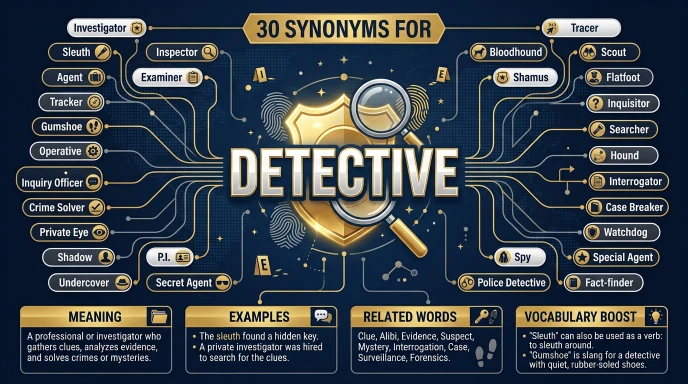
Synonyms for Detective
1. Investigator (Noun)
US IPA: /ɪnˈvɛstəɡeɪtər/ | UK IPA: /ɪnˈvestɪɡeɪtə/
Meaning: A person who carefully examines facts to discover information.
Examples:
- The investigator examined the evidence.
- An experienced investigator interviewed the witnesses.
2. Sleuth (Noun)
US IPA: /sluːθ/ | UK IPA: /sluːθ/
Meaning: A person who investigates mysteries or crimes.
Examples:
- The sleuth followed a difficult clue.
- The fictional sleuth solved the mystery.
3. Private Investigator (Noun)
US IPA: /ˈpraɪvət ɪnˈvɛstəɡeɪtər/ | UK IPA: /ˈpraɪvət ɪnˈvestɪɡeɪtə/
Meaning: A person hired privately to investigate a case or problem.
Examples:
- The family hired a private investigator.
- The private investigator searched for new evidence.
4. Private Eye (Noun)
US IPA: /ˌpraɪvət ˈaɪ/ | UK IPA: /ˌpraɪvət ˈaɪ/
Meaning: An informal term for a private investigator.
Examples:
- The private eye was hired to follow the suspect.
- The novel features a clever private eye.
5. Gumshoe (Noun)
US IPA: /ˈɡʌmʃuː/ | UK IPA: /ˈɡʌmʃuː/
Meaning: A casual term for a detective or investigator.
Examples:
- The old gumshoe worked late into the night.
- The story follows a tough gumshoe in the city.
6. Detective Officer (Noun)
US IPA: /dɪˈtɛktɪv ˈɔːfɪsər/ | UK IPA: /dɪˈtektɪv ˈɒfɪsə/
Meaning: A police officer who investigates crimes.
Examples:
- The detective officer questioned the witness.
- A detective officer collected evidence from the scene.
7. Police Investigator (Noun)
US IPA: /pəˈliːs ɪnˈvɛstəɡeɪtər/ | UK IPA: /pəˈliːs ɪnˈvestɪɡeɪtə/
Meaning: A police professional who investigates crimes.
Examples:
- The police investigator reviewed the case.
- A police investigator found an important clue.
8. Crime Investigator (Noun)
US IPA: /kraɪm ɪnˈvɛstəɡeɪtər/ | UK IPA: /kraɪm ɪnˈvestɪɡeɪtə/
Meaning: A person who investigates criminal activity.
Examples:
- The crime investigator studied the fingerprints.
- The crime investigator interviewed the suspect.
9. Case Investigator (Noun)
US IPA: /keɪs ɪnˈvɛstəɡeɪtər/ | UK IPA: /keɪs ɪnˈvestɪɡeɪtə/
Meaning: A person responsible for investigating a particular case.
Examples:
- The case investigator reviewed every report.
- The case investigator discovered a missing detail.
10. Law Enforcement Investigator (Noun)
US IPA: /lɔː ɪnˈfɔːrsmənt ɪnˈvɛstəɡeɪtər/ | UK IPA: /lɔː ɪnˈfɔːsmənt ɪnˈvestɪɡeɪtə/
Meaning: An investigator who works within a law enforcement system.
Examples:
- The law enforcement investigator gathered evidence.
- A law enforcement investigator led the inquiry.
11. Inspector (Noun)
US IPA: /ɪnˈspɛktər/ | UK IPA: /ɪnˈspektə/
Meaning: An official who examines or investigates something; in some police systems, an inspector is a police rank.
Examples:
- The inspector arrived at the crime scene.
- The police inspector reviewed the evidence.
12. Special Agent (Noun)
US IPA: /ˈspɛʃəl ˈeɪdʒənt/ | UK IPA: /ˈspeʃəl ˈeɪdʒənt/
Meaning: A government or law-enforcement officer who investigates specific cases.
Examples:
- The special agent joined the investigation.
- A special agent questioned the suspect.
13. Agent (Noun)
US IPA: /ˈeɪdʒənt/ | UK IPA: /ˈeɪdʒənt/
Meaning: A person who acts for an organization, especially in an investigative role.
Examples:
- The agent gathered information about the case.
- A government agent interviewed the witness.
14. Intelligence Officer (Noun)
US IPA: /ɪnˈtɛlədʒəns ˈɔːfɪsər/ | UK IPA: /ɪnˈtelɪdʒəns ˈɒfɪsə/
Meaning: An official who collects and analyzes information for security or intelligence purposes.
Examples:
- The intelligence officer studied the information.
- An intelligence officer identified a possible threat.
15. Investigator (Noun)
US IPA: /ɪnˈvɛstəɡeɪtər/ | UK IPA: /ɪnˈvestɪɡeɪtə/
Meaning: A person who searches for facts and evidence.
Examples:
- The investigator found an important document.
- The investigator continued working on the case.
16. Examiner (Noun)
US IPA: /ɪɡˈzæmɪnər/ | UK IPA: /ɪɡˈzæmɪnə/
Meaning: A person who carefully examines something to find information.
Examples:
- The examiner checked the evidence.
- The forensic examiner studied the material.
17. Inspector-General (Noun)
US IPA: /ɪnˌspɛktər ˈdʒɛnərəl/ | UK IPA: /ɪnˌspektə ˈdʒenərəl/
Meaning: A senior official who investigates or oversees an organization.
Examples:
- The inspector-general ordered an investigation.
- The inspector-general examined the department’s actions.
18. Detective-Sergeant (Noun)
US IPA: /dɪˈtɛktɪv ˈsɑːrdʒənt/ | UK IPA: /dɪˈtektɪv ˈsɑːdʒənt/
Meaning: A police sergeant who works in detective duties.
Examples:
- The detective-sergeant took charge of the case.
- A detective-sergeant interviewed the witnesses.
19. Detective Inspector (Noun)
US IPA: /dɪˈtɛktɪv ɪnˈspɛktər/ | UK IPA: /dɪˈtektɪv ɪnˈspektə/
Meaning: A police rank used in some systems for an officer who leads investigations.
Examples:
- The detective inspector reviewed the case.
- The detective inspector spoke to the investigation team.
20. Case Officer (Noun)
US IPA: /keɪs ˈɔːfɪsər/ | UK IPA: /keɪs ˈɒfɪsə/
Meaning: An official responsible for handling a particular investigation or case.
Examples:
- The case officer organized the evidence.
- The case officer contacted the witnesses.
21. Enquirer (Noun)
US IPA: /ɪnˈkwaɪərər/ | UK IPA: /ɪnˈkwaɪərə/
Meaning: A person who seeks information through questions or investigation.
Examples:
- The enquirer asked several questions.
- The enquirer wanted to discover the truth.
22. Questioner (Noun)
US IPA: /ˈkwɛstʃənər/ | UK IPA: /ˈkwestʃənə/
Meaning: A person who asks questions to obtain information.
Examples:
- The questioner carefully examined the witness’s answers.
- The skilled questioner noticed a contradiction.
23. Fact-Finder (Noun)
US IPA: /ˈfækt ˌfaɪndər/ | UK IPA: /ˈfækt ˌfaɪndə/
Meaning: A person who searches for and establishes facts.
Examples:
- The investigator acted as a careful fact-finder.
- A professional fact-finder reviewed the evidence.
24. Bloodhound (Noun)
US IPA: /ˈblʌdˌhaʊnd/ | UK IPA: /ˈblʌdˌhaʊnd/
Meaning: An informal term for a person who is very persistent at finding information.
Examples:
- The reporter was a real bloodhound for hidden facts.
- The fictional detective was described as a bloodhound.
25. Sleuthhound (Noun)
US IPA: /ˈsluːθˌhaʊnd/ | UK IPA: /ˈsluːθˌhaʊnd/
Meaning: An old-fashioned or playful term for a detective or persistent investigator.
Examples:
- The story presents him as a clever sleuthhound.
- The young sleuthhound followed every clue.
26. Gumshoe Detective (Noun)
US IPA: /ˈɡʌmʃuː dɪˈtɛktɪv/ | UK IPA: /ˈɡʌmʃuː dɪˈtektɪv/
Meaning: A casual expression for a detective, often in crime fiction.
Examples:
- The novel follows a tough gumshoe detective.
- The gumshoe detective searched the old building.
27. Crime Solver (Noun)
US IPA: /kraɪm ˈsɑːlvər/ | UK IPA: /kraɪm ˈsɒlvə/
Meaning: A person who solves crimes or criminal mysteries.
Examples:
- The fictional crime solver found the missing clue.
- Everyone trusted the skilled crime solver.
28. Mystery Solver (Noun)
US IPA: /ˈmɪstəri ˈsɑːlvər/ | UK IPA: /ˈmɪstəri ˈsɒlvə/
Meaning: A person who solves mysteries or unexplained problems.
Examples:
- The young mystery solver followed the clues.
- The mystery solver finally discovered the truth.
29. Crime Detective (Noun)
US IPA: /kraɪm dɪˈtɛktɪv/ | UK IPA: /kraɪm dɪˈtektɪv/
Meaning: A detective who investigates criminal cases.
Examples:
- The crime detective examined the crime scene.
- The crime detective collected new evidence.
30. Detective Investigator (Noun)
US IPA: /dɪˈtɛktɪv ɪnˈvɛstəɡeɪtər/ | UK IPA: /dɪˈtektɪv ɪnˈvestɪɡeɪtə/
Meaning: An investigator who works to discover facts about crimes or mysteries.
Examples:
- The detective investigator reviewed the case files.
- The detective investigator followed a new lead.
Prototype Meaning
The most typical meaning of detective is a person who investigates a crime or mystery. When people hear this word, they often imagine someone examining clues, interviewing witnesses, studying evidence, and following leads.
A detective is usually associated with careful observation, logical thinking, and the search for truth.
Prototype Categorization
- Direct professional alternatives: investigator, police investigator, crime investigator, detective officer.
- Private investigation terms: private investigator, private eye, case investigator.
- Police and official terms: inspector, special agent, intelligence officer, case officer.
- Informal or fictional terms: sleuth, gumshoe, bloodhound, sleuthhound.
- Problem-solving terms: fact-finder, crime solver, mystery solver.
- Case-specific terms: case officer, case investigator, detective-sergeant, detective inspector.
Short Questions and Answers
- What does detective mean?
A detective is a person who investigates crimes, mysteries, or problems to discover facts. - When should detective be used?
Use detective when referring to a person who investigates crimes or mysteries, especially in police work or fiction. - Is detective positive or negative?
The word is usually neutral or positive. It can suggest intelligence, courage, and careful investigation, but the tone depends on context. - How is detective different from investigator?
Detective often refers specifically to crime investigation, while investigator is broader and can describe someone investigating many types of cases. - What is a casual synonym for detective?
Sleuth, gumshoe, and private eye can be casual or literary alternatives. - What is the most common synonym for detective?
Investigator is one of the closest general synonyms.
Conclusion
Learning detective and its synonyms can greatly improve your English vocabulary. Words such as investigator, sleuth, private investigator, inspector, special agent, and gumshoe can describe people who search for facts, but each word has a slightly different use or tone.
Understanding these differences helps you choose the right word for stories, essays, conversations, and professional writing. A wider vocabulary also prevents repetition and makes your sentences more interesting. English learners can build confidence by practicing these words in short sentences and reading them in real contexts.
Writers can use formal alternatives for professional content and casual alternatives for fiction or conversation. Try learning a few new words each day and using them in your own examples. Regular practice will make your vocabulary stronger and more natural.
Explore more about!
- Synonyms of Colony: Best Alternative Words to Know
- Synonyms for Park 30 Powerful Words to Improve Your Vocabulary
- Synonyms of Sweetheart: Best Alternative Words to Know

I am an American author, and I write books about power, strategy, and human behavior. My writing style is simple but deep, and I try to explain how people think and act in real-life situations.
I studied classical studies, and before becoming a writer, I worked in different fields which helped me understand people and life better.
My most famous books include The 48 Laws of Power, The Art of Seduction, and Mastery. These books are widely read by business people, leaders, and students around the world.