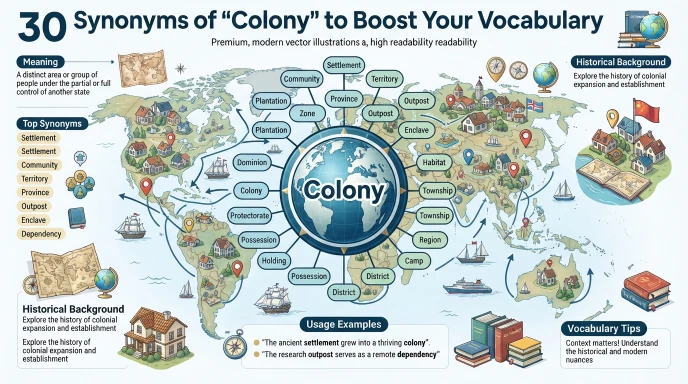
Colony means a group of people who settle in a place and live there under the control of another country or authority. It can also mean a group of animals, insects, or organisms living together.
Imagine a group of settlers moving to a new land and building homes, farms, and towns while their original country controls the area. This is an example of a colony. The word is common in history, geography, biology, politics, and everyday discussions about groups living together.
Learning synonyms of colony helps English learners understand different contexts and avoid repeating the same word. Content writers can also use related terms to make their writing more precise. In this guide, we will explore the meaning, grammar, pronunciation, history, emotional tone, and 30 useful synonyms and context-based alternatives with simple examples.
Meaning of Colony
Colony (Noun):
A territory or settlement controlled by another country, or a group of living organisms that live together.
Examples
- India was once a British colony.
- A colony of ants lived under the old tree.
Connotative Meaning
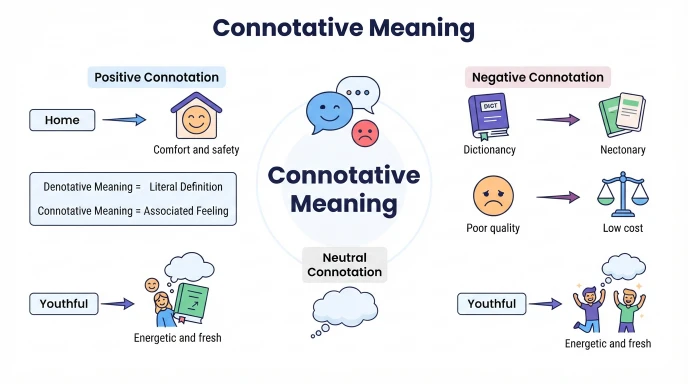
Positive tone:
- Community
- Settlement
- Cooperation
- Shared living
- Growth
Negative tone:
- Control
- Foreign rule
- Exploitation
- Loss of independence
- Oppression
Neutral tone:
- Territory
- Settlement
- Group
- Population
- Community
(Connotation means the feeling or idea that a word suggests beyond its basic dictionary meaning.)
Etymology
- Source: Latin, through Old French and Middle English.
- The word comes from Latin colonia, meaning a settlement, farm, or landed estate.
- It is related to the Latin verb colere, meaning “to cultivate” or “to inhabit.”
- Over time, colony developed a strong connection with territories settled and controlled by another country.
Short History of the Keyword
Old English (450–1100):
The modern word colony was not a common Old English word. The idea of settlement was expressed through other Germanic terms related to land, homes, and communities. The Latin root later became important in English through French.
Middle English (1100–1500):
The word entered English through Anglo-French and Middle French forms connected with Latin colonia. It referred to a settlement or group of people who had moved to a new place.
Modern English (1500–Present):
The meaning expanded as European powers established overseas territories. Today, colony can describe a historically controlled territory, a settlement, or a group of animals, insects, fungi, or microorganisms living together.
Pronunciation (US & UK – IPA)
US: /ˈkɑːləni/
UK: /ˈkɒləni/
Syllables
col-o-ny
Affixation Pattern of Colony
Root: colon- / coloni-
Prefix: None
Suffix: -y
Word Formation
- Colony : adjective/noun: related to a colony.
- Colonially : adverb: in a colonial manner.
- Colonist : noun: a person who settles in a colony.
- Colonialism : noun: a system or practice involving colonial control.
- Colonize : verb: to establish control or settlement in another place.
- Colonized : adjective/past participle: brought under colonial control.
- Colonization : noun: the process of establishing a colony or control.
- Colonizer : noun: a person, group, or power that colonizes.
- Decolonize : verb: to remove colonial control or influence.
Synonyms of Colony
1. Settlement (Noun)
US IPA: /ˈsetəlmənt/ | UK IPA: /ˈsetəlmənt/
Meaning: A place where people establish homes and live together.
Examples:
- The settlers built a small settlement near the river.
- The historical settlement later became a large town.
2. Dependency (Noun)
US IPA: /dɪˈpendənsi/ | UK IPA: /dɪˈpendənsi/
Meaning: A territory that depends on and is controlled by another country or authority.
Examples:
- The island was once a colonial dependency.
- The territory had a special dependency status.
3. Territory (Noun)
US IPA: /ˈterətɔːri/ | UK IPA: /ˈterətri/
Meaning: An area of land controlled by a country or authority.
Examples:
- The territory was governed from overseas.
- The army entered the disputed territory.
4. Outpost (Noun)
US IPA: /ˈaʊtpoʊst/ | UK IPA: /ˈaʊtpəʊst/
Meaning: A small settlement or station far from the main area of control.
Examples:
- The traders established an outpost near the coast.
- The remote outpost became an important trading center.
5. Settlement Area (Noun Phrase)
US IPA: /ˈsetəlmənt ˈeriə/ | UK IPA: /ˈsetəlmənt ˈeəriə/
Meaning: An area where people establish a community and homes.
Examples:
- The settlement area grew over several decades.
- Farmers developed the new settlement area.
6. Enclave (Noun)
US IPA: /ˈenkleɪv/ | UK IPA: /ˈenkleɪv/
Meaning: A distinct area or community surrounded by another territory.
Examples:
- The community formed a cultural enclave.
- The small enclave maintained its traditions.
7. Possession (Noun)
US IPA: /pəˈzeʃən/ | UK IPA: /pəˈzeʃən/
Meaning: A place controlled or held by a country or authority.
Examples:
- The island became an overseas possession.
- Several possessions were governed from the capital.
8. Protectorate (Noun)
US IPA: /prəˈtektərət/ | UK IPA: /prəˈtektərət/
Meaning: A territory partly controlled or protected by a stronger state.
Examples:
- The region became a protectorate under a foreign power.
- The protectorate kept some local institutions.
9. Province (Noun)
US IPA: /ˈprɑːvəns/ | UK IPA: /ˈprɒvɪns/
Meaning: A major administrative area within a country or political system.
Examples:
- The former colony was later organized as a province.
- The province has several historic cities.
10. Domain (Noun)
US IPA: /doʊˈmeɪn/ | UK IPA: /dəˈmeɪn/
Meaning: An area controlled or governed by a person, group, or state.
Examples:
- The island was once part of an overseas domain.
- The empire expanded its domain across the region.
11. Community (Noun)
US IPA: /kəˈmjuːnəti/ | UK IPA: /kəˈmjuːnəti/
Meaning: A group of people living together or sharing common interests.
Examples:
- A farming community developed in the area.
- The community preserved its traditional customs.
12. Settlement (Noun)
US IPA: /ˈsetəlmənt/ | UK IPA: /ˈsetəlmənt/
Meaning: A place where people establish a permanent home.
Examples:
- The settlement was founded near the sea.
- Archaeologists discovered an ancient settlement.
13. Hamlet (Noun)
US IPA: /ˈhæmlət/ | UK IPA: /ˈhæmlət/
Meaning: A very small village or settlement.
Examples:
- The colonists first lived in a small hamlet.
- The remote hamlet had only a few families.
14. Village (Noun)
US IPA: /ˈvɪlɪdʒ/ | UK IPA: /ˈvɪlɪdʒ/
Meaning: A small community or group of homes in a rural area.
Examples:
- The settlers created a small village.
- The village grew around the original settlement.
15. Population (Noun)
US IPA: /ˌpɑːpjəˈleɪʃən/ | UK IPA: /ˌpɒpjəˈleɪʃən/
Meaning: All the people or living organisms living in a particular place.
Examples:
- The colony had a growing population.
- The island’s population increased over time.
16. Settlement Community (Noun Phrase)
US IPA: /ˈsetəlmənt kəˈmjuːnəti/ | UK IPA: /ˈsetəlmənt kəˈmjuːnəti/
Meaning: A community formed by people who settle in a new area.
Examples:
- The settlement community developed its own traditions.
- The new settlement community relied on farming.
17. Establishment (Noun)
US IPA: /ɪˈstæblɪʃmənt/ | UK IPA: /ɪˈstæblɪʃmənt/
Meaning: The act or process of creating a new organization, place, or community.
Examples:
- The establishment of the settlement changed the region.
- The establishment became an important trading center.
18. Base (Noun)
US IPA: /beɪs/ | UK IPA: /beɪs/
Meaning: A place used as a center for activities or operations.
Examples:
- The explorers created a small base near the coast.
- The trading base later became a permanent settlement.
19. Station (Noun)
US IPA: /ˈsteɪʃən/ | UK IPA: /ˈsteɪʃən/
Meaning: A place established for a particular activity or purpose.
Examples:
- The group built a remote station on the island.
- The station supported trade in the region.
20. Community Group (Noun Phrase)
US IPA: /kəˈmjuːnəti ɡruːp/ | UK IPA: /kəˈmjuːnəti ɡruːp/
Meaning: A group of people connected by a shared place, purpose, or identity.
Examples:
- The community group worked together to build homes.
- The community group maintained local traditions.
Categorizing synonyms helps writers choose a word that matches the exact context instead of using every alternative in the same way.
21. Settlement (Noun)
US IPA: /ˈsetəlmənt/ | UK IPA: /ˈsetəlmənt/
Meaning: A place where people establish homes and live permanently.
Examples:
- The settlers built a small settlement near the river.
- The settlement became an important trading center.
22. Village (Noun)
US IPA: /ˈvɪlɪdʒ/ | UK IPA: /ˈvɪlɪdʒ/
Meaning: A small community of homes, usually in a rural area.
Examples:
- The settlers created a small village.
- The village grew around the original settlement.
23. Hamlet (Noun)
US IPA: /ˈhæmlət/ | UK IPA: /ˈhæmlət/
Meaning: A very small village or group of houses.
Examples:
- The settlers lived in a quiet hamlet.
- The remote hamlet had only a few families.
24. Base (Noun)
US IPA: /beɪs/ | UK IPA: /beɪs/
Meaning: A place used as a center for activities or operations.
Examples:
- The explorers established a base near the coast.
- The trading base later became a permanent settlement.
25. Station (Noun)
US IPA: /ˈsteɪʃən/ | UK IPA: /ˈsteɪʃən/
Meaning: A place established for a particular activity or purpose.
Examples:
- The group built a remote station on the island.
- The station supported trade in the region.
26. Establishment (Noun)
US IPA: /ɪˈstæblɪʃmənt/ | UK IPA: /ɪˈstæblɪʃmənt/
Meaning: The act of creating or setting up a place, organization, or community.
Examples:
- The establishment of the settlement changed the region.
- The establishment became an important center for trade.
27. Occupation (Noun)
US IPA: /ˌɑːkjəˈpeɪʃən/ | UK IPA: /ˌɒkjəˈpeɪʃən/
Meaning: Control of a place by a foreign military or political power.
Examples:
- The occupation changed the region’s political system.
- The city experienced years of foreign occupation.
28. Settlement Community (Noun Phrase)
US IPA: /ˈsetəlmənt kəˈmjuːnəti/ | UK IPA: /ˈsetəlmənt kəˈmjuːnəti/
Meaning: A community formed by people who settle in a new area.
Examples:
- The settlement community developed its own traditions.
- The new settlement community depended on farming.
29. Migrant Community (Noun Phrase)
US IPA: /ˈmaɪɡrənt kəˈmjuːnəti/ | UK IPA: /ˈmaɪɡrənt kəˈmjuːnəti/
Meaning: A group of people who have moved from one place to another and live together or share a common background.
Examples:
- A migrant community developed near the port.
- The migrant community preserved many of its cultural traditions.
30. Colony Group (Noun Phrase)
US IPA: /ˈkɑːləni ɡruːp/ | UK IPA: /ˈkɒləni ɡruːp/
Meaning: A group living together as a colony, especially in a biological context.
Examples:
- Scientists studied the colony group of insects.
- The colony group lived together in a protected area.
Short History of Colony
Old English (450–1100):
The modern word colony was not part of common Old English vocabulary. The idea of a settlement was expressed through other words for homes, communities, and inhabited land.
Middle English (1100–1500):
Colony entered English through French forms that came from Latin colonia. It referred to a settlement or group of people established in a new place.
Modern English (1500–Present):
The word became strongly associated with overseas territories controlled by European powers. Today, colony can refer to historical political territories as well as groups of organisms such as ants, bees, and bacteria.
Prototype Meaning
The most common historical meaning of colony is a settlement or territory controlled by another country. People often imagine settlers living in a distant land while another government has political authority over the area.
In biology, the word has a different common use: a group of organisms living together in one place.
Prototype Categorization
- Political: dependency, protectorate, possession, territory
- Historical: colony, settlement, occupation, colonization
- Community: community, population, migrant community
- Small settlement: village, hamlet, outpost
- Administrative: province, territory, domain
- Remote center: base, station, outpost
- Biological: colony, population, community
This grouping helps writers select a word based on the exact context. For example, territory fits land and political control, while community fits people living together.
Antonyms of Colony
- Independence (Noun): Freedom from control by another country or power.
- Sovereignty (Noun): The authority of a country to govern itself.
- Autonomy (Noun): The ability to make decisions and govern independently.
- Liberation (Noun): The process of becoming free from control.
- Self-Government (Noun): The ability of a people or territory to govern itself.
Short Questions and Answers
- What does colony mean?
A colony can mean a territory controlled by another country or a group of organisms living together. - When should colony be used?
Use colony when discussing historical territories under foreign control or groups of certain organisms living together. - Is colony positive or negative?
Its tone depends on context. Historical uses may suggest foreign control, while biological uses are generally neutral. - How is colony different from settlement?
Settlement focuses mainly on a place where people live. Colony can also emphasize political control by another country.
Conclusion
Learning the synonyms of colony gives English learners more precise ways to describe settlements, territories, communities, and groups of organisms. Words such as settlement, territory, dependency, protectorate, community, outpost, and population have related meanings, but they are not always interchangeable.
Understanding their differences helps you select the right word for historical, geographical, political, and biological writing. Studying pronunciation, word formation, connotation, history, and examples also makes new vocabulary easier to remember.
For content writers, these alternatives can reduce repetition and make articles more detailed and natural. For English learners, regular practice with new words can strengthen both speaking and writing. Try learning a few synonyms each day and use them in your own sentences. This simple habit can gradually improve vocabulary, accuracy, and confidence.
Explore more about!
- Synonyms for Advocate: Alternative Words & Meanings
- Synonyms for Park 30 Powerful Words to Improve Your Vocabulary
- Synonyms of Sweetheart: Best Alternative Words to Know

I am a linguist with 17 years of experience in English language teaching, including postgraduate-level instruction. My expertise includes English grammar, and I contribute as a content and blog writer, producing scholarly and educational language resources.