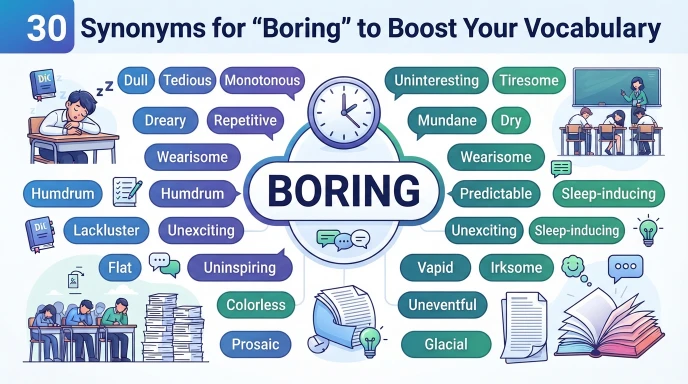
Boring means not interesting, exciting, or enjoyable. Imagine sitting in a long class where nothing new happens and every minute feels slow. You might say, “This class is boring.”
The word boring is common because people often use it to describe books, movies, conversations, lessons, places, or activities that fail to hold their attention. For English learners, knowing synonyms of boring helps make speaking and writing more natural and varied.
Content writers can also use these words to avoid repeating the same adjective. In this guide, we will explore the meaning, synonyms, examples, grammar, pronunciation, connotation, etymology, history, and semantic categories of boring. You will also learn when each synonym fits best, from simple everyday speech to more formal writing.
Meaning of Boring
Definition
Boring (Adjective):
Not interesting, exciting, or enjoyable; causing a person to lose interest or attention.
Examples
- The lecture was boring, so many students struggled to stay focused.
- I found the movie boring because the story moved very slowly.
Connotative Meaning
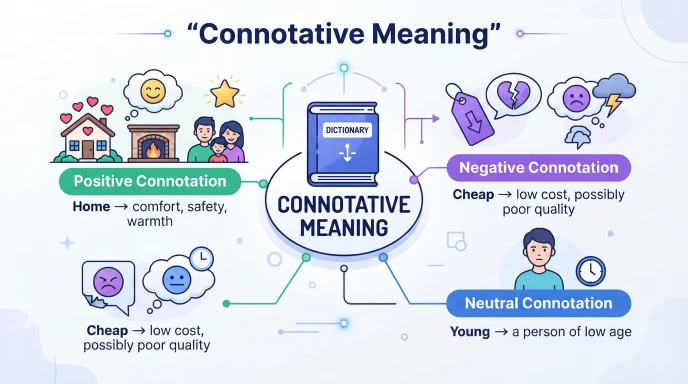
Connotation (the feeling or idea that a word suggests beyond its basic meaning):
- Positive tone: Usually, boring has no positive tone because it describes something that lacks interest. However, in some contexts, a quiet or boring activity may be seen as peaceful or safe.
- Negative tone: It often suggests dullness, lack of excitement, poor entertainment, or loss of interest.
- Neutral tone: It can simply describe something that does not create much interest, without strongly criticizing it.
Etymology
- Source: The word boring comes from the verb bore, meaning to make someone weary or uninterested.
- Older root: Bore developed in English from Middle English usage connected with causing weariness or annoyance.
- Modern development: The adjective boring became widely used for something that causes a person to feel uninterested or tired of an activity.
Short History of the Keyword
- Old English (450–1100): The exact modern adjective boring was not used in Old English. English had other words for weariness, tiredness, and lack of pleasure.
- Middle English (1100–1500): The verb bore developed through English usage with meanings connected to causing weariness or annoyance.
- Modern English (1500–Present): Boring developed as the familiar adjective for something that fails to interest or entertain. Its use expanded into everyday descriptions of people, activities, books, films, classes, and conversations.
Pronunciation (US & UK – IPA)
US: /ˈbɔːrɪŋ/
UK: /ˈbɔːrɪŋ/
Syllables
bor-ing
Affixation Pattern of Boring
- Root: bore
- Prefix: None
- Suffix: -ing
- Formation: bore + -ing → boring
- Grammatical category: Adjective when it describes something that causes boredom; also the present participle form of the verb bore.
- Related forms: bore (verb/noun), bored (adjective), boredom (noun), boring (adjective/participle).
Synonyms of Boring
1. Dull (Adjective)
US: /dʌl/ | UK: /dʌl/
Meaning: Not interesting, lively, or exciting.
Examples:
- The presentation was dull and difficult to follow.
- He thought the book was dull.
2. Tedious (Adjective)
US: /ˈtiːdiəs/ | UK: /ˈtiːdiəs/
Meaning: Long, repetitive, and tiring because it lacks interest.
Examples:
- Filling out the forms was tedious.
- The task became tedious after several hours.
3. Monotonous (Adjective)
US: /məˈnɑːtənəs/ | UK: /məˈmɒtənəs/
Meaning: Repetitive and lacking variety.
Examples:
- The speaker’s voice was monotonous.
- Doing the same job every day can become monotonous.
4. Tiresome (Adjective)
US: /ˈtaɪərsəm/ | UK: /ˈtaɪəsəm/
Meaning: Causing tiredness or annoyance because something continues for too long.
Examples:
- The long meeting became tiresome.
- His repeated complaints were tiresome.
5. Uninteresting (Adjective)
US: /ˌʌnˈɪntrəstɪŋ/ | UK: /ˌʌnˈɪntrəstɪŋ/
Meaning: Not interesting or engaging.
Examples:
- The topic was uninteresting to me.
- She found the article uninteresting.
6. Tedious (Adjective)
US: /ˈtiːdiəs/ | UK: /ˈtiːdiəs/
Meaning: Repetitive and requiring patience.
Examples:
- Data entry can be tedious work.
- The repeated instructions were tedious.
7. Lifeless (Adjective)
US: /ˈlaɪfləs/ | UK: /ˈlaɪfləs/
Meaning: Lacking energy, excitement, or liveliness.
Examples:
- The party felt lifeless.
- The performance was lifeless.
8. Lackluster (Adjective)
US: /ˈlækˌlʌstər/ | UK: /ˈlæklʌstə/
Meaning: Less exciting, impressive, or successful than expected.
Examples:
- The team gave a lackluster performance.
- The movie received attention but felt lackluster.
9. Dry (Adjective)
US: /draɪ/ | UK: /draɪ/
Meaning: Lacking excitement or emotional interest.
Examples:
- His lecture was informative but dry.
- The article uses a very dry style.
10. Humdrum (Adjective)
US: /ˈhʌmdrʌm/ | UK: /ˈhʌmdrʌm/
Meaning: Ordinary, repetitive, and lacking excitement.
Examples:
- She wanted to escape her humdrum routine.
- His humdrum job gave him little excitement.
11. Mundane (Adjective)
US: /mʌnˈdeɪn/ | UK: /mʌnˈdeɪn/
Meaning: Ordinary and not exciting.
Examples:
- They spent the afternoon doing mundane tasks.
- Even mundane activities can be useful.
12. Unexciting (Adjective)
US: /ˌʌnɪkˈsaɪtɪŋ/ | UK: /ˌʌnɪkˈsaɪtɪŋ/
Meaning: Not producing excitement or enthusiasm.
Examples:
- The game was unexciting.
- We watched an unexciting documentary.
13. Repetitive (Adjective)
US: /rɪˈpetətɪv/ | UK: /rɪˈpetətɪv/
Meaning: Repeating the same actions or ideas too often.
Examples:
- The lesson became repetitive.
- The work is simple but repetitive.
14. Routine (Adjective)
US: /ruːˈtiːn/ | UK: /ruːˈtiːn/
Meaning: Regular and lacking unusual or exciting features.
Examples:
- It was a routine day at the office.
- The task was routine and predictable.
15. Predictable (Adjective)
US: /prɪˈdɪktəbəl/ | UK: /prɪˈdɪktəbəl/
Meaning: Easy to know in advance because nothing surprising happens.
Examples:
- The ending was predictable.
- The story became predictable after the first chapter.
16. Insipid (Adjective)
US: /ɪnˈsɪpɪd/ | UK: /ɪnˈsɪpɪd/
Meaning: Lacking interest, energy, or strong character.
Examples:
- The dialogue felt insipid.
- The article was accurate but insipid.
17. Tediously Repetitive (Adjective Phrase)
US: /ˈtiːdiəsli rɪˈpetətɪv/ | UK: /ˈtiːdiəsli rɪˈpetətɪv/
Meaning: Repeated so often that it becomes tiring and boring.
Examples:
- The training became tediously repetitive.
- The explanation was tediously repetitive.
18. Prosaic (Adjective)
US: /proʊˈzeɪɪk/ | UK: /prəʊˈzeɪɪk/
Meaning: Ordinary and lacking imagination or excitement.
Examples:
- The story had a prosaic ending.
- His writing sometimes sounds prosaic.
19. Colorless (Adjective)
US: /ˈkʌlərləs/ | UK: /ˈkʌlələs/
Meaning: Lacking excitement, emotion, or distinctive character.
Examples:
- The speech was colorless.
- The description felt colorless and plain.
20. Spiritless (Adjective)
US: /ˈspɪrɪtləs/ | UK: /ˈspɪrɪtləs/
Meaning: Lacking energy, enthusiasm, or liveliness.
Examples:
- The performance was spiritless.
- The team gave a spiritless response.
21. Vacuous (Adjective)
US: /ˈvækjuəs/ | UK: /ˈvækjuəs/
Meaning: Showing little thought, intelligence, or meaningful content.
Examples:
- The discussion became vacuous.
- The article contained several vacuous statements.
22. Stale (Adjective)
US: /steɪl/ | UK: /steɪl/
Meaning: No longer fresh, interesting, or original.
Examples:
- The jokes became stale.
- The discussion felt stale after an hour.
23. Wearisome (Adjective)
US: /ˈwɪrɪsəm/ | UK: /ˈwɪəsəm/
Meaning: Making someone feel tired or bored.
Examples:
- The journey was long and wearisome.
- The repeated discussion became wearisome.
24. Lackadaisical (Adjective)
US: /ˌlækəˈdeɪzɪkəl/ | UK: /ˌlækəˈdeɪzɪkəl/
Meaning: Showing little energy, care, or enthusiasm.
Examples:
- His lackadaisical attitude slowed the project.
- She gave a lackadaisical response.
25. Dreary (Adjective)
US: /ˈdrɪri/ | UK: /ˈdrɪəri/
Meaning: Dull, gloomy, and lacking enjoyment.
Examples:
- It was a dreary afternoon.
- The room looked dreary and empty.
26. Sleepy (Adjective)
US: /ˈsliːpi/ | UK: /ˈsliːpi/
Meaning: Quiet and lacking activity or excitement.
Examples:
- The town is sleepy during the winter.
- We stayed in a sleepy village.
27. Tediousness (Noun)
US: /ˈtiːdiəsnəs/ | UK: /ˈtiːdiəsnəs/
Meaning: The quality of being repetitive and boring.
Examples:
- The tediousness of the task reduced motivation.
- She complained about the tediousness of the work.
28. Monotony (Noun)
US: /məˈnɑːtəni/ | UK: /məˈmɒtəni/
Meaning: A lack of variety caused by repeated activities.
Examples:
- The monotony of the job became difficult.
- Music helped break the monotony of the journey.
29. Banal (Adjective)
US: /bəˈnɑːl/ | UK: /bəˈnɑːl/
Meaning: So ordinary or common that it seems uninteresting.
Examples:
- The conversation was filled with banal comments.
- The article offered banal advice.
30. Insipidly (Adverb)
US: /ɪnˈsɪpɪdli/ | UK: /ɪnˈsɪpɪdli/
Meaning: In a dull or uninteresting manner.
Examples:
- He spoke insipidly about the subject.
- The story was told insipidly.
Prototype Meaning
The most typical meaning of boring is something that does not hold your attention or create excitement. When people hear this word, they often imagine a slow lecture, repetitive task, predictable movie, or conversation with little energy.
The word usually describes the effect of an experience on the person rather than simply saying that the experience is quiet.
Prototype Categorization
- General lack of interest: dull, uninteresting, unexciting, boring
- Repetition: tedious, monotonous, repetitive, humdrum
- Ordinary or predictable: mundane, routine, predictable, banal
- Lack of energy: lifeless, spiritless, lackluster
- Gloomy or unpleasant: dreary, wearisome
- Lack of originality: stale, prosaic, colorless
- Formal vocabulary: insipid, vacuous, prosaic, banal
Categorization helps writers choose a synonym that matches the exact situation. For example, monotonous works well for repeated sounds or routines, while dreary can describe something dull and gloomy.
Antonyms of Boring
- Interesting (Adjective): Holding attention or curiosity.
- Exciting (Adjective): Creating enthusiasm or strong interest.
- Engaging (Adjective): Keeping someone interested and involved.
- Fascinating (Adjective): Extremely interesting and attention-grabbing.
- Entertaining (Adjective): Providing enjoyment or amusement.
- Stimulating (Adjective): Encouraging thought, interest, or activity.
- Lively (Adjective): Full of energy and activity.
- Thrilling (Adjective): Producing strong excitement.
- Captivating (Adjective): Holding attention very strongly.
- Dynamic (Adjective): Active, energetic, and constantly changing.
Short Questions and Answers
- What does boring mean?
- Boring means not interesting, exciting, or enjoyable.
- When should boring be used?
- Use boring when describing something that fails to keep your attention or interest.
- Is boring positive or negative?
- It usually has a negative tone, but the exact effect depends on context.
- How is boring different from similar words?
- Boring is a general word. Tedious often suggests tiring repetition, monotonous suggests a lack of variety, and dull suggests a general lack of interest or energy.
Conclusion
Learning boring and its synonyms gives English learners more ways to describe experiences, people, activities, and writing styles. Instead of using boring in every situation, you can choose a more exact word such as dull, tedious, monotonous, mundane, or dreary.
This makes your writing clearer and helps your speaking sound more natural. Understanding tone is also important because some synonyms are mild, while others sound stronger or more formal. Writers can use these words to avoid repetition and create more precise descriptions.
Regular vocabulary practice can improve both speaking and writing skills. Try learning a few synonyms each day, make your own sentences, and use them in real conversations or short writing exercises. With steady practice, your vocabulary and English confidence can grow.
Explore more about!
- Synonyms for Intense: Alternative Words & Meanings
- Synonyms for A Lot: Alternative Words & Meanings
- Synonyms of Frequent: Best Alternative Words to Know

I am an American author, and I write books about power, strategy, and human behavior. My writing style is simple but deep, and I try to explain how people think and act in real-life situations.
I studied classical studies, and before becoming a writer, I worked in different fields which helped me understand people and life better.
My most famous books include The 48 Laws of Power, The Art of Seduction, and Mastery. These books are widely read by business people, leaders, and students around the world.