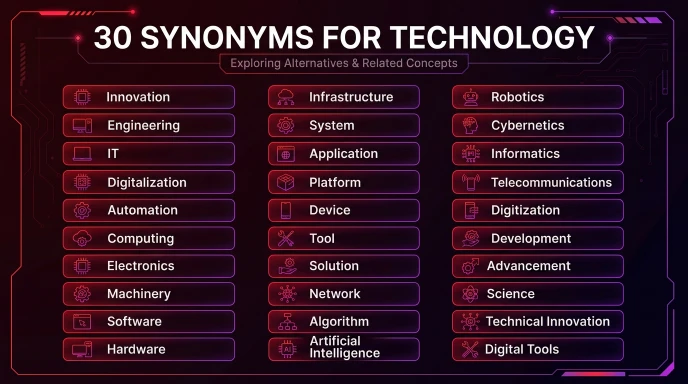
The word technology means the use of scientific knowledge, tools, and methods to solve problems and make life easier.
Imagine a student using a laptop to complete homework, search for information, and attend online classes. These digital tools are examples of technology.
The word is commonly used because modern life depends on computers, machines, the internet, and new inventions.
Learning synonyms for technology helps English learners and content writers improve their vocabulary and describe different types of tools and systems more clearly.
Some synonyms focus on machines, while others describe scientific methods, digital systems, or new inventions.
This article explains the meaning of technology and its synonyms with examples, grammar details, pronunciation, history, word formation, and semantic categories. Understanding these differences helps learners choose accurate words for different topics and writing styles.
Meaning of Technology
Definition
Technology (Noun):
The use of scientific knowledge, tools, machines, and systems to solve problems and improve human life.
Examples
- Modern technology helps people communicate faster.
- The company uses new technology to improve its services.
Connotative Meaning
(Connotation means the emotional feeling or idea connected with a word beyond its basic dictionary meaning.)
- Positive tone: Suggests progress, innovation, improvement, convenience, and creativity.
- Negative tone: Can suggest dependence, privacy problems, job loss, or harmful effects.
- Neutral tone: Simply refers to tools, systems, or methods created using knowledge.
Etymology
- The word technology comes from the Greek word technologia, meaning “systematic treatment of an art or skill.”
- It is formed from Greek techne, meaning “art, craft, or skill,” and logos, meaning “study or knowledge.”
- The original meaning was related to the study of skills and practical knowledge.
Short History
- Old English (450–1100):
The word technology was not used in Old English. People used words related to crafts, tools, and skills. - Middle English (1100–1500):
English adopted many Greek and Latin words through education and science. The idea of technology became connected with practical skills. - Modern English (1500–Present):
Technology developed into a word for machines, inventions, digital systems, and scientific applications. Today it is strongly connected with computers, the internet, and innovation.
Pronunciation (US & UK – IPA)
US: /tekˈnɑːlədʒi/
UK: /tekˈnɒlədʒi/
Syllables
tech-nol-o-gy
Affixation Pattern of Technology
- Root: techne (Greek: art, skill, craft)
- Prefix: None
- Suffix: -logy (study or knowledge)
Word Formation of Technology
- Technology (noun): the use of scientific knowledge and tools.
- Technological (adjective): related to technology.
- Technologically (adverb): in a technological way.
- Technologist (noun): a person who works with technology.
- Technologies (plural noun): different types of technology.
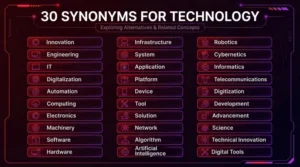
Synonyms of Technology
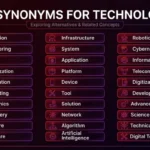
1. Innovation (Noun)
US IPA: /ˌɪnəˈveɪʃən/ | UK IPA: /ˌɪnəˈveɪʃən/
Meaning: A new idea, method, or invention that improves something.
Examples:
- The company created an innovation in medical equipment.
- Innovation helps businesses grow.
2. Advancement (Noun)
US IPA: /ədˈvænsmənt/ | UK IPA: /ədˈvɑːnsmənt/
Meaning: A development that improves knowledge, skills, or technology.
Examples:
- Scientific advancements changed modern medicine.
- The advancement of computers has changed communication.
3. Invention (Noun)
US IPA: /ɪnˈvenʃən/ | UK IPA: /ɪnˈvenʃən/
Meaning: A new device, idea, or process created by people.
Examples:
- The telephone was an important invention.
- His invention made daily tasks easier.
4. Machinery (Noun)
US IPA: /məˈʃiːnəri/ | UK IPA: /məˈʃiːnəri/
Meaning: Machines used for a particular purpose.
Examples:
- The factory uses modern machinery.
- Heavy machinery helps workers build roads.
5. Equipment (Noun)
US IPA: /ɪˈkwɪpmənt/ | UK IPA: /ɪˈkwɪpmənt/
Meaning: Tools or machines needed for a specific activity.
Examples:
- The laboratory has advanced equipment.
- Sports equipment helps athletes perform better.
6. Tool (Noun)
US IPA: /tuːl/ | UK IPA: /tuːl/
Meaning: An object or system used to complete a task.
Examples:
- A computer is a useful learning tool.
- This software is a powerful tool for designers.
7. Device (Noun)
US IPA: /dɪˈvaɪs/ | UK IPA: /dɪˈvaɪs/
Meaning: A machine or electronic object made for a purpose.
Examples:
- A smartphone is a popular technology device.
- The device connects to the internet.
8. System (Noun)
US IPA: /ˈsɪstəm/ | UK IPA: /ˈsɪstəm/
Meaning: A group of connected parts working together.
Examples:
- The company created a new computer system.
- The security system protects the building.
9. Application (Noun)
US IPA: /ˌæplɪˈkeɪʃən/ | UK IPA: /ˌæplɪˈkeɪʃən/
Meaning: The practical use of knowledge or technology.
Examples:
- The application of AI is growing quickly.
- Scientists study the application of new methods.
10. Engineering (Noun)
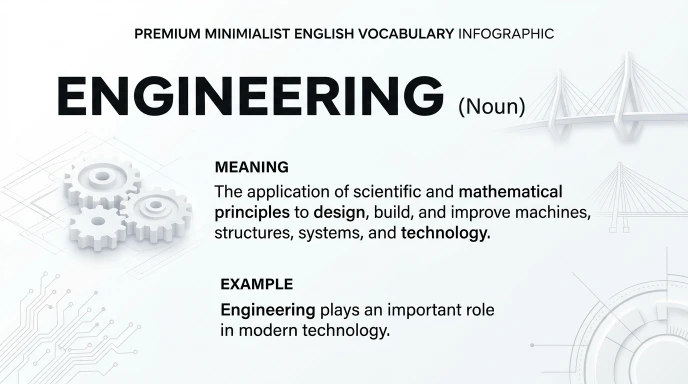
US IPA: /ˌendʒəˈnɪrɪŋ/ | UK IPA: /ˌendʒɪˈnɪərɪŋ/
Meaning: The use of science and mathematics to design and create solutions.
Examples:
- Engineering helps create safer buildings.
- She studies computer engineering.
11. Science (Noun)
US IPA: /ˈsaɪəns/ | UK IPA: /ˈsaɪəns/
Meaning: Knowledge gained through study and experiments about the natural world.
Examples:
- Science helps develop new technologies.
- Modern science improves human life.
12. Method (Noun)
US IPA: /ˈmeθəd/ | UK IPA: /ˈmeθəd/
Meaning: A planned way of doing something.
Examples:
- The scientist developed a new method.
- This teaching method uses technology.
13. Technique (Noun)
US IPA: /tekˈniːk/ | UK IPA: /tekˈniːk/
Meaning: A skillful way of completing a task.
Examples:
- The engineer used a new technique.
- This technique improves computer performance.
14. Process (Noun)
US IPA: /ˈprɑːses/ | UK IPA: /ˈprəʊses/
Meaning: A series of actions used to produce a result.
Examples:
- The manufacturing process uses advanced machines.
- Technology improves the production process.
15. Digital System (Noun)
US IPA: /ˈdɪdʒɪtəl ˈsɪstəm/ | UK IPA: /ˈdɪdʒɪtəl ˈsɪstəm/
Meaning: A system that uses digital information and electronic signals.
Examples:
- The school uses a digital system for online learning.
- Digital systems make communication easier.
16. Software (Noun)
US IPA: /ˈsɔːftwer/ | UK IPA: /ˈsɒftweə/
Meaning: Computer programs that control or perform tasks.
Examples:
- The company created new software for customers.
- This software helps students learn.
17. Hardware (Noun)
US IPA: /ˈhɑːrdwer/ | UK IPA: /ˈhɑːdweə/
Meaning: The physical parts of a computer or electronic device.
Examples:
- The technician repaired the computer hardware.
- New hardware improved the system’s speed.
18. Automation (Noun)
US IPA: /ˌɔːtəˈmeɪʃən/ | UK IPA: /ˌɔːtəˈmeɪʃən/
Meaning: The use of machines to complete tasks automatically.
Examples:
- Automation makes factories more efficient.
- Many industries use automation today.
19. Artificial Intelligence (Noun)
US IPA: /ˌɑːrtɪˈfɪʃəl ɪnˈtelɪdʒəns/ | UK IPA: /ˌɑːtɪˈfɪʃəl ɪnˈtelɪdʒəns/
Meaning: Computer systems that can perform tasks requiring human intelligence.
Examples:
- Artificial intelligence helps analyze data.
- Many companies use artificial intelligence tools.
20. Digitalization (Noun)
US IPA: /ˌdɪdʒɪtəlaɪˈzeɪʃən/ | UK IPA: /ˌdɪdʒɪtaɪˈzeɪʃən/
Meaning: The process of changing information into digital form.
Examples:
- Digitalization changed how businesses work.
- The library started a digitalization project.
21. Mechanism (Noun)
US IPA: /ˈmekənɪzəm/ | UK IPA: /ˈmekənɪzəm/
Meaning: A system or part that makes something work.
Examples:
- The machine has a simple mechanism.
- Engineers studied the mechanism carefully.
22. Infrastructure (Noun)
US IPA: /ˈɪnfrəˌstrʌktʃər/ | UK IPA: /ˈɪnfrəˌstrʌktʃə/
Meaning: Basic systems and structures needed for technology to work.
Examples:
- Internet infrastructure connects millions of people.
- Good infrastructure supports technological growth.
23. Network (Noun)
US IPA: /ˈnetwɜːrk/ | UK IPA: /ˈnetwɜːk/
Meaning: A connected group of computers or systems.
Examples:
- The office uses a secure network.
- The network allows fast communication.
24. Platform (Noun)
US IPA: /ˈplætfɔːrm/ | UK IPA: /ˈplætfɔːm/
Meaning: A digital service or system that allows activities online.
Examples:
- Students use an online learning platform.
- The platform connects buyers and sellers.
25. Software Solution (Noun)
US IPA: /ˈsɔːftwer səˈluːʃən/ | UK IPA: /ˈsɒftweə səˈluːʃən/
Meaning: A computer program designed to solve a problem.
Examples:
- The company created a software solution for businesses.
- This software solution saves time.
26. Gadget (Noun)
US IPA: /ˈɡædʒɪt/ | UK IPA: /ˈɡædʒɪt/
Meaning: A small electronic device with a useful function.
Examples:
- He bought a new technology gadget.
- Smart watches are popular gadgets.
27. Instrument (Noun)
US IPA: /ˈɪnstrəmənt/ | UK IPA: /ˈɪnstrəmənt/
Meaning: A tool used for scientific or practical purposes.
Examples:
- Scientists use special instruments for research.
- The instrument measures temperature.
28. Creation (Noun)
US IPA: /kriˈeɪʃən/ | UK IPA: /kriˈeɪʃən/
Meaning: Something made through skill, knowledge, or imagination.
Examples:
- The invention was a remarkable creation.
- Technology is based on human creations.
29. Development (Noun)
US IPA: /dɪˈveləpmənt/ | UK IPA: /dɪˈveləpmənt/
Meaning: The process of creating or improving something.
Examples:
- Technology development changes society.
- The development of new devices takes time.
30. Modernization (Noun)
US IPA: /ˌmɑːdərnəˈzeɪʃən/ | UK IPA: /ˌmɒdənaɪˈzeɪʃən/
Meaning: The process of making something more modern by using new technology.
Examples:
- Modernization improved the city’s services.
- The company invested in modernization.
Prototype Meaning
The most typical meaning of technology is the use of modern tools, machines, and digital systems to solve problems and improve daily life.
When people hear the word technology, they usually imagine computers, smartphones, the internet, artificial intelligence, and other modern inventions. The central idea is the practical use of knowledge to create useful solutions.
Prototype Categorization
- Innovation and creation synonyms: innovation, invention, creation, development, modernization.
These words describe new ideas, discoveries, and improvements. - Machine and equipment synonyms: machinery, equipment, device, gadget, instrument.
These words describe physical objects used for practical purposes. - Digital technology synonyms: software, hardware, digital system, network, platform, artificial intelligence.
These words describe computer-based systems and online tools. - Scientific and skill-based synonyms: science, engineering, method, technique, process.
These words focus on knowledge, skills, and ways of creating solutions. - Automation and system-based synonyms: automation, mechanism, infrastructure, system.
These words describe organized structures that help technology function.
Categorizing synonyms helps writers select the best word for each context. For example, device is useful for a physical object, while software is better for computer programs. Choosing the correct synonym makes technical writing clearer, more accurate, and easier to understand.
Part 3 will continue with:
- Antonyms of technology
- Short Questions and Answers
- Conclusion
- Meta Description
Antonyms of Technology
- Tradition (Noun): A practice, belief, or method that comes from the past instead of modern technological development.
- Nature (Noun): The natural world that exists without human-made tools or systems.
- Manual Labor (Noun): Work completed mainly by human physical effort instead of machines.
- Simplicity (Noun): A state of being basic and free from complex systems or advanced tools.
- Obsolete (Adjective): No longer useful because newer technology has replaced it.
- Outdated (Adjective): Old-fashioned and not suitable for current needs.
- Nontechnical (Adjective): Not related to science, engineering, or technological systems.
Short Questions and Answers
- What does technology mean?
Technology means the use of scientific knowledge, tools, machines, and systems to solve problems and improve human life. - When should technology be used?
Use technology when discussing computers, machines, digital tools, inventions, scientific systems, or methods created to improve tasks and processes. - Is technology positive or negative?
Technology is generally neutral. It can be positive when it improves education, healthcare, communication, and daily life. It can be negative when it causes problems such as security risks, privacy concerns, or too much dependence. - How is technology different from similar words?
Technology is a broad term for tools, systems, and methods created through knowledge. Innovation focuses on new ideas, invention focuses on creating something new, and machinery refers mainly to physical machines.
Conclusion
Learning the word technology and its synonyms helps English learners build a wider vocabulary and communicate modern ideas more effectively.
These words help describe digital tools, machines, inventions, scientific methods, and new developments with greater accuracy.
Understanding pronunciation, meaning, history, and context allows learners to choose the most suitable word for different situations.
Using a variety of synonyms reduces repetition and makes writing clearer and more engaging. A strong technology vocabulary is useful for students, professionals, and content writers because technology affects almost every part of modern life.
Daily vocabulary practice through reading, writing, and conversation can improve English confidence and strengthen communication skills.
Read more about!
- 30 Synonyms for Annoying to Boost Your Vocabulary
- Synonyms for Shown: 30 Words to Boost Vocabulary
- Synonyms for Problems: 30 Words With Meanings & Examples

I am an American author, and I write books about power, strategy, and human behavior. My writing style is simple but deep, and I try to explain how people think and act in real-life situations.
I studied classical studies, and before becoming a writer, I worked in different fields which helped me understand people and life better.
My most famous books include The 48 Laws of Power, The Art of Seduction, and Mastery. These books are widely read by business people, leaders, and students around the world.