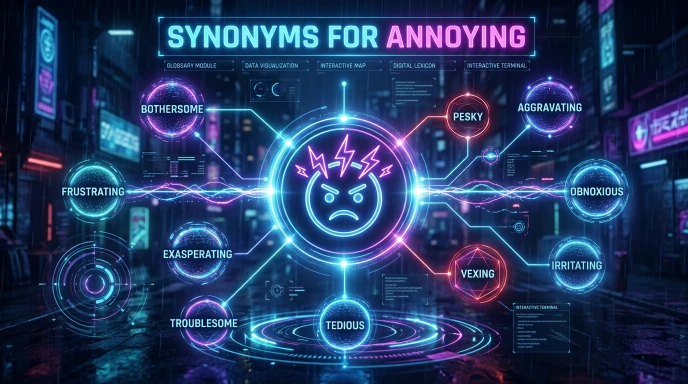
The word annoying means something or someone that causes irritation, discomfort, or mild anger.
Imagine a student trying to study for an important exam while a loud phone notification keeps ringing every few minutes. That repeated sound feels annoying because it interrupts focus and creates frustration.
The word annoying is commonly used in daily English because people often need to describe small problems, unpleasant habits, or actions that disturb them.
Learning synonyms for annoying helps English learners express feelings more accurately and helps content writers create stronger, more varied writing.
This article explains the meaning of annoying and explores its synonyms with examples, grammar details, pronunciation, word history, and semantic categories. Understanding these words will help learners choose the right expression for different situations and improve overall English communication.
Meaning of Annoying
Definition
Annoying (adjective):
Causing irritation, discomfort, frustration, or mild anger because something is unpleasant, repeated, or disturbing.
Examples
- The loud music from the neighbor’s house is very annoying.
- His constant questions became annoying during the meeting.
Connotative Meaning
Connotation (the feeling or idea connected with a word beyond its exact dictionary meaning):
- Positive tone:
The word annoying usually does not have a positive meaning, but it may be used playfully among friends.
Example: My little brother is annoying, but I still love spending time with him. - Negative tone:
It often shows irritation, frustration, or dislike.
Example: The annoying noise made it hard to concentrate. - Neutral tone:
It can simply describe something that causes a small problem without strong emotion.
Example: The app has an annoying error message.
Etymology of Annoying
- The word annoying comes from the verb annoy, which came from the Old French word anoier.
- Old French anoier meant “to harm, trouble, or vex.”
- It developed from the Latin expression in odio, meaning “in hatred” or “causing dislike.”
Short History of Annoying
- Old English (450–1100):
The exact word annoying was not used in Old English. Similar ideas were expressed through words meaning trouble, harm, or disturbance. - Middle English (1100–1500):
The French influence after the Norman Conquest introduced forms like anoien, meaning “to trouble or irritate.” - Modern English (1500–Present):
The word developed into annoy and later annoying, becoming a common adjective used for irritating people, sounds, actions, and situations.
Pronunciation of Annoying (US & UK – IPA)
US: /əˈnɔɪ.ɪŋ/
UK: /əˈnɔɪ.ɪŋ/
Syllables
an-noy-ing
Affixation Pattern of Annoying
Root:
- noy / annoy related to trouble, irritation, or discomfort.
Prefix:
- an- originally connected with the idea of causing or bringing about an action.
Suffix:
- -ing shows an ongoing action or creates an adjective describing something that causes an effect.
Word Formation of Annoying
- Annoy (verb): to irritate or disturb someone.
- Annoyed (adjective): feeling irritated.
- Annoying (adjective): causing irritation.
- Annoyance (noun): a person, thing, or situation that causes irritation.
Synonyms of Annoying
1. Irritating (Adjective)
US IPA: /ˈɪr.ə.teɪ.tɪŋ/
UK IPA: /ˈɪr.ɪ.teɪ.tɪŋ/
Meaning:
Causing someone to feel bothered, impatient, or uncomfortable.
Examples:
- The irritating sound of the alarm woke everyone up.
- His irritating habit of interrupting people upset his coworkers.
2. Bothering (Adjective)
US IPA: /ˈbɑː.ðɚ.ɪŋ/
UK IPA: /ˈbɒð.ər.ɪŋ/
Meaning:
Causing worry, discomfort, or inconvenience.
Examples:
- The bright light was bothering me while I was reading.
- She stopped the bothering noise by closing the window.
3. Disturbing (Adjective)
US IPA: /dɪˈstɝː.bɪŋ/
UK IPA: /dɪˈstɜː.bɪŋ/
Meaning:
Causing interruption, discomfort, or concern.
Examples:
- The disturbing noise outside kept him awake.
- The disturbing news shocked many people.
4. Irrksome (Adjective)
US IPA: /ˈɝːk.səm/
UK IPA: /ˈɜːk.səm/
Meaning:
Annoying because something is repetitive or unpleasant.
Examples:
- Filling out endless forms can be irksome.
- The irksome delay made passengers frustrated.
5. Troublesome (Adjective)
US IPA: /ˈtrʌb.əl.səm/
UK IPA: /ˈtrʌb.əl.səm/
Meaning:
Creating problems, difficulties, or inconvenience.
Examples:
- The troublesome machine stopped working again.
- He had a troublesome experience during his trip.
6. Frustrating (Adjective)
US IPA: /ˈfrʌs.treɪ.tɪŋ/
UK IPA: /frʌˈstreɪ.tɪŋ/
Meaning:
Making someone feel upset because progress is difficult.
Examples:
- Learning a new language can be frustrating at times.
- The slow internet connection was frustrating.
7. Exasperating (Adjective)
US IPA: /ɪɡˈzæs.pə.reɪ.tɪŋ/
UK IPA: /ɪɡˈzɑː.spə.reɪ.tɪŋ/
Meaning:
Extremely annoying and causing strong frustration.
Examples:
- His repeated mistakes were exasperating.
- The long waiting time became exasperating for customers.
8. Irritative (Adjective)
US IPA: /ˈɪr.ə.teɪ.tɪv/
UK IPA: /ˈɪr.ɪ.tə.tɪv/
Meaning:
Causing irritation or discomfort.
Examples:
- The chemical smell was irritative to my nose.
- The irritative comments created tension in the group.
9. Pesky (Adjective)
US IPA: /ˈpes.ki/
UK IPA: /ˈpes.ki/
Meaning:
Small but annoying or difficult to deal with.
Examples:
- A pesky fly kept landing on my food.
- He solved the pesky computer problem quickly.
10. Nuisance (Noun/Adjective)
US IPA: /ˈnuː.səns/
UK IPA: /ˈnjuː.səns/
Meaning:
A person, thing, or situation that causes trouble or annoyance.
Examples:
- The construction noise is a real nuisance.
- The broken elevator became a nuisance for residents.
11. Aggravating (Adjective)
US IPA: /ˈæɡ.rə.veɪ.tɪŋ/
UK IPA: /ˈæɡ.rə.veɪ.tɪŋ/
Meaning:
Causing someone to feel more irritated, angry, or frustrated.
Examples:
- The aggravating traffic made me late for work.
- His aggravating behavior disturbed everyone in the room.
12. Vexing (Adjective)
US IPA: /ˈvek.sɪŋ/
UK IPA: /ˈvek.sɪŋ/
Meaning:
Causing worry, confusion, or irritation.
Examples:
- The missing documents created a vexing problem.
- She faced a vexing question during the interview.
13. Tedious (Adjective)
US IPA: /ˈtiː.di.əs/
UK IPA: /ˈtiː.di.əs/
Meaning:
Boring and annoying because it takes too much time or effort.
Examples:
- Copying hundreds of files is a tedious task.
- The tedious meeting lasted for three hours.
14. Tiresome (Adjective)
US IPA: /ˈtaɪr.səm/
UK IPA: /ˈtaɪə.səm/
Meaning:
Making someone feel tired, bored, or annoyed.
Examples:
- His tiresome complaints affected the team’s mood.
- The tiresome journey lasted all day.
15. Wearisome (Adjective)
US IPA: /ˈwɪr.i.səm/
UK IPA: /ˈwɪə.ri.səm/
Meaning:
Causing tiredness or boredom because something continues for too long.
Examples:
- The wearisome discussion repeated the same points.
- The workers were tired after the wearisome process.
16. Pesky (Adjective)
US IPA: /ˈpes.ki/
UK IPA: /ˈpes.ki/
Meaning:
Slightly annoying and difficult to remove or solve.
Examples:
- A pesky mosquito kept flying around my room.
- He fixed the pesky problem with his computer.
17. Bothersome (Adjective)
US IPA: /ˈbɑː.ðɚ.səm/
UK IPA: /ˈbɒð.ə.səm/
Meaning:
Causing trouble, inconvenience, or irritation.
Examples:
- The bothersome noise stopped me from sleeping.
- Carrying a heavy bag can become bothersome.
18. Obnoxious (Adjective)
US IPA: /əbˈnɑːk.ʃəs/
UK IPA: /əbˈnɒk.ʃəs/
Meaning:
Extremely unpleasant because of rude or offensive behavior.
Examples:
- His obnoxious attitude annoyed the entire group.
- The obnoxious customer shouted at the staff.
19. Offensive (Adjective)
US IPA: /əˈfen.sɪv/
UK IPA: /əˈfen.sɪv/
Meaning:
Causing anger, dislike, or hurt because it is disrespectful.
Examples:
- The offensive comment upset many people.
- Some people found the joke offensive.
20. Unpleasant (Adjective)
US IPA: /ʌnˈplez.ənt/
UK IPA: /ʌnˈplez.ənt/
Meaning:
Not enjoyable or comfortable.
Examples:
- The unpleasant smell came from the kitchen.
- It was an unpleasant experience for everyone.
21. Agitating (Adjective)
US IPA: /ˈædʒ.ə.teɪ.tɪŋ/
UK IPA: /ˈædʒ.ɪ.teɪ.tɪŋ/
Meaning:
Making someone feel nervous, upset, or disturbed.
Examples:
- The agitating noise made it hard to relax.
- His agitating questions slowed the discussion.
22. Intrusive (Adjective)
US IPA: /ɪnˈtruː.sɪv/
UK IPA: /ɪnˈtruː.sɪv/
Meaning:
Entering someone’s space or activities in an unwanted way.
Examples:
- The intrusive advertisements appeared every minute.
- She disliked the intrusive personal questions.
23. Pesky (Adjective)
US IPA: /ˈpes.ki/
UK IPA: /ˈpes.ki/
Meaning:
Small but annoying and hard to ignore.
Examples:
- The pesky little problem took hours to solve.
- A pesky insect disturbed my sleep.
24. Disruptive (Adjective)
US IPA: /dɪˈrʌp.tɪv/
UK IPA: /dɪˈrʌp.tɪv/
Meaning:
Causing interruption or preventing normal activity.
Examples:
- The disruptive student interrupted the class.
- The disruptive sound affected the performance.
25. Distressing (Adjective)
US IPA: /dɪˈstres.ɪŋ/
UK IPA: /dɪˈstres.ɪŋ/
Meaning:
Causing sadness, worry, or emotional discomfort.
Examples:
- The distressing news made everyone quiet.
- The distressing situation required quick action.
26. Harassing (Adjective)
US IPA: /həˈræs.ɪŋ/
UK IPA: /ˈhær.ə.sɪŋ/
Meaning:
Causing repeated trouble, pressure, or discomfort.
Examples:
- The harassing messages continued for several days.
- The employee reported harassing behavior.
27. Irritating (Adjective)
US IPA: /ˈɪr.ə.teɪ.tɪŋ/
UK IPA: /ˈɪr.ɪ.teɪ.tɪŋ/
Meaning:
Making someone feel annoyed or impatient.
Examples:
- The irritating alarm rang every morning.
- His irritating comments distracted the team.
28. Maddening (Adjective)
US IPA: /ˈmæd.ən.ɪŋ/
UK IPA: /ˈmæd.ən.ɪŋ/
Meaning:
Extremely annoying and difficult to tolerate.
Examples:
- The slow computer speed was maddening.
- Waiting without information was maddening.
29. Infuriating (Adjective)
US IPA: /ɪnˈfjʊr.i.eɪ.tɪŋ/
UK IPA: /ɪnˈfjʊə.ri.eɪ.tɪŋ/
Meaning:
Causing intense anger or extreme annoyance.
Examples:
- The unfair decision was infuriating.
- His dishonest actions were infuriating.
30. Exasperating (Adjective)
US IPA: /ɪɡˈzæs.pə.reɪ.tɪŋ/
UK IPA: /ɪɡˈzɑː.spə.reɪ.tɪŋ/
Meaning:
Extremely frustrating and difficult to handle.
Examples:
- The repeated delays were exasperating.
- Her exasperating questions slowed the project.
Prototype Meaning of Annoying
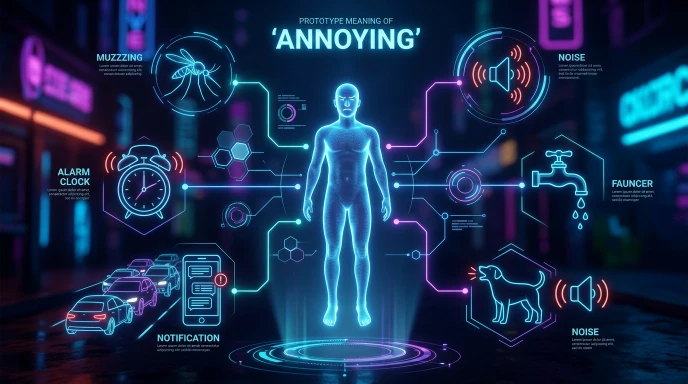
The most typical meaning of annoying is something that causes a person to feel irritated, uncomfortable, or slightly angry.
When people hear the word annoying, they usually imagine common daily problems such as a loud noise, repeated interruptions, unwanted messages, or a person’s irritating habit.
The word usually describes small but repeated actions or situations that disturb peace, comfort, or concentration.
Prototype Categorization
Synonyms of annoying can be grouped into different categories based on their level of intensity and situation. This categorization helps writers select the most suitable word instead of repeating the same term.
- Mild Annoyance Category:
These words describe small problems that cause slight irritation but are not serious.
Examples: pesky, bothersome, tiresome, tedious, irritating
These are useful for everyday conversations and casual writing. - Strong Irritation Category:
These words show a higher level of frustration or anger.
Examples: aggravating, exasperating, infuriating, maddening, vexing
These words are useful when describing intense emotional reactions. - Problem-Causing Category:
These words describe things that create difficulty, interruption, or inconvenience.
Examples: troublesome, disruptive, intrusive, bothersome
These are common in professional and academic writing. - Rude or Offensive Behavior Category:
These words describe annoying people because of unpleasant attitudes or actions.
Examples: obnoxious, offensive, harassing
These words are useful when discussing social behavior. - Emotional Discomfort Category:
These words describe situations that create worry, sadness, or stress.
Examples: distressing, disturbing, unpleasant
These are often used in formal writing and serious contexts.
Choosing the correct synonym improves writing because each word carries a different emotional strength. A writer can create clearer messages by matching the synonym with the exact situation.
Antonyms of Annoying
1. Pleasant (Adjective)
Meaning:
Something enjoyable, comfortable, or satisfying.
- The pleasant weather made our trip enjoyable.
- She has a pleasant personality.
2. Enjoyable (Adjective)
Meaning:
Something that gives happiness or pleasure.
- The movie was enjoyable for the whole family.
- We had an enjoyable conversation.
3. Calm (Adjective)
Meaning:
Free from disturbance, stress, or excitement.
- The calm environment helped me study.
- She remained calm during the problem.
4. Peaceful (Adjective)
Meaning:
Quiet, relaxing, and free from trouble.
- The peaceful garden was a perfect place to rest.
- They enjoyed a peaceful evening together.
5. Helpful (Adjective)
Meaning:
Providing support or making something easier.
- The helpful teacher explained the lesson clearly.
- This guide is helpful for beginners.
6. Polite (Adjective)
Meaning:
Showing good manners and respect toward others.
- The polite customer thanked the staff.
- He gave a polite answer.
7. Friendly (Adjective)
Meaning:
Kind, pleasant, and easy to communicate with.
- The friendly neighbor welcomed us.
- She is friendly with everyone.
Short Questions and Answers
What does annoying mean?
- Annoying means causing irritation, discomfort, or frustration.
- It describes people, actions, sounds, or situations that bother someone.
When should annoying be used?
- Use annoying when something creates mild irritation or disturbance.
- It is common in everyday conversations.
- It can describe habits, noises, problems, or behaviors.
Examples:
- The annoying alarm woke me up.
- His annoying habit distracted the team.
Is annoying positive or negative?
- Annoying usually has a negative meaning because it shows irritation.
- However, it can sometimes be used in a playful or friendly way.
Example:
- Negative: The annoying noise disturbed my work.
- Playful: My annoying little brother always makes me laugh.
How is annoying different from similar words?
- Annoying describes something that causes irritation.
- Irritating is very similar but often focuses on a repeated action or behavior.
- Frustrating describes something that blocks progress or creates difficulty.
- Infuriating is much stronger and shows extreme anger.
- Bothersome is usually milder and describes a small inconvenience.
Conclusion
Learning the word annoying and its synonyms helps English learners build a stronger vocabulary and communicate feelings more clearly.
Instead of using the same word repeatedly, learners can choose accurate alternatives such as irritating, frustrating, bothersome, or exasperating depending on the situation. Understanding pronunciation, meaning, tone, history, and word usage makes vocabulary learning easier and more practical.
These synonyms help writers create better articles, stories, conversations, and professional content. Regular vocabulary practice improves speaking confidence, strengthens writing skills, and helps learners express ideas with greater accuracy.
Reading, writing, and using new words daily is one of the best ways to develop natural English communication skills.
Explore more about!
- 30 Powerful Synonyms for First
- Synonyms for Grow: 30+ Best Words to Use in English
- Synonyms for Used in English: 30 Words You Should Know

I am a linguist with 17 years of experience in English language teaching, including postgraduate-level instruction. My expertise includes English grammar, and I contribute as a content and blog writer, producing scholarly and educational language resources.