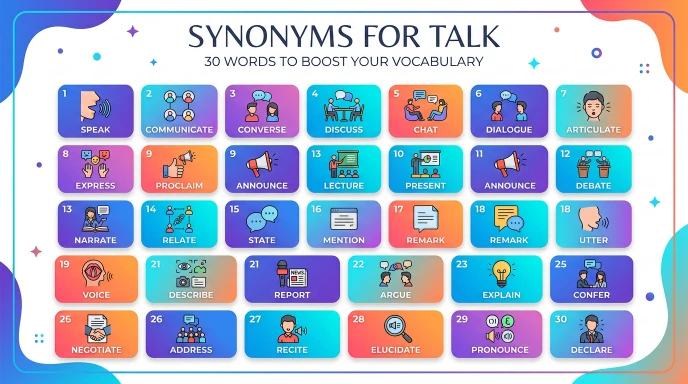
The word “talk” means to speak with someone or share thoughts, ideas, and information through words.
For example, friends talk after school to share their experiences, or a teacher talks to students to explain a lesson.
The word is commonly used in everyday English because communication is an important part of human life. However, repeating the same word often can make speaking and writing less interesting.
Learning synonyms for talk helps English learners and content writers express ideas more clearly and choose words that match different situations.
This article explains the meaning of talk and explores its synonyms with examples, grammar, history, pronunciation, word formation, and semantic categories. Understanding these related words helps learners improve vocabulary, writing quality, and speaking confidence.
Meaning of Talk
Definition
Talk (Verb/Noun):
The word talk means to communicate by speaking, share information, or have a conversation with someone.
Examples
- She talks with her friends every evening.
- The teacher talked about the importance of education.
Connotative Meaning
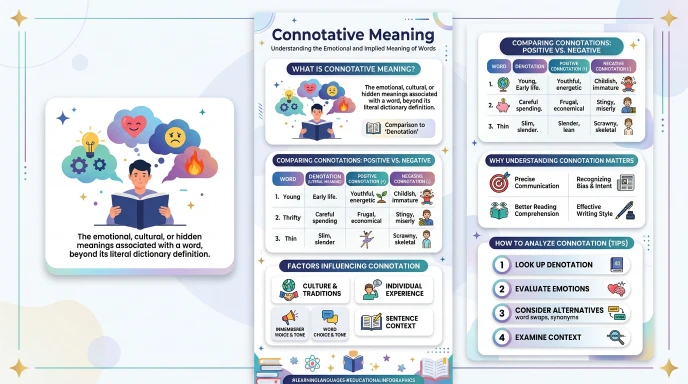
Connotation (the feelings, emotions, or ideas connected with a word beyond its basic meaning):
- Positive tone:
Talk can suggest friendly communication, sharing, and connection.
Example: They talked about their future plans happily. - Negative tone:
Talk can suggest unnecessary discussion, complaints, or rumors.
Example: There was too much talk about the problem. - Neutral tone:
Talk can simply describe normal communication.
Example: We talked about the weather.
Etymology
- The word talk comes from Middle English talken, meaning “to speak, converse, or tell stories.”
- It may be connected to Old English words related to telling, discussing, and communicating.
Short History of “Talk”
- Old English (450–1100):
Old English used words such as sprecan (to speak) and secgan (to say) for communication. The modern word talk was not common during this period. - Middle English (1100–1500):
The word talken appeared and developed the meaning of speaking, chatting, and sharing information. - Modern English (1500–Present):
Talk became one of the most common English communication words. Today, it is used for conversations, discussions, speeches, and informal communication.
Pronunciation (US & UK – IPA)
US: /tɔːk/
UK: /tɔːk/
Syllables
talk
Affixation Pattern of Talk
Root:
- talk meaning “to speak or communicate”
Prefix:
- No prefix
Suffix:
- No suffix in the base word
Word Formation of “Talk”
- talk (verb) to communicate by speaking
- talk (noun) a conversation or discussion
- talker (noun) a person who talks
- talking (noun/adjective/verb form) the act of speaking
- talkative (adjective) liking to talk a lot
- talkative (noun form: talkativeness) the quality of speaking often
- outtalk (verb) to talk more than someone else
- small talk (noun phrase) casual conversation
Synonyms of Talk
1. Speak (Verb)
US IPA: /spiːk/
UK IPA: /spiːk/
Meaning: To use words to communicate thoughts or ideas.
Examples:
- She speaks English very well.
- He spoke about his travel experiences.
2. Say (Verb)
US IPA: /seɪ/
UK IPA: /seɪ/
Meaning: To express words, thoughts, or information.
Examples:
- She said hello to her teacher.
- He said that he was feeling tired.
3. Tell (Verb)
US IPA: /tel/
UK IPA: /tel/
Meaning: To give information or communicate something to someone.
Examples:
- Please tell me the truth.
- She told her friend an interesting story.
4. Communicate (Verb)
US IPA: /kəˈmjuːnəˌkeɪt/
UK IPA: /kəˈmjuːnɪkeɪt/
Meaning: To share information, ideas, or feelings with others.
Examples:
- Good leaders communicate clearly.
- They communicate through emails and meetings.
5. Converse (Verb)
US IPA: /kənˈvɝːs/
UK IPA: /kənˈvɜːs/
Meaning: To have a formal or informal conversation.
Examples:
- They conversed about their future plans.
- She enjoys conversing with new people.
6. Discuss (Verb)
US IPA: /dɪˈskʌs/
UK IPA: /dɪˈskʌs/
Meaning: To talk about a topic in detail.
Examples:
- The students discussed the new lesson.
- They discussed different solutions to the problem.
7. Explain (Verb)
US IPA: /ɪkˈspleɪn/
UK IPA: /ɪkˈspleɪn/
Meaning: To make an idea or information clear through words.
Examples:
- The teacher explained the grammar rule.
- She explained how the machine works.
8. Mention (Verb)
US IPA: /ˈmenʃən/
UK IPA: /ˈmenʃən/
Meaning: To speak about something briefly.
Examples:
- He mentioned his new project.
- She mentioned an important point during the talk.
9. Describe (Verb)
US IPA: /dɪˈskraɪb/
UK IPA: /dɪˈskraɪb/
Meaning: To talk about something by giving details.
Examples:
- She described her hometown.
- He described the problem clearly.
10. Discuss (Verb)
US IPA: /dɪˈskʌs/
UK IPA: /dɪˈskʌs/
Meaning: To exchange ideas about a subject.
Examples:
- The team discussed the new plan.
- They discussed the issue during the meeting.
11. Chat (Verb/Noun)
US IPA: /tʃæt/
UK IPA: /tʃæt/
Meaning: To talk in a friendly and informal way.
Examples:
- I chatted with my neighbor yesterday.
- They had a short chat after class.
12. Converse (Verb)
US IPA: /kənˈvɝːs/
UK IPA: /kənˈvɜːs/
Meaning: To communicate through conversation.
Examples:
- The two friends conversed for hours.
- She likes to converse with people from different cultures.
13. Debate (Verb/Noun)
US IPA: /dɪˈbeɪt/
UK IPA: /dɪˈbeɪt/
Meaning: To talk about a topic while giving different opinions.
Examples:
- Students debated the environmental issue.
- The leaders had a debate about the policy.
14. Argue (Verb)
US IPA: /ˈɑːrɡjuː/
UK IPA: /ˈɑːɡjuː/
Meaning: To talk while expressing disagreement or strong opinions.
Examples:
- They argued about the best solution.
- She argued that education is important.
15. State (Verb)
US IPA: /steɪt/
UK IPA: /steɪt/
Meaning: To express something clearly and formally.
Examples:
- The report states the main findings.
- He stated his opinion during the meeting.
16. Announce (Verb)
US IPA: /əˈnaʊns/
UK IPA: /əˈnaʊns/
Meaning: To make information known publicly.
Examples:
- The company announced a new product.
- The teacher announced the exam date.
17. Report (Verb)
US IPA: /rɪˈpɔːrt/
UK IPA: /rɪˈpɔːt/
Meaning: To give information about an event, situation, or fact.
Examples:
- The journalist reported the news.
- She reported the problem to her manager.
18. Reveal (Verb)
US IPA: /rɪˈviːl/
UK IPA: /rɪˈviːl/
Meaning: To make information known that was hidden before.
Examples:
- He revealed the truth during the interview.
- The study revealed important results.
19. Express (Verb)
US IPA: /ɪkˈspres/
UK IPA: /ɪkˈspres/
Meaning: To communicate thoughts, feelings, or ideas.
Examples:
- She expressed her opinion clearly.
- He expressed his happiness through words.
20. Share (Verb)
US IPA: /ʃer/
UK IPA: /ʃeə/
Meaning: To tell or give information, ideas, or feelings to others.
Examples:
- She shared her experience with the group.
- He shared his thoughts about the book.
21. Narrate (Verb)
US IPA: /ˈnæreɪt/
UK IPA: /nəˈreɪt/
Meaning: To tell a story or describe events.
Examples:
- The author narrated his childhood memories.
- She narrated the story beautifully.
22. Inform (Verb)
US IPA: /ɪnˈfɔːrm/
UK IPA: /ɪnˈfɔːm/
Meaning: To give someone facts or knowledge.
Examples:
- Please inform me about the changes.
- The email informed customers about the update.
23. Address (Verb)
US IPA: /əˈdres/
UK IPA: /əˈdres/
Meaning: To speak to someone or deal with a topic.
Examples:
- The manager addressed the employees.
- She addressed the problem during the meeting.
24. Present (Verb)
US IPA: /prɪˈzent/
UK IPA: /prɪˈzent/
Meaning: To give information or ideas to an audience.
Examples:
- He presented his research findings.
- She presented the project to the team.
25. Lecture (Verb/Noun)
US IPA: /ˈlektʃər/
UK IPA: /ˈlektʃə/
Meaning: To give a formal talk to teach or explain something.
Examples:
- The professor lectured about history.
- She attended a lecture on science.
26. Discuss (Verb)
US IPA: /dɪˈskʌs/
UK IPA: /dɪˈskʌs/
Meaning: To exchange ideas about a subject.
Examples:
- They discussed the future of technology.
- We discussed the problem together.
27. Whisper (Verb/Noun)
US IPA: /ˈwɪspər/
UK IPA: /ˈwɪspə/
Meaning: To speak very quietly.
Examples:
- She whispered a secret to her friend.
- They whispered during the meeting.
28. Mention (Verb)
US IPA: /ˈmenʃən/
UK IPA: /ˈmenʃən/
Meaning: To refer to something briefly while speaking.
Examples:
- He mentioned his new job.
- She mentioned an interesting idea.
29. Consult (Verb)
US IPA: /kənˈsʌlt/
UK IPA: /kənˈsʌlt/
Meaning: To talk with someone to get advice or information.
Examples:
- She consulted a doctor about her health.
- They consulted experts before making a decision.
30. Negotiate (Verb)
US IPA: /nɪˈɡoʊʃieɪt/
UK IPA: /nɪˈɡəʊʃieɪt/
Meaning: To talk with others to reach an agreement.
Examples:
- The two companies negotiated a new deal.
- They negotiated the terms of the contract.
Prototype Meaning
The most typical meaning of “talk” is to communicate with another person by using spoken words.
When people hear the word talk, they usually imagine a conversation between friends, family members, teachers, or coworkers.
It can describe simple daily conversations, serious discussions, or formal communication. The word is broad and can be used in many social and professional situations.
Prototype Categorization
Synonyms of talk can be grouped into different categories. These categories help writers choose the best word based on purpose, audience, and situation.
- General communication category:
speak, say, tell, communicate, converse
These words describe normal speaking and sharing information. - Formal discussion category:
discuss, debate, present, lecture, negotiate
These words are useful for academic, business, and professional communication. - Information-sharing category:
inform, report, announce, reveal, state, mention
These words focus on giving facts or making information known. - Friendly conversation category:
chat, share, converse
These words describe relaxed and personal communication. - Emotional expression category:
express, narrate, describe
These words help describe sharing feelings, stories, or experiences.
Understanding these categories helps writers avoid repetition and select words that match the correct tone and context.
Antonyms of Talk
1. Silence (Noun/Verb)
Meaning: The absence of speech or the act of stopping communication.
- The room fell into silence after the announcement.
- She silenced her phone during the meeting.
2. Listen (Verb)
Meaning: To pay attention without speaking.
- Please listen carefully to the instructions.
- She listened to her teacher’s advice.
3. Ignore (Verb)
Meaning: To refuse to respond, notice, or communicate.
- He ignored the messages from his friend.
- She ignored the question during the discussion.
4. Hide (Verb)
Meaning: To keep information secret instead of sharing it.
- He hid the truth from his family.
- The company hid important details.
5. Conceal (Verb)
Meaning: To prevent something from being known or revealed.
- She concealed her feelings.
- They concealed the information from the public.
6. Suppress (Verb)
Meaning: To stop yourself from expressing thoughts or feelings.
- He suppressed his anger during the meeting.
- She suppressed her opinion to avoid conflict.
7. Withhold (Verb)
Meaning: To refuse to give or share information.
- The company withheld important details.
- He withheld his personal opinion.
Short Questions and Answers
What does “talk” mean?
- Talk means to communicate by speaking, sharing ideas, or having a conversation.
- It can describe casual conversations, formal discussions, or sharing information.
When should “talk” be used?
- Use talk when you describe normal communication between people.
- It is common in everyday English and can be used in both speaking and writing.
Examples:
- I need to talk to my friend.
- They talked about their plans.
Is “talk” positive or negative?
- Talk is usually neutral because it simply describes communication.
- It can have a positive meaning when it shows friendship, sharing, or understanding.
- It can have a negative meaning when it refers to complaints, rumors, or unnecessary discussion.
Examples:
- Positive: We talked about our future goals.
- Negative: There was too much talk about the problem.
- Neutral: They talked after school.
How is “talk” different from similar words?
- Talk vs. Speak:
Talk is often used for conversations, while speak can refer to the ability or act of using a language. - Talk vs. Discuss:
Talk is general, while discuss usually involves a detailed exchange of ideas. - Talk vs. Say:
Talk focuses on communication, while say focuses on the words someone expresses. - Talk vs. Tell:
Talk often involves two-way communication, while tell usually means giving information to someone.
Conclusion
Learning the word “talk” and its synonyms helps English learners improve their vocabulary and communicate with more confidence.
Although talk is a simple and common word, using alternatives such as communicate, discuss, express, announce, and negotiate makes speaking and writing more effective. Understanding the meanings, pronunciation, tone, and usage of these words helps learners choose the right expression for different situations.
Synonyms also help writers avoid repetition and create clearer, more engaging content. Regular vocabulary practice through reading, speaking, and writing activities builds stronger English skills.
By learning new words every day, learners can improve their communication ability and express their ideas more naturally.
Read more about!
- Synonyms for Meaningful:30 Easy Words to Learn
- Synonyms for White: 30 Simple Words to Learn Today
- 30 Best Synonyms for Crucial You Should Know

I am an American writer and speaker who focuses on habits, productivity, and self-improvement.
I study how small daily habits can create big changes in life. I try to write in a very simple and practical way so anyone can apply my ideas.
My most popular book is Atomic Habits, which is read around the world.