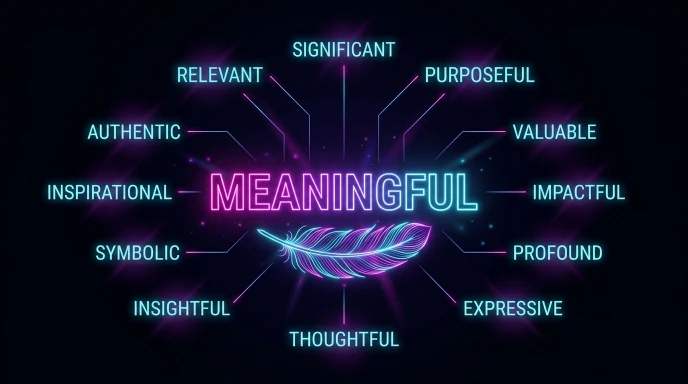
“Meaningful means having purpose, value, or importance; synonyms include significant, purposeful, worthwhile, valuable, profound, and impactful.”
Meaningful means having a special value, importance, or purpose. Imagine a student receiving a simple handwritten note from a teacher saying, “I believe in you.The note may be small, but it feels meaningful because it carries a deep message and emotion.
The word “meaningful” is commonly used because people often talk about experiences, relationships, actions, and ideas that have importance beyond their surface value.Learning synonyms for meaningful helps English learners and content writers express thoughts with more accuracy and variety.
A strong vocabulary allows writers to choose words that match the right feeling and situation. This article explains the meaning of meaningful and its synonyms with examples, grammar, history, pronunciation, and semantic categories to help learners communicate more effectively.
Meaning of Meaningful
Definition
Meaningful (adjective):
Having a clear purpose, deep value, or special importance.
Examples
- Her advice was meaningful because it helped me make an important decision.
- The friendship became meaningful over many years.
Connotative Meaning
(Connotation means the feelings, emotions, or ideas connected with a word beyond its direct dictionary meaning.)
- Positive tone: Suggests value, importance, purpose, love, or emotional connection.
- Negative tone: Can suggest something serious, heavy, or connected with difficult experiences.
- Neutral tone: Simply describes something that has meaning or importance.
Etymology
- Origin: The word “meaningful” comes from the English word meaning combined with the suffix -ful.
- Root source: “Meaning” comes from Old English mænan, meaning “to intend, tell, or signify.”
- Original idea: The word developed from the idea of expressing a thought, purpose, or message.
Short History
- Old English (450–1100): The root word came from Old English mænan, which meant “to intend” or “to have in mind.” Words connected with thoughts and intentions were common in daily speech.
- Middle English (1100–1500): The word “meaning” developed through changes in English influenced by French and Latin. People used it to describe ideas, messages, and purposes.
- Modern English (1500–Present): “Meaningful” became widely used to describe important experiences, relationships, communication, and personal values.
Pronunciation (US & UK – IPA)
US: /ˈmiːnɪŋfəl/
UK: /ˈmiːnɪŋfəl/
Syllables
mean-ing-ful
Affixation Pattern of Meaningful
- Root: mean (to represent an idea or purpose)
- Prefix: None
- Suffix: -ing, -ful
Word Formation of Meaningful
- Mean (verb): to have a particular idea or purpose
- Meaning (noun): the idea or message expressed by something
- Meaningful (adjective): having importance or value
- Meaningfully (adverb): in a way that shows importance
- Meaningfulness (noun): the quality of having meaning
Synonyms of Meaningful
1. Significant (Adjective)
US IPA: /sɪɡˈnɪfɪkənt/ | UK IPA: /sɪɡˈnɪfɪkənt/
Meaning:
Having great importance or influence.
Examples:
- The discovery was a significant moment in science.
- She made a significant contribution to the project.
2. Important (Adjective)
US IPA: /ɪmˈpɔːrtənt/ | UK IPA: /ɪmˈpɔːtənt/
Meaning:
Having high value or needing attention.
Examples:
- Education is important for personal growth.
- This meeting is important for our future plans.
3. Valuable (Adjective)
US IPA: /ˈvæljuəbəl/ | UK IPA: /ˈvæljuəbəl/
Meaning:
Having great worth or usefulness.
Examples:
- She gave me valuable advice.
- The experience was valuable for my career.
4. Purposeful (Adjective)
US IPA: /ˈpɜːrpəsfəl/ | UK IPA: /ˈpɜːpəsfəl/
Meaning:
Done with a clear aim or reason.
Examples:
- He lives a purposeful life.
- Every action should be purposeful.
5. Special (Adjective)
US IPA: /ˈspeʃəl/ | UK IPA: /ˈspeʃəl/
Meaning:
Different from others because of importance or uniqueness.
Examples:
- This gift has a special meaning.
- She shared a special memory with her family.
6. Important (Adjective)
US IPA: /ɪmˈpɔːrtənt/ | UK IPA: /ɪmˈpɔːtənt/
Meaning:
Having strong value or influence.
Examples:
- Friendship is important in life.
- The decision was important for the company.
7. Deep (Adjective)
US IPA: /diːp/ | UK IPA: /diːp/
Meaning:
Showing strong thought, feeling, or understanding.
Examples:
- The book contains deep ideas about life.
- They had a deep conversation.
8. Valuable (Adjective)
US IPA: /ˈvæljuəbəl/ | UK IPA: /ˈvæljuəbəl/
Meaning:
Worth a lot because of usefulness or importance.
Examples:
- Her experience was valuable to the team.
- The lesson was valuable for students.
9. Relevant (Adjective)
US IPA: /ˈreləvənt/ | UK IPA: /ˈreləvənt/
Meaning:
Connected to a topic or situation in a useful way.
Examples:
- The information is relevant to the discussion.
- He gave relevant examples during the lesson.
10. Useful (Adjective)
US IPA: /ˈjuːsfəl/ | UK IPA: /ˈjuːsfəl/
Meaning:
Helpful or practical.
Examples:
- The guide provides useful information.
- These tips are useful for beginners.
11. Memorable (Adjective)
US IPA: /ˈmemərəbəl/ | UK IPA: /ˈmemərəbəl/
Meaning:
Easy to remember because it is special or important.
Examples:
- It was a memorable day for my family.
- The speaker gave a memorable presentation.
12. Impactful (Adjective)
US IPA: /ɪmˈpæktfəl/ | UK IPA: /ɪmˈpæktfəl/
Meaning:
Having a strong effect or influence.
Examples:
- Her speech was impactful.
- The campaign created impactful changes.
13. Valuable (Adjective)
US IPA: /ˈvæljuəbəl/ | UK IPA: /ˈvæljuəbəl/
Meaning:
Showing high importance or worth.
Examples:
- The training was valuable for new workers.
- His opinion was valuable during the meeting.
14. Worthwhile (Adjective)
US IPA: /ˌwɜːrθˈwaɪl/ | UK IPA: /ˌwɜːθˈwaɪl/
Meaning:
Worth spending time, money, or effort on.
Examples:
- Learning English is a worthwhile goal.
- The project was worthwhile despite difficulties.
15. Meaningful (Adjective)
US IPA: /ˈmiːnɪŋfəl/ | UK IPA: /ˈmiːnɪŋfəl/
Meaning:
Having importance, purpose, or emotional value.
Examples:
- They had a meaningful conversation.
- The gift was meaningful because it came from a friend.
16. Profound (Adjective)
US IPA: /prəˈfaʊnd/ | UK IPA: /prəˈfaʊnd/
Meaning:
Having a very deep meaning, effect, or importance.
Examples:
- The book had a profound effect on my thinking.
- She shared a profound message about kindness.
17. Valuable (Adjective)
US IPA: /ˈvæljuəbəl/ | UK IPA: /ˈvæljuəbəl/
Meaning:
Having great importance, usefulness, or worth.
Examples:
- His experience was valuable for the new team.
- The teacher gave valuable feedback.
18. Significant (Adjective)
US IPA: /sɪɡˈnɪfɪkənt/ | UK IPA: /sɪɡˈnɪfɪkənt/
Meaning:
Important enough to be noticed or remembered.
Examples:
- The invention was a significant achievement.
- She made significant progress in English.
19. Essential (Adjective)
US IPA: /ɪˈsenʃəl/ | UK IPA: /ɪˈsenʃəl/
Meaning:
Extremely important and necessary.
Examples:
- Communication is essential for success.
- Water is essential for life.
20. Worthwhile (Adjective)
US IPA: /ˌwɜːrθˈwaɪl/ | UK IPA: /ˌwɜːθˈwaɪl/
Meaning:
Useful or valuable enough to justify effort.
Examples:
- Reading daily is a worthwhile habit.
- The experience was worthwhile for my personal growth.
21. Inspirational (Adjective)
US IPA: /ˌɪnspəˈreɪʃənəl/ | UK IPA: /ˌɪnspəˈreɪʃənəl/
Meaning:
Causing people to feel motivated or encouraged.
Examples:
- Her story was inspirational.
- The teacher gave an inspirational speech.
22. Moving (Adjective)
US IPA: /ˈmuːvɪŋ/ | UK IPA: /ˈmuːvɪŋ/
Meaning:
Creating strong emotions or feelings.
Examples:
- The movie had a moving ending.
- His words were deeply moving.
23. Emotional (Adjective)
US IPA: /ɪˈmoʊʃənəl/ | UK IPA: /ɪˈməʊʃənəl/
Meaning:
Connected with strong feelings.
Examples:
- The letter was very emotional.
- They shared an emotional moment together.
24. Symbolic (Adjective)
US IPA: /sɪmˈbɑːlɪk/ | UK IPA: /sɪmˈbɒlɪk/
Meaning:
Representing a deeper idea or message.
Examples:
- The gift was symbolic of their friendship.
- The flag is symbolic of national pride.
25. Valuable (Adjective)
US IPA: /ˈvæljuəbəl/ | UK IPA: /ˈvæljuəbəl/
Meaning:
Important because it provides benefit or knowledge.
Examples:
- The advice was valuable for my future.
- She shared valuable information.
26. Notable (Adjective)
US IPA: /ˈnoʊtəbəl/ | UK IPA: /ˈnəʊtəbəl/
Meaning:
Worthy of attention because of importance or quality.
Examples:
- He made a notable improvement in his skills.
- The scientist made a notable discovery.
27. Remarkable (Adjective)
US IPA: /rɪˈmɑːrkəbəl/ | UK IPA: /rɪˈmɑːkəbəl/
Meaning:
Unusual and impressive.
Examples:
- She showed remarkable courage.
- The team achieved remarkable results.
28. Purposeful (Adjective)
US IPA: /ˈpɜːrpəsfəl/ | UK IPA: /ˈpɜːpəsfəl/
Meaning:
Having a clear goal or intention.
Examples:
- He made a purposeful decision.
- A purposeful life brings satisfaction.
29. Intentional (Adjective)
US IPA: /ɪnˈtenʃənəl/ | UK IPA: /ɪnˈtenʃənəl/
Meaning:
Done deliberately with a clear reason.
Examples:
- Her actions were intentional and thoughtful.
- He made an intentional effort to improve.
30. Valuable (Adjective)
US IPA: /ˈvæljuəbəl/ | UK IPA: /ˈvæljuəbəl/
Meaning:
Having great importance or usefulness.
Examples:
- The lesson was valuable for everyone.
- Their friendship is valuable to me.
Prototype Meaning
The most typical meaning of meaningful is something that has a deeper value, purpose, or emotional importance. When people hear the word “meaningful,” they usually imagine special experiences, important relationships, helpful actions, or messages that create strong feelings. It is often connected with things that matter personally or socially rather than ordinary events.
Prototype Categorization
- Importance and value: significant, important, valuable, essential, notable
- These words are useful when describing things that have high importance or influence.
- Emotional connection: moving, emotional, inspirational, memorable, profound
- These synonyms are best for personal experiences, relationships, and feelings.
- Purpose and intention: purposeful, intentional, worthwhile
- These words describe actions or choices that have clear goals.
- Deep ideas and messages: symbolic, profound, relevant, remarkable
- These words help writers explain ideas with hidden value or strong impact.
Categorizing synonyms helps writers choose the most accurate word for each situation. For example, “emotional” works well for feelings, while “significant” is better for facts, achievements, or events.
Antonyms of Meaningful
1. Meaningless (Adjective)
Meaning:
Having no purpose, value, or importance.
- The argument felt meaningless.
- The task seemed meaningless without a clear goal.
2. Pointless (Adjective)
Meaning:
Having no useful purpose or reason.
- The discussion became pointless.
- A pointless activity wastes time.
3. Empty (Adjective)
Meaning:
Lacking emotion, value, or importance.
- The promise felt empty.
- His words sounded empty.
4. Insignificant (Adjective)
Meaning:
Not important or worth attention.
- The mistake was insignificant.
- The change was insignificant.
5. Trivial (Adjective)
Meaning:
Small and unimportant.
- They argued about a trivial issue.
- The problem was only a trivial matter.
Short Questions and Answers
- What does meaningful mean?
- Meaningful means having importance, purpose, or a deep value.
- When should meaningful be used?
- Use meaningful when describing experiences, actions, relationships, ideas, or objects that have special importance.
- Is meaningful positive or negative?
- Meaningful is usually positive because it often describes things that have value, purpose, or emotional importance. However, it can describe serious or difficult experiences too.
- How is it different from similar words?
- Meaningful is a broad word. “Significant” focuses on importance, “emotional” focuses on feelings, and “purposeful” focuses on goals.
Conclusion
Learning the word meaningful and its synonyms improves vocabulary by helping learners express ideas with greater accuracy and emotion.
These words strengthen writing and speaking because they allow people to describe experiences, actions, and ideas in more powerful ways. Using different synonyms also avoids repetition and makes communication more interesting.
Understanding pronunciation, tone, history, and meaning helps English learners build confidence.
Writers can create clearer articles, stories, and conversations by choosing the right synonym for each situation. Daily vocabulary practice, reading, and using new words in sentences are simple ways to improve English skills and develop stronger communication.
Read more about!
- Synonyms for Grow: 30+ Best Words to Use in English
- Synonyms for Innovative: 30+ Best Words to Use in English

I am a linguist with 17 years of experience in English language teaching, including postgraduate-level instruction. My expertise includes English grammar, and I contribute as a content and blog writer, producing scholarly and educational language resources.