30 Powerful Synonyms for Pain to Improve Your Vocabulary
Pain means an unpleasant feeling in the body or mind caused by injury, illness, or emotional suffering. Imagine you accidentally touch a hot pan while cooking. You quickly pull your hand away because you feel pain.
People also feel pain after losing someone they love or facing a difficult situation. This word is very common because everyone experiences physical or emotional pain at some point in life.
Learning synonyms for pain helps English learners, students, and content writers express ideas more clearly. Different situations need different words, and using synonyms makes your writing and speaking more natural.
In this article, you will learn the meaning of pain, its definition, pronunciation, grammar, history, connotation, and 30 useful synonyms with simple meanings and examples. You will also discover semantic categories and practical usage to improve your English vocabulary.
Meaning of Pain
Definition
Pain (Noun):
An unpleasant physical or emotional feeling caused by injury, illness, or sadness.
Examples
- She felt pain in her back after lifting the heavy box.
- Losing his best friend caused deep pain.
Connotative Meaning
(Connotation: the emotional or cultural feeling that a word suggests beyond its basic dictionary meaning.)
- Positive tone: Sometimes pain helps people learn, grow, or become stronger.
- Negative tone: Usually refers to suffering, injury, sadness, or discomfort.
- Neutral tone: Can simply describe a physical feeling without emotion, such as medical pain.
Etymology
- Source language: Latin
- Original word: poena
- Original meaning: Punishment, penalty, or suffering.
- The word entered English through Old French peine, meaning suffering or hardship.
Short History of the Keyword
- Old English (450–1100): Native speakers mainly used words like sār for bodily pain.
- Middle English (1100–1500): Pain entered English from Old French after the Norman Conquest.
- Modern English (1500–Present): The word came to describe both physical pain and emotional suffering.
Pronunciation (US & UK – IPA)
US: /peɪn/
UK: /peɪn/
Syllables
pain
(One syllable)
Affixation Pattern of Pain
Root: pain
Prefix: None
Suffix: None
Word Formation of the Keyword
- pain (noun)
- painful (adjective)
- painless (adjective)
- painfully (adverb)
- painlessly (adverb)
- painfulness (noun)
- painlessness (noun)
- painkiller (noun)
- painstaking (adjective)
- painstakingly (adverb)
Synonyms of Pain
1. Ache (Noun)
US: /eɪk/
UK: /eɪk/
Meaning: A continuous, dull pain in part of the body.
Examples
- My legs have a dull ache after the long walk.
- She felt an ache in her shoulder.
2. Soreness (Noun)
US: /ˈsɔːrnəs/
UK: /ˈsɔːnəs/
Meaning: Pain caused by overuse, injury, or illness.
Examples
- He felt soreness after exercising.
- The medicine reduced the soreness in her throat.
3. Discomfort (Noun)
US: /dɪsˈkʌmfərt/
UK: /dɪsˈkʌmfət/
Meaning: Slight pain or an unpleasant physical feeling.
Examples
- The new shoes caused discomfort.
- She felt discomfort while sitting for hours.
4. Agony (Noun)
US: /ˈæɡəni/
UK: /ˈæɡəni/
Meaning: Extremely severe physical or emotional pain.
Examples
- He cried in agony after the accident.
- She lived in agony after losing her family.
5. Misery (Noun)
US: /ˈmɪzəri/
UK: /ˈmɪzəri/
Meaning: Great unhappiness or suffering.
Examples
- The illness caused months of misery.
- Poverty brought misery to many families.
6. Suffering (Noun)
US: /ˈsʌfərɪŋ/
UK: /ˈsʌfərɪŋ/
Meaning: The experience of physical or emotional pain.
Examples
- The medicine ended her suffering.
- Many people faced suffering during the war.
7. Hurt (Noun)
US: /hɜːrt/
UK: /hɜːt/
Meaning: Physical pain or emotional sadness.
Examples
- The fall caused a lot of hurt.
- His words brought deep hurt.
8. Anguish (Noun)
US: /ˈæŋɡwɪʃ/
UK: /ˈæŋɡwɪʃ/
Meaning: Intense emotional pain or distress.
Examples
- She cried in anguish after hearing the news.
- His face showed great anguish.
9. Distress (Noun)
US: /dɪˈstres/
UK: /dɪˈstres/
Meaning: Great emotional or physical suffering.
Examples
- The loud noise caused distress to the child.
- She was in distress after losing her wallet.
10. Torment (Noun)
US: /ˈtɔːrmənt/
UK: /ˈtɔːment/
Meaning: Extreme physical or emotional pain over a long time.
Examples
- The disease became a daily torment.
- Guilt was a constant torment for him.
11. Affliction (Noun)
US: /əˈflɪkʃən/
UK: /əˈflɪkʃən/
Meaning: A condition that causes long-term physical or emotional suffering.
Examples
- The disease became a lifelong affliction.
- Many people live with a serious affliction.
12. Trauma (Noun)
US: /ˈtrɔːmə/
UK: /ˈtrɔːmə/
Meaning: Severe physical injury or deep emotional pain caused by a shocking event.
Examples
- The accident left him with lasting trauma.
- She received counseling after her emotional trauma.
13. Sting (Noun)
US: /stɪŋ/
UK: /stɪŋ/
Meaning: A sharp, burning pain caused by an insect, plant, or harsh words.
Examples
- The bee’s sting hurt for several hours.
- He still felt the sting of her criticism.
14. Smart (Noun)
US: /smɑːrt/
UK: /smɑːt/
Meaning: A sharp, sudden pain, especially on the skin.
Examples
- The cut gave a quick smart.
- She felt a smart after touching the hot pan.
15. Throb (Noun)
US: /θrɑːb/
UK: /θrɒb/
Meaning: A strong, regular pain that beats like a pulse.
Examples
- His tooth had a constant throb.
- She could feel the throb in her injured ankle.
16. Twinge (Noun)
US: /twɪndʒ/
UK: /twɪndʒ/
Meaning: A sudden, brief, and sharp pain.
Examples
- I felt a twinge in my knee while running.
- A twinge of guilt crossed his mind.
17. Cramp (Noun)
US: /kræmp/
UK: /kræmp/
Meaning: A painful tightening of a muscle.
Examples
- She woke up with a leg cramp.
- Drinking water helped reduce the cramp.
18. Burning (Noun)
US: /ˈbɜːrnɪŋ/
UK: /ˈbɜːnɪŋ/
Meaning: A hot, stinging type of pain.
Examples
- He felt a burning in his stomach.
- The medicine eased the burning sensation.
19. Sorrow (Noun)
US: /ˈsɑːroʊ/
UK: /ˈsɒrəʊ/
Meaning: Deep sadness caused by loss or disappointment.
Examples
- The family shared their sorrow after the funeral.
- Her letter expressed great sorrow.
20. Grief (Noun)
US: /ɡriːf/
UK: /ɡriːf/
Meaning: Deep emotional pain caused by losing someone or something important.
Examples
- His grief lasted for many months.
- Friends helped her through her grief.
21. Ailment (Noun)
US: /ˈeɪlmənt/
UK: /ˈeɪlmənt/
Meaning: A minor illness or condition that causes pain or discomfort.
Examples
- The doctor treated her stomach ailment.
- He recovered quickly from the small ailment.
22. Injury (Noun)
US: /ˈɪndʒəri/
UK: /ˈɪndʒəri/
Meaning: Physical harm that often causes pain.
Examples
- The player suffered a knee injury.
- His arm injury healed after several weeks.
23. Wound (Noun)
US: /wuːnd/
UK: /wuːnd/
Meaning: A cut or injury that causes pain.
Examples
- The nurse cleaned the wound carefully.
- His wound needed several stitches.
24. Bruise (Noun)
US: /bruːz/
UK: /bruːz/
Meaning: A painful mark caused by a hit or fall.
Examples
- She had a large bruise on her leg.
- The bruise became darker the next day.
25. Tenderness (Noun)
US: /ˈtendərnəs/
UK: /ˈtendənəs/
Meaning: Pain when a part of the body is touched.
Examples
- There was tenderness around the injury.
- The doctor checked the tenderness in his shoulder.
26. Smarting (Noun)
US: /ˈsmɑːrtɪŋ/
UK: /ˈsmɑːtɪŋ/
Meaning: A sharp, burning pain.
Examples
- The cut caused smarting for several minutes.
- She felt smarting after using the strong soap.
27. Heartache (Noun)
US: /ˈhɑːrteɪk/
UK: /ˈhɑːteɪk/
Meaning: Deep emotional pain caused by sadness or loss.
Examples
- Losing her pet brought great heartache.
- The movie tells a story of love and heartache.
28. Despair (Noun)
US: /dɪˈsper/
UK: /dɪˈspeə/
Meaning: Complete loss of hope that causes emotional pain.
Examples
- He felt despair after losing everything.
- Her face showed deep despair.
29. Suffering (Noun)
US: /ˈsʌfərɪŋ/
UK: /ˈsʌfərɪŋ/
Meaning: Continuous physical or emotional pain.
Examples
- The treatment reduced her suffering.
- Many families experienced suffering during the disaster.
30. Misfortune (Noun)
US: /mɪsˈfɔːrtʃən/
UK: /mɪsˈfɔːtʃən/
Meaning: Bad luck or an unhappy event that may cause pain or sorrow.
Examples
- Despite his misfortune, he remained hopeful.
- The family faced many years of misfortune.
Prototype Meaning

The prototype meaning of pain is an unpleasant feeling in the body or mind caused by injury, illness, or emotional suffering.
When people hear the word pain, they usually think of a physical injury, such as a headache, toothache, or broken bone. They may also think of emotional pain, such as sadness after losing someone or feeling disappointed.
Prototype Categorization
Grouping synonyms into categories helps learners understand when each word is most appropriate. It also helps writers choose accurate and natural vocabulary.
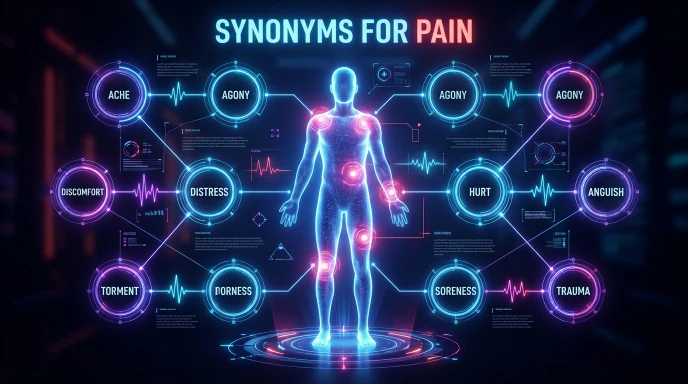
- Physical pain: ache, soreness, sting, smart, throb, twinge, cramp, burning, tenderness
- Severe pain: agony, torment, suffering, trauma
- Emotional pain: grief, sorrow, anguish, heartache, despair, misery
- Medical conditions: ailment, injury, wound, bruise, affliction
- General discomfort: discomfort, distress, hurt, misfortune
Using these categories makes writing more precise and helps speakers select the best synonym for different situations.
Antonyms of Pain
- Comfort (Noun): A pleasant feeling of ease and relaxation.
- Relief (Noun): Freedom from pain or worry.
- Ease (Noun): A state without difficulty or discomfort.
- Pleasure (Noun): A feeling of happiness or enjoyment.
- Joy (Noun): Great happiness.
- Delight (Noun): Strong pleasure or satisfaction.
- Happiness (Noun): A feeling of being happy.
- Wellness (Noun): Good physical and mental health.
- Health (Noun): A condition of physical and mental well-being.
- Contentment (Noun): A peaceful feeling of satisfaction.
Short Questions and Answers
- What does pain mean?
Pain is an unpleasant physical or emotional feeling caused by injury, illness, or sadness. - When should pain be used?
Use pain when talking about physical discomfort, injury, illness, or emotional suffering. - Is pain positive or negative?
Pain is usually negative because it describes suffering. However, people sometimes speak of pain positively when it leads to learning, healing, or personal growth. - How is it different from similar words?
Pain is a general word. Ache usually means a dull physical pain, agony means extreme pain, grief refers to emotional pain after loss, and discomfort describes mild pain.
Conclusion
Learning the word pain and its synonyms helps you build a richer English vocabulary. Instead of repeating the same word, you can choose words like ache, agony, grief, heartache, torment, or discomfort to express different levels and types of pain
. Understanding their meanings, pronunciation, history, and usage makes your writing and speaking more natural and accurate.
It also helps you communicate clearly in conversations, stories, academic writing, and professional content.
Practice using one new synonym each day in your sentences. Over time, your vocabulary will grow, your confidence will increase, and your English communication skills will become stronger.
Explore more about!
- Synonyms for Vibe:30 Powerful Words to Improve Your Vocabulary
- Synonyms for “Finally” to Enhance Your English
- Synonyms for Desire : 30 Powerful Words

I am an American author, and I write books about power, strategy, and human behavior. My writing style is simple but deep, and I try to explain how people think and act in real-life situations.
I studied classical studies, and before becoming a writer, I worked in different fields which helped me understand people and life better.
My most famous books include The 48 Laws of Power, The Art of Seduction, and Mastery. These books are widely read by business people, leaders, and students around the world.