Sadness means a feeling of unhappiness, sorrow, or emotional pain. Imagine a student who studies hard for an exam but receives a low grade.
He may feel sadness because his effort did not bring the result he hoped for. The word sadness is commonly used because it describes a basic human emotion that everyone experiences in daily life.
Learning synonyms of sadness is important for English learners and content writers because it helps them express feelings with more accuracy and variety. Using different words can make writing more powerful and avoid repetition.
This article explains the meaning of sadness, its synonyms, examples, pronunciation, grammar, history, and semantic categories. Understanding these words helps learners choose the right expression for different emotional situations and improves communication skills.
Meaning of Sadness
Definition
Sadness (noun):
A feeling of unhappiness, sorrow, or emotional pain caused by a difficult situation, loss, disappointment, or problem.
Examples
- She felt sadness after saying goodbye to her best friend.
- His sadness became stronger after he lost something important.
Connotative Meaning
Connotation (the emotional feeling, idea, or association that a word creates beyond its direct meaning):
- Positive tone:
- Sadness can show deep care, love, and emotional connection.
- Example: Her sadness showed how much she loved her family.
- Negative tone:
- Sadness can suggest pain, loneliness, disappointment, or suffering.
- Example: The sadness of losing a loved one was difficult to overcome.
- Neutral tone:
- Sadness can simply describe a normal human emotion without strong judgment.
- Example: The movie created feelings of sadness among viewers.
Etymology
- Origin:
- The word sadness comes from the Old English word sæd, meaning “satisfied, full, heavy, or weary.”
- Over time, the meaning changed from “being full or heavy” to “feeling sorrowful or unhappy.”
Short History of Sadness
- Old English (450–1100):
- The word sæd was used to describe a state of being full, tired, or weighed down. It did not originally mean emotional sorrow.
- Middle English (1100–1500):
- The meaning of the word changed gradually. Sad began to describe seriousness, heaviness, and a troubled emotional state.
- Modern English (1500–Present):
- The word sadness developed as the noun form of sad and became a common word for describing emotional pain, sorrow, and unhappiness.
Pronunciation (US & UK – IPA)
US: /ˈsæd.nəs/
UK: /ˈsæd.nəs/
Syllables
sad-ness
Affixation Pattern of Sadness
Root:
- sad
- Meaning: unhappy, sorrowful, or serious
Prefix:
- No prefix
Suffix:
- -ness
- Meaning: a state, condition, or quality
Word Formation of Sadness
- Sad (adjective): feeling unhappy or sorrowful.
- Sadness (noun): the state or feeling of being sad.
- Sadly (adverb): in an unhappy or unfortunate way.
- Sadden (verb): to make someone feel sad.
- Saddened (adjective/past participle): affected by sadness.
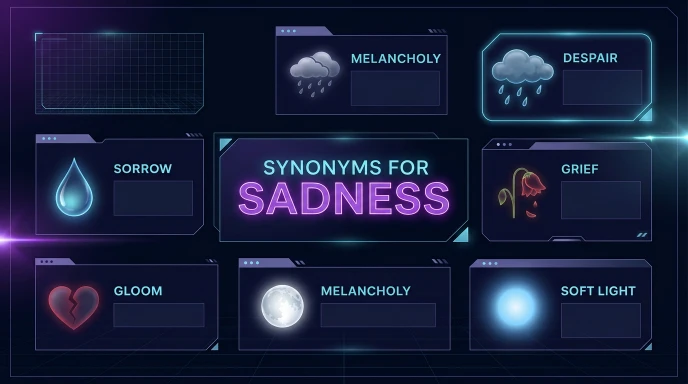
Synonyms of Sadness
1. Sorrow (Noun)
US IPA: /ˈsɑːroʊ/
UK IPA: /ˈsɒrəʊ/
Meaning: A deep feeling of sadness, especially caused by loss or disappointment.
Examples:
- She felt great sorrow after losing her pet.
- His sorrow was visible during the farewell ceremony.
2. Grief (Noun)
US IPA: /ɡriːf/
UK IPA: /ɡriːf/
Meaning: A strong feeling of sadness caused by someone’s death or a major loss.
Examples:
- The family experienced deep grief after the accident.
- She needed time to heal from her grief.
3. Misery (Noun)
US IPA: /ˈmɪzəri/
UK IPA: /ˈmɪzəri/
Meaning: A state of great unhappiness or suffering.
Examples:
- The poor living conditions caused years of misery.
- He felt misery after repeated failures.
4. Melancholy (Noun)
US IPA: /ˈmelənˌkɑːli/
UK IPA: /ˈmelənkəli/
Meaning: A deep, quiet feeling of sadness, often without a clear reason.
Examples:
- The old song filled her with melancholy.
- A feeling of melancholy surrounded the empty house.
5. Unhappiness (Noun)
US IPA: /ʌnˈhæpinəs/
UK IPA: /ʌnˈhæpinəs/
Meaning: A feeling of not being happy or satisfied.
Examples:
- His unhappiness came from his difficult situation.
- She expressed her unhappiness with the decision.
6. Despair (Noun)
US IPA: /dɪˈsper/
UK IPA: /dɪˈspeə(r)/
Meaning: A feeling of complete hopelessness and deep sadness.
Examples:
- He felt despair after losing his last chance.
- The news brought despair to the entire community.
7. Distress (Noun)
US IPA: /dɪˈstres/
UK IPA: /dɪˈstres/
Meaning: A feeling of extreme worry, sadness, or suffering.
Examples:
- The accident caused emotional distress.
- She called her friend during a time of distress.
8. Anguish (Noun)
US IPA: /ˈæŋɡwɪʃ/
UK IPA: /ˈæŋɡwɪʃ/
Meaning: Severe emotional or physical pain.
Examples:
- The family experienced great anguish after the loss.
- His face showed the anguish he was feeling.
9. Heartbreak (Noun)
US IPA: /ˈhɑːrtbreɪk/
UK IPA: /ˈhɑːtbreɪk/
Meaning: Extreme sadness caused by emotional pain, especially the end of a relationship.
Examples:
- She experienced heartbreak after the breakup.
- The story describes the heartbreak of losing a loved one.
10. Gloom (Noun)
US IPA: /ɡluːm/
UK IPA: /ɡluːm/
Meaning: A feeling of sadness, darkness, or hopelessness.
Examples:
- A sense of gloom filled the room.
- The rainy weather added to his gloom.
11. Depression (Noun)
US IPA: /dɪˈpreʃən/
UK IPA: /dɪˈpreʃən/
Meaning: A state of deep sadness or low mood.
Examples:
- He experienced depression after many stressful events.
- Talking with friends helped reduce her feelings of depression.
12. Regret (Noun)
US IPA: /rɪˈɡret/
UK IPA: /rɪˈɡret/
Meaning: A feeling of sadness because of something done or not done.
Examples:
- She felt regret about her past decision.
- His regret grew after he missed the opportunity.
13. Disappointment (Noun)
US IPA: /ˌdɪsəˈpɔɪntmənt/
UK IPA: /ˌdɪsəˈpɔɪntmənt/
Meaning: A feeling of sadness caused by an expectation not being met.
Examples:
- Losing the match brought disappointment to the team.
- He showed disappointment after hearing the result.
14. Loneliness (Noun)
US IPA: /ˈloʊnlinəs/
UK IPA: /ˈləʊnlinəs/
Meaning: A feeling of sadness caused by being alone or feeling disconnected.
Examples:
- Moving to a new city sometimes creates loneliness.
- She overcame her loneliness by making new friends.
15. Solitude (Noun)
US IPA: /ˈsɑːlətuːd/
UK IPA: /ˈsɒlɪtjuːd/
Meaning: A state of being alone that can sometimes create sadness.
Examples:
- Too much solitude made him feel unhappy.
- He enjoyed solitude but sometimes missed company.
16. Suffering (Noun)
US IPA: /ˈsʌfərɪŋ/
UK IPA: /ˈsʌfərɪŋ/
Meaning: Physical or emotional pain.
Examples:
- The war caused great suffering.
- She wanted to help people facing suffering.
17. Pain (Noun)
US IPA: /peɪn/
UK IPA: /peɪn/
Meaning: A feeling of emotional or physical hurt.
Examples:
- He felt emotional pain after the loss.
- The memory brought back painful feelings.
18. Agony (Noun)
US IPA: /ˈæɡəni/
UK IPA: /ˈæɡəni/
Meaning: Extreme physical or emotional suffering.
Examples:
- She cried in agony after hearing the news.
- The long wait caused emotional agony.
19. Sorrowfulness (Noun)
US IPA: /ˈsɑːroʊfəlnəs/
UK IPA: /ˈsɒrəʊfəlnəs/
Meaning: The quality or state of being full of sadness.
Examples:
- The poem expresses deep sorrowfulness.
- His voice carried a sense of sorrowfulness.
20. Woe (Noun)
US IPA: /woʊ/
UK IPA: /wəʊ/
Meaning: Great sadness, trouble, or suffering.
Examples:
- The story tells of a person’s many woes.
- He shared his woes with his closest friend.
21. Blue (Adjective)
US IPA: /bluː/
UK IPA: /bluː/
Meaning: Feeling sad or unhappy.
Examples:
- She felt blue after leaving her hometown.
- He was a little blue after the disappointing news.
22. Downhearted (Adjective)
US IPA: /ˌdaʊnˈhɑːrtɪd/
UK IPA: /ˌdaʊnˈhɑːtɪd/
Meaning: Feeling discouraged, sad, or without hope.
Examples:
- He felt downhearted after failing the exam.
- The team was downhearted after losing the game.
23. Unhappy (Adjective)
US IPA: /ʌnˈhæpi/
UK IPA: /ʌnˈhæpi/
Meaning: Feeling sad or not satisfied.
Examples:
- She was unhappy with the final decision.
- He looked unhappy during the meeting.
24. Miserable (Adjective)
US IPA: /ˈmɪzərəbəl/
UK IPA: /ˈmɪzərəbəl/
Meaning: Extremely unhappy or uncomfortable.
Examples:
- The cold weather made everyone miserable.
- He felt miserable after losing his job.
25. Dismal (Adjective)
US IPA: /ˈdɪzməl/
UK IPA: /ˈdɪzməl/
Meaning: Showing sadness, failure, or lack of hope.
Examples:
- The empty house had a dismal feeling.
- The team had a dismal performance.
26. Somber (Adjective)
US IPA: /ˈsɑːmbər/
UK IPA: /ˈsɒmbə(r)/
Meaning: Serious, dark, or filled with sadness.
Examples:
- The funeral had a somber atmosphere.
- His somber expression showed his feelings.
27. Mournful (Adjective)
US IPA: /ˈmɔːrnfəl/
UK IPA: /ˈmɔːnfəl/
Meaning: Showing or expressing deep sadness.
Examples:
- The song had a mournful sound.
- She gave a mournful look at the old photograph.
28. Tearful (Adjective)
US IPA: /ˈtɪrfəl/
UK IPA: /ˈtɪəfəl/
Meaning: Showing sadness through tears.
Examples:
- She gave a tearful goodbye.
- His tearful eyes showed his emotions.
29. Depressed (Adjective)
US IPA: /dɪˈprest/
UK IPA: /dɪˈprest/
Meaning: Feeling very sad or emotionally low.
Examples:
- He felt depressed after several difficult days.
- She became depressed because of constant stress.
30. Woeful (Adjective)
US IPA: /ˈwoʊfəl/
UK IPA: /ˈwəʊfəl/
Meaning: Full of sadness, pain, or difficulty.
Examples:
- The character had a woeful story.
- They faced a woeful situation after the disaster.
Prototype Meaning of Sadness
The most typical meaning of sadness is a feeling of emotional pain caused by loss, disappointment, loneliness, or difficult experiences.
When people hear the word sadness, they usually imagine tears, a heavy heart, low mood, or a person facing an unhappy moment.
It is a common human emotion that can be temporary or long-lasting depending on the situation.
Prototype Categorization
Synonyms of sadness can be grouped into categories based on emotional strength and context:
- General sadness category:
- unhappiness, sorrow, sadness, blue
- These words describe normal feelings of being unhappy.
- Deep emotional pain category:
- grief, anguish, heartbreak, despair
- These words describe stronger feelings caused by serious loss or suffering.
- Loneliness and isolation category:
- loneliness, solitude, gloom
- These words focus on sadness connected with being alone.
- Disappointment category:
- regret, disappointment, distress
- These words describe sadness caused by failure, mistakes, or unmet expectations.
- Literary and emotional expression category:
- melancholy, mournful, woeful, sorrowfulness
- These words are common in stories, poems, and emotional writing.
Understanding these categories helps writers choose the correct synonym. For example, grief is suitable for the loss of a loved one, while disappointment is better for an unmet goal. Choosing the right word makes writing clearer and more emotionally accurate.
Antonyms of Sadness
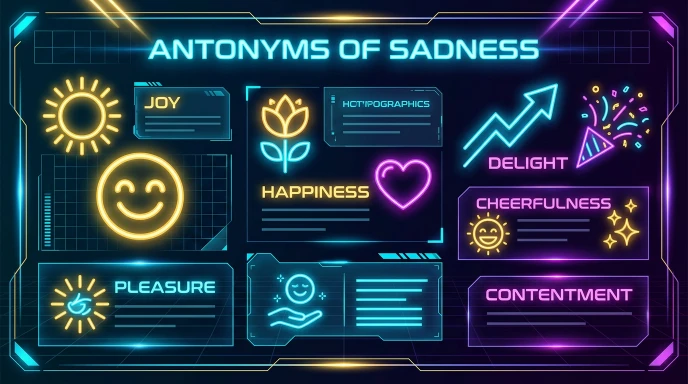
1. Happiness (Noun)
Meaning: A feeling of joy, pleasure, or satisfaction.
- She felt happiness after achieving her goal.
- The celebration brought happiness to everyone.
2. Joy (Noun)
Meaning: A strong feeling of great pleasure and delight.
- The birth of the baby filled the family with joy.
- He found joy in helping others.
3. Cheerfulness (Noun)
Meaning: A positive and happy attitude or mood.
- Her cheerfulness made the workplace better.
- His cheerfulness helped others feel relaxed.
4. Hope (Noun)
Meaning: A feeling of expectation and belief that something good will happen.
- Hope helped him continue during difficult times.
- She never lost hope for a better future.
5. Contentment (Noun)
Meaning: A peaceful feeling of satisfaction.
- He found contentment in a simple lifestyle.
- The quiet environment gave her a sense of contentment.
6. Excitement (Noun)
Meaning: A feeling of happiness and enthusiasm about something.
- The children showed excitement before the trip.
- The new opportunity created excitement among workers.
Short Questions and Answers
What does Sadness mean?
- Sadness means a feeling of unhappiness, sorrow, or emotional pain caused by loss, disappointment, loneliness, or difficult experiences.
When should Sadness be used?
- Sadness should be used when describing a feeling of being unhappy or emotionally hurt.
- It is suitable for everyday conversations, academic writing, stories, and emotional descriptions.
- Example:
- The movie created feelings of sadness among viewers.
Is Sadness positive or negative?
- Sadness is usually considered a negative emotion because it describes pain or unhappiness.
- However, sadness can have a positive role because it helps people understand their feelings, show empathy, and value happy moments.
How is Sadness different from similar words?
- Sadness: A general feeling of being unhappy.
- Example: She felt sadness after leaving her friends.
- Grief: A much deeper sadness, often caused by death or major loss.
- Example: He experienced grief after losing his father.
- Melancholy: A quiet or thoughtful type of sadness.
- Example: The old song created a feeling of melancholy.
- Despair: A strong sadness mixed with hopelessness.
- Example: He felt despair after losing all hope.
- Disappointment: Sadness caused by expectations not being fulfilled.
- Example: She felt disappointment after failing the exam.
Conclusion
Learning the meaning of sadness and its synonyms helps English learners understand and express emotions more clearly.
Different words describe different levels and types of sadness, from simple unhappiness to deep grief and despair.
A strong emotional vocabulary improves writing and speaking by helping people choose accurate words for different situations.
For content writers, using varied synonyms makes articles more engaging and avoids repetition. For English learners, practicing these words builds confidence and improves communication skills.
Reading stories, writing sentences, and using new vocabulary in daily conversations are effective ways to remember these words. Understanding emotions like sadness helps learners develop a richer and more natural command of English.
Read more about!
- Synonyms for Challenging :Boost Your Vocabulary Instantly
- Synonyms for You: Formal, Casual & Creative Alternatives

I am a linguist with 17 years of experience in English language teaching, including postgraduate-level instruction. My expertise includes English grammar, and I contribute as a content and blog writer, producing scholarly and educational language resources.