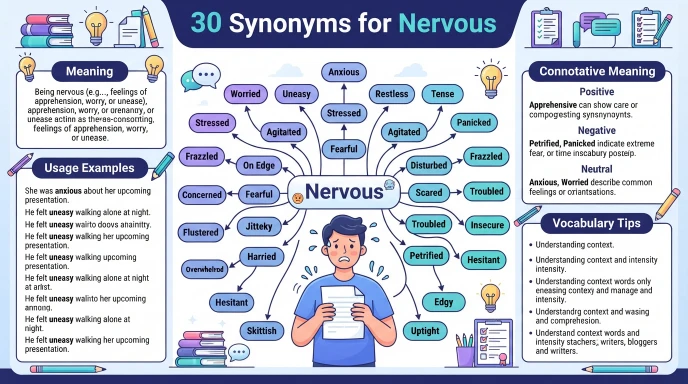
The word nervous means feeling worried, anxious, uneasy, or afraid about something that may happen. Imagine a student standing in front of the class before giving a speech. Their hands may shake, their heart may beat faster, and they may feel nervous.
This word is commonly used in everyday English because people often experience worry, stress, excitement, or uncertainty.
Learning synonyms for nervous helps English learners, students, writers, and content creators express feelings more clearly.
Different synonyms allow you to describe emotions with greater accuracy and avoid repeating the same word. In this article, you will learn the meaning of nervous, its pronunciation, grammar, history, connotation, and 30 useful synonyms.
You will also explore examples, semantic categories, antonyms, related words, and vocabulary-building tips to improve your English communication skills.
Meaning of Nervous
Definition
Nervous (Adjective):
Feeling worried, anxious, frightened, or uncomfortable about a situation.
Examples
- She felt nervous before her interview.
- I always get nervous when speaking in public.
Connotative Meaning
What is connotation? (The emotional or cultural feeling associated with a word beyond its basic dictionary meaning.)
- Positive tone: Excited, eager, alert before an important event.
- Negative tone: Worried, fearful, stressed, uneasy.
- Neutral tone: Experiencing emotional tension or uncertainty.
Etymology
- Comes from Latin nervus, meaning “sinew” or “nerve.”
- Entered English through French and Latin influence.
- Originally related to the body’s nerves and strength.
Short History of the Keyword
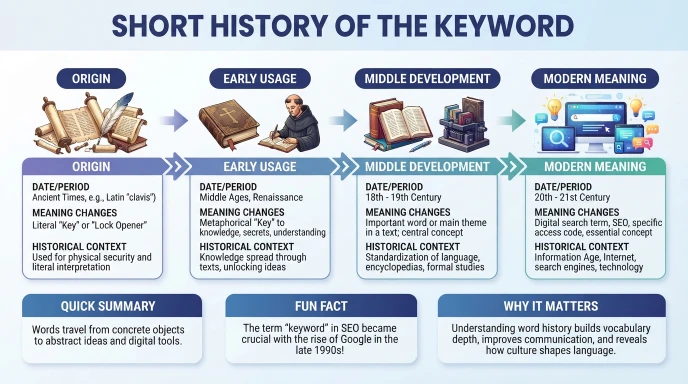
Old English (450–1100)
- The exact word nervous did not exist.
- Similar ideas were expressed through words meaning fearful or troubled.
Middle English (1100–1500)
- Latin-based medical terms entered English.
- Concepts related to nerves and emotions became more common.
Modern English (1500–Present)
- Nervous became widely used to describe emotional anxiety and tension.
- Today it is common in everyday conversation, medicine, and psychology.
Pronunciation (US & UK – IPA)
US: /ˈnɝː.vəs/
UK: /ˈnɜː.vəs/
Syllables
ner-vous
Affixation Pattern of Nervous
Root: nerv (nerve)
Prefix: None
Suffix: -ous
Word Formation of Nervous
- Nervous (Adjective)
- Nervously (Adverb)
- Nervousness (Noun)
- Nerve (Noun)
- Nerves (Noun)
- Nervy (Adjective)
- Unnerved (Adjective/Verb)
Synonyms of Nervous
1. Anxious (Adjective)
US: /ˈæŋk.ʃəs/ | UK: /ˈæŋk.ʃəs/
Meaning: Worried about something that may happen.
Examples:
- She felt anxious before the test.
- Parents were anxious about the storm.
2. Worried (Adjective)
US: /ˈwɝː.id/ | UK: /ˈwʌr.id/
Meaning: Thinking about possible problems.
Examples:
- He looked worried all day.
- She was worried about her family.
3. Uneasy (Adjective)
US: /ʌnˈiː.zi/ | UK: /ʌnˈiː.zi/
Meaning: Slightly uncomfortable or concerned.
Examples:
- I felt uneasy in the dark room.
- The news made everyone uneasy.
4. Apprehensive (Adjective)
US: /ˌæp.rɪˈhen.sɪv/ | UK: /ˌæp.rɪˈhen.sɪv/
Meaning: Feeling worried about the future.
Examples:
- She was apprehensive about moving.
- He felt apprehensive before surgery.
5. Tense (Adjective)
US: /tens/ | UK: /tens/
Meaning: Feeling stress or pressure.
Examples:
- The room became tense.
- He felt tense before the game.
6. Fearful (Adjective)
US: /ˈfɪr.fəl/ | UK: /ˈfɪə.fəl/
Meaning: Feeling afraid.
Examples:
- The child looked fearful.
- They were fearful of failure.
7. Afraid (Adjective)
US: /əˈfreɪd/ | UK: /əˈfreɪd/
Meaning: Feeling fear or worry.
Examples:
- She was afraid of heights.
- I am afraid of making mistakes.
8. Distressed (Adjective)
US: /dɪˈstrest/ | UK: /dɪˈstrest/
Meaning: Very worried or upset.
Examples:
- The family was distressed.
- He seemed distressed by the news.
9. Agitated (Adjective)
US: /ˈædʒ.ə.teɪ.t̬ɪd/ | UK: /ˈædʒ.ɪ.teɪ.tɪd/
Meaning: Feeling troubled and restless.
Examples:
- She became agitated during the argument.
- The crowd grew agitated.
10. Restless (Adjective)
US: /ˈrest.ləs/ | UK: /ˈrest.ləs/
Meaning: Unable to relax.
Examples:
- He felt restless before traveling.
- She was too restless to sleep.
11. Concerned (Adjective)
US: /kənˈsɝːnd/ | UK: /kənˈsɜːnd/
Meaning: Feeling worry about something.
Examples:
- We are concerned about safety.
- She looked concerned.
12. Jittery (Adjective)
US: /ˈdʒɪt̬.ɚ.i/ | UK: /ˈdʒɪt.ər.i/
Meaning: Very nervous and shaky.
Examples:
- He felt jittery before the interview.
- Coffee made her jittery.
13. Fidgety (Adjective)
US: /ˈfɪdʒ.ə.t̬i/ | UK: /ˈfɪdʒ.ɪ.ti/
Meaning: Unable to sit still due to nervousness.
Examples:
- The child became fidgety.
- I felt fidgety while waiting.
14. Alarmed (Adjective)
US: /əˈlɑːrmd/ | UK: /əˈlɑːmd/
Meaning: Suddenly worried or frightened.
Examples:
- Residents were alarmed by the noise.
- She looked alarmed.
15. Panicky (Adjective)
US: /ˈpæn.ɪ.ki/ | UK: /ˈpæn.ɪ.ki/
Meaning: Feeling close to panic.
Examples:
- He sounded panicky on the phone.
- She became panicky before the flight.
16. Troubled (Adjective)
US: /ˈtrʌb.əld/ | UK: /ˈtrʌb.əld/
Meaning: Feeling worried or disturbed.
Examples:
- He looked troubled.
- The situation left her troubled.
17. Edgy (Adjective)
US: /ˈedʒ.i/ | UK: /ˈedʒ.i/
Meaning: Easily irritated due to stress.
Examples:
- She felt edgy all morning.
- The waiting made him edgy.
18. Strained (Adjective)
US: /streɪnd/ | UK: /streɪnd/
Meaning: Under pressure or stress.
Examples:
- He sounded strained.
- The atmosphere felt strained.
19. Shaky (Adjective)
US: /ˈʃeɪ.ki/ | UK: /ˈʃeɪ.ki/
Meaning: Trembling because of fear or worry.
Examples:
- Her voice was shaky.
- I felt shaky before speaking.
20. Overwrought (Adjective)
US: /ˌoʊ.vɚˈrɔːt/ | UK: /ˌəʊ.vəˈrɔːt/
Meaning: Extremely emotional or nervous.
Examples:
- She became overwrought.
- He was overwrought after the event.
21. Timid (Adjective)
US: /ˈtɪm.ɪd/ | UK: /ˈtɪm.ɪd/
Meaning: Lacking confidence because of fear.
Examples:
- The timid student spoke softly.
- He was timid in new situations.
22. Hesitant (Adjective)
US: /ˈhez.ə.tənt/ | UK: /ˈhez.ɪ.tənt/
Meaning: Unsure or uncertain.
Examples:
- She seemed hesitant to answer.
- He was hesitant about the plan.
23. Insecure (Adjective)
US: /ˌɪn.sɪˈkjʊr/ | UK: /ˌɪn.sɪˈkjʊə/
Meaning: Lacking confidence.
Examples:
- He felt insecure about his skills.
- She became insecure after criticism.
24. Frightened (Adjective)
US: /ˈfraɪ.tənd/ | UK: /ˈfraɪ.tənd/
Meaning: Feeling fear.
Examples:
- The loud sound frightened her.
- The children looked frightened.
25. Perturbed (Adjective)
US: /pɚˈtɝːbd/ | UK: /pəˈtɜːbd/
Meaning: Worried or disturbed.
Examples:
- He seemed perturbed.
- The delay left her perturbed.
26. Upset (Adjective)
US: /ʌpˈset/ | UK: /ʌpˈset/
Meaning: Emotionally disturbed.
Examples:
- She was upset by the news.
- He felt upset and nervous.
27. On Edge (Adjective Phrase)
US: /ɑːn edʒ/ | UK: /ɒn edʒ/
Meaning: Nervous and unable to relax.
Examples:
- Everyone was on edge.
- The delay kept us on edge.
28. High-Strung (Adjective)
US: /ˌhaɪ ˈstrʌŋ/ | UK: /ˌhaɪ ˈstrʌŋ/
Meaning: Easily nervous or excited.
Examples:
- He is high-strung by nature.
- She became high-strung before exams.
29. Jumpy (Adjective)
US: /ˈdʒʌm.pi/ | UK: /ˈdʒʌm.pi/
Meaning: Easily startled because of nervousness.
Examples:
- He was jumpy after the incident.
- The loud noise made her jumpy.
30. Unsettled (Adjective)
US: /ʌnˈset.əld/ | UK: /ʌnˈset.əld/
Meaning: Feeling uncomfortable or worried.
Examples:
- She felt unsettled by the change.
- The news left everyone unsettled.
Prototype Meaning
The most typical meaning of nervous is feeling worried, tense, or uncertain about something that may happen.
When people hear this word, they often imagine a person with a fast heartbeat, sweaty hands, or anxious thoughts before an important event.
Prototype Categorization
- Mild Worry: uneasy, concerned, hesitant, apprehensive.
- Strong Anxiety: anxious, panicky, distressed, alarmed.
- Fear-Based Feelings: afraid, fearful, frightened.
- Physical Nervousness: jittery, fidgety, shaky, restless.
- Stress and Pressure: tense, strained, edgy, on edge.
- Low Confidence: timid, insecure, hesitant.
Categorization helps writers choose the most accurate synonym based on intensity, tone, and context.
Antonyms of Nervous
- Calm (Adjective) – Free from worry or stress.
- Relaxed (Adjective) – Comfortable and at ease.
- Confident (Adjective) – Sure of oneself.
- Composed (Adjective) – Calm and self-controlled.
- Fearless (Adjective) – Without fear.
- Secure (Adjective) – Feeling safe and confident.
- Steady (Adjective) – Stable and controlled.
- Peaceful (Adjective) – Quiet and free from anxiety.
Formal and Casual Alternatives
Formal Alternatives
- Apprehensive
- Perturbed
- Distressed
- Concerned
- Agitated
- Overwrought
Casual Alternatives
- Worried
- Jittery
- Shaky
- Edgy
- Jumpy
- On edge
Related Words
- Nerve (Noun)
- Nervousness (Noun)
- Anxiety (Noun)
- Stress (Noun)
- Tension (Noun)
- Concern (Noun)
- Fear (Noun)
- Uneasiness (Noun)
Short Questions and Answers
- What does nervous mean?
Nervous means feeling worried, anxious, or afraid about something. - When should nervous be used?
Use it when describing emotional stress, worry, fear, or uncertainty. - Is nervous positive or negative?
It is usually negative, but it can sometimes show excitement before an important event. - How is it different from similar words?
Nervous is a general term, while anxious suggests stronger worry and jittery focuses on physical restlessness.
Conclusion
Learning the word nervous and its synonyms can improve both your vocabulary and communication skills.
These words help you describe emotions more accurately in conversations, essays, stories, and professional writing. Understanding different levels of worry, fear, and anxiety allows you to choose the most suitable word for each situation. Learning pronunciation, connotation, history, and related forms also deepens your understanding of English.
if you are an ESL learner, student, teacher, or writer, using these synonyms can make your language richer and more natural. Practice a few new words each day and use them in sentences. Consistent vocabulary practice will help you speak and write with greater confidence.
Read more about!
- Synonyms for Ugly 30 Powerful Words to Improve Your Vocabulary
- Synonyms for Reason: Powerful Words to Use Instead
- Synonyms for Elite: Powerful Words to Use Instead

I am a linguist with 17 years of experience in English language teaching, including postgraduate-level instruction. My expertise includes English grammar, and I contribute as a content and blog writer, producing scholarly and educational language resources.