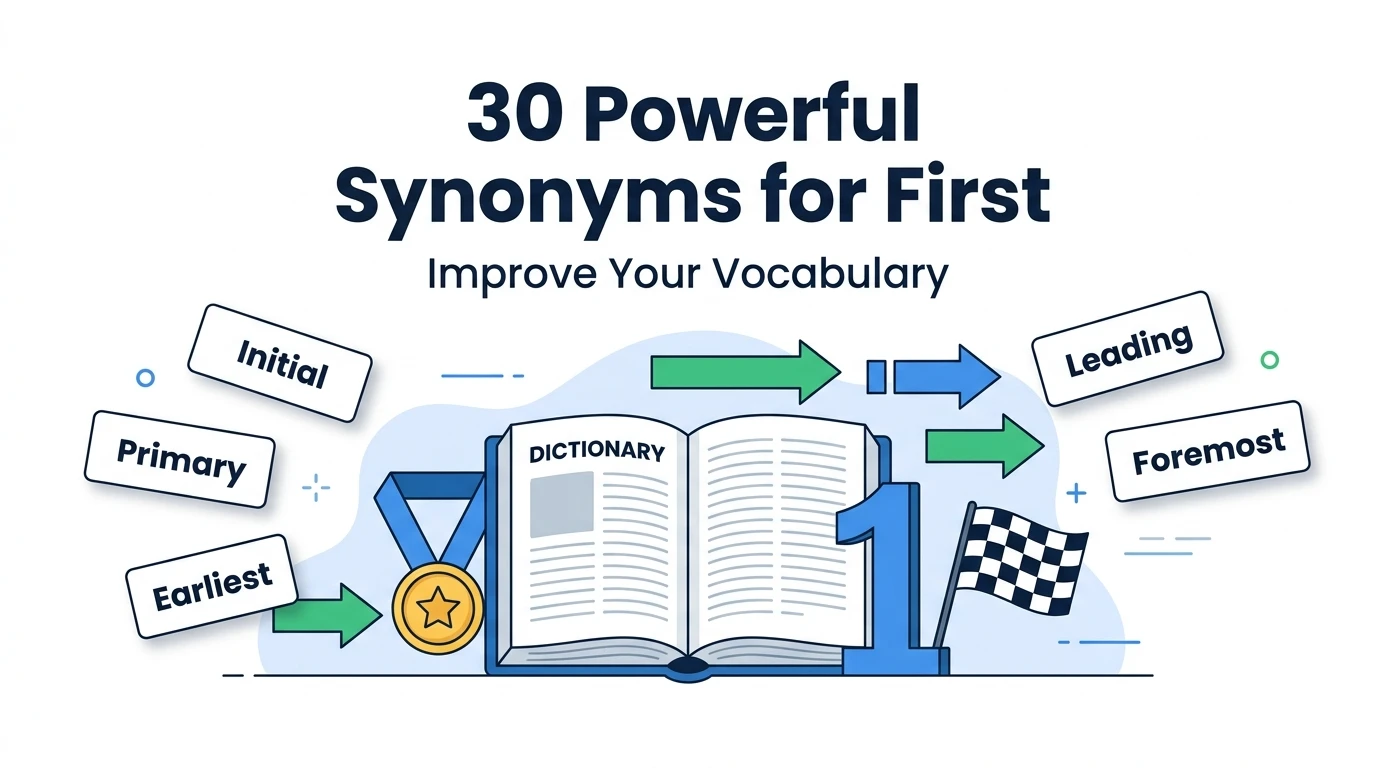
The word first means being before all others in time, order, rank, or importance. Imagine a student who wins a school race. She reaches the finish line before everyone else, so she is the first winner. This simple word is used every day because it helps people describe beginnings, order, and priority.
Learning synonyms for first is important for English learners and content writers because repeating the same word can make speaking and writing less interesting. A strong vocabulary helps people express ideas with more accuracy and style.
This article explains the meaning of first, its synonyms, examples, grammar use, history, pronunciation, and semantic categories. It will help learners understand how different words can replace first in different situations.
Meaning of First
Definition
First (adjective, adverb, noun, verb):
First means coming before all others in time, order, position, or importance.
Examples
- She was the first person to arrive at the meeting.
- First, finish your homework, then watch television.
Connotative Meaning
(Connotation means the feeling or idea connected with a word beyond its basic meaning.)
- Positive tone: Can suggest achievement, success, leadership, and excellence.
- Negative tone: Can sometimes suggest pressure, competition, or selfish priority.
- Neutral tone: Simply shows order, sequence, or position.
Etymology
- Origin: Old English fyrst
- Source language: Germanic language family
- Original meaning: “foremost” or “before all others”
Short History
- Old English (450–1100): The word appeared as fyrst and described the earliest position or highest rank.
- Middle English (1100–1500): The spelling changed toward first while keeping the meaning of beginning or leading position.
- Modern English (1500–Present): First became a common word used for order, achievement, priority, and introduction.
Pronunciation (US & UK – IPA)
US: /fɝːst/
UK: /fɜːst/
Syllables
first
Affixation Pattern of First
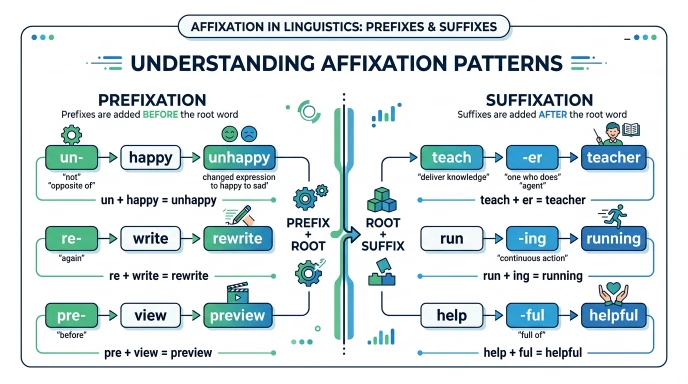
Root: first
Prefix: None
Suffix: None
Word Formation
- firstly (adverb)
- firstness (noun)
- first-rate (adjective)
- firsthand (adjective/adverb)
- firstborn (noun/adjective)
Synonyms of First
1. Initial (adjective)
US IPA: /ɪˈnɪʃəl/ | UK IPA: /ɪˈnɪʃəl/
Meaning: Happening at the beginning.
Examples:
- The initial plan was successful.
- We discussed the initial steps of the project.
2. Earliest (adjective)
US IPA: /ˈɜrliɪst/ | UK IPA: /ˈɜːliɪst/
Meaning: Happening before all others.
Examples:
- She caught the earliest train.
- The earliest records show ancient traditions.
3. Foremost (adjective)
US IPA: /ˈfɔːrmoʊst/ | UK IPA: /ˈfɔːməʊst/
Meaning: Most important or leading.
Examples:
- Safety is our foremost concern.
- He is a foremost expert in science.
4. Primary (adjective)
US IPA: /ˈpraɪmeri/ | UK IPA: /ˈpraɪməri/
Meaning: Most important or main.
Examples:
- Education is the primary goal.
- The primary reason was clear.
5. Leading (adjective)
US IPA: /ˈliːdɪŋ/ | UK IPA: /ˈliːdɪŋ/
Meaning: Being the most important or successful.
Examples:
- She works for a leading company.
- He is a leading researcher.
6. Original (adjective)
US IPA: /əˈrɪdʒənəl/ | UK IPA: /əˈrɪdʒɪnəl/
Meaning: Existing from the beginning.
Examples:
- This is the original design.
- The original idea came from her.
7. Earliest-made (adjective)
US IPA: /ˈɜrliəst meɪd/ | UK IPA: /ˈɜːliɪst meɪd/
Meaning: Created before others.
Examples:
- This is the earliest-made version.
- The museum displays the earliest-made tools.
8. Foremost-ranked (adjective)
US IPA: /ˈfɔːrmoʊst ræŋkt/ | UK IPA: /ˈfɔːməʊst ræŋkt/
Meaning: Holding the highest position.
Examples:
- She is a foremost-ranked athlete.
- The team became foremost-ranked nationally.
9. Premier (adjective)
US IPA: /prɪˈmɪr/ | UK IPA: /ˈpremiə/
Meaning: First in importance or quality.
Examples:
- It is a premier university.
- He attended a premier event.
10. Prime (adjective)
US IPA: /praɪm/ | UK IPA: /praɪm/
Meaning: Most important or best.
Examples:
- This is the prime example.
- Health is a prime concern.
11. Beginning (noun)
US IPA: /bɪˈɡɪnɪŋ/ | UK IPA: /bɪˈɡɪnɪŋ/
Meaning: The start of something.
Examples:
- The beginning of the story was exciting.
- We met at the beginning of summer.
12. Opening (adjective/noun)
US IPA: /ˈoʊpənɪŋ/ | UK IPA: /ˈəʊpənɪŋ/
Meaning: The first part or start.
Examples:
- The opening speech was inspiring.
- The opening chapter was interesting.
13. Pioneer (noun)
US IPA: /ˌpaɪəˈnɪr/ | UK IPA: /ˌpaɪəˈnɪə/
Meaning: A person who is among the first to develop something.
Examples:
- She was a pioneer in technology.
- The pioneer created new methods.
14. Trailblazer (noun)
US IPA: /ˈtreɪlˌbleɪzər/ | UK IPA: /ˈtreɪlˌbleɪzə/
Meaning: A person who creates a new path.
Examples:
- He was a trailblazer in medicine.
- The artist became a trailblazer.
15. Leader (noun)
US IPA: /ˈliːdər/ | UK IPA: /ˈliːdə/
Meaning: A person or thing that comes first in importance.
Examples:
- She is a leader in her field.
- The company is a market leader.
16. Forefront (noun)
US IPA: /ˈfɔːrfrʌnt/ | UK IPA: /ˈfɔːfrʌnt/
Meaning: The leading position.
Examples:
- The scientist is at the forefront of research.
- Innovation remains at the forefront.
17. First-rate (adjective)
US IPA: /ˈfɜrst reɪt/ | UK IPA: /ˈfɜːst reɪt/
Meaning: Excellent or very high quality.
Examples:
- They provide first-rate service.
- She is a first-rate teacher.
18. Chief (adjective)
US IPA: /tʃiːf/ | UK IPA: /tʃiːf/
Meaning: Most important.
Examples:
- His chief reason was honesty.
- The chief problem was solved.
19. Principal (adjective)
US IPA: /ˈprɪnsəpəl/ | UK IPA: /ˈprɪnsəpəl/
Meaning: Main or most important.
Examples:
- The principal cause was pollution.
- Her principal duty was teaching.
20. Head (noun/adjective)
US IPA: /hed/ | UK IPA: /hed/
Meaning: The highest or leading position.
Examples:
- He is the head of the department.
- The head office opened today.
21. Front (noun)
US IPA: /frʌnt/ | UK IPA: /frʌnt/
Meaning: The position ahead of others.
Examples:
- She stood at the front of the line.
- The team moved to the front.
22. Ahead (adverb)
US IPA: /əˈhed/ | UK IPA: /əˈhed/
Meaning: Before or in front.
Examples:
- She finished ahead of everyone.
- Plan ahead for success.
23. Beforehand (adverb)
US IPA: /bɪˈfɔrˌhænd/ | UK IPA: /bɪˈfɔːhænd/
Meaning: Before an event happens.
Examples:
- Prepare beforehand.
- He called beforehand.
24. Advance (noun/adjective)
US IPA: /ədˈvæns/ | UK IPA: /ədˈvɑːns/
Meaning: Coming before or moving forward.
Examples:
- They received advance notice.
- The advance team arrived early.
25. New (adjective)
US IPA: /nuː/ | UK IPA: /njuː/
Meaning: Recent or original.
Examples:
- This is a new beginning.
- She introduced a new idea.
26. Fresh (adjective)
US IPA: /freʃ/ | UK IPA: /freʃ/
Meaning: New or recently created.
Examples:
- He brought fresh ideas.
- The project started with a fresh approach.
27. Firsthand (adjective/adverb)
US IPA: /ˌfɜrstˈhænd/ | UK IPA: /ˌfɜːstˈhænd/
Meaning: Directly experienced.
Examples:
- She has firsthand knowledge.
- I saw the event firsthand.
28. Founding (adjective)
US IPA: /ˈfaʊndɪŋ/ | UK IPA: /ˈfaʊndɪŋ/
Meaning: Related to the beginning or creation.
Examples:
- He was a founding member.
- The founding principles remain important.
29. Introductory (adjective)
US IPA: /ˌɪntrəˈdʌktəri/ | UK IPA: /ˌɪntrəˈdʌktəri/
Meaning: Giving basic first information.
Examples:
- This is an introductory lesson.
- She wrote an introductory paragraph.
30. Maiden (adjective)
US IPA: /ˈmeɪdən/ | UK IPA: /ˈmeɪdən/
Meaning: First or earliest.
Examples:
- He made his maiden speech.
- The ship completed its maiden voyage.
Prototype Meaning
The most typical meaning of first is being number one in a sequence. When people hear this word, they usually imagine the person, thing, or event that comes before all others. It often connects with beginnings, achievement, and importance.
Prototype Categorization
- Beginning synonyms: initial, opening, introductory, original
Used when talking about starts and early stages. - Importance synonyms: primary, chief, principal, foremost, prime
Used when describing importance or priority. - Achievement synonyms: leading, pioneer, trailblazer, premier
Used for success and leadership. - Time-order synonyms: earliest, beforehand, advance, maiden
Used for sequence and timing.
Categorizing synonyms helps writers choose the correct word for each situation instead of replacing words randomly.
Antonyms of First
- Last (adjective/noun): Coming after all others.
- Final (adjective): Happening at the end.
- Latest (adjective): Most recent.
- Secondary (adjective): Less important than the main thing.
- Following (adjective): Coming after something else.
Short Questions and Answers
- What does first mean?
- First means coming before all others in time, order, or importance.
- When should first be used?
- Use first when showing the beginning of an action, sequence, or ranking.
- Is first positive or negative?
- First is usually positive, but its meaning depends on context.
- How is first different from similar words?
- First focuses on order, while words like primary focus on importance and pioneer focuses on creating something new.
Conclusion
Learning the word first and its synonyms improves vocabulary by helping learners express ideas more clearly. Different synonyms allow writers and speakers to avoid repetition and choose words that match the exact meaning they want. Understanding pronunciation, tone, history, and categories makes vocabulary learning easier and more effective. Strong vocabulary builds confidence in English communication and improves both writing and speaking skills. Practice using one new synonym every day in sentences, conversations, or writing tasks. Over time, these small steps create stronger language skills and better expression.
Read more about!

I am an American author, and I write books about power, strategy, and human behavior. My writing style is simple but deep, and I try to explain how people think and act in real-life situations.
I studied classical studies, and before becoming a writer, I worked in different fields which helped me understand people and life better.
My most famous books include The 48 Laws of Power, The Art of Seduction, and Mastery. These books are widely read by business people, leaders, and students around the world.