The word happy means feeling pleased, joyful, or satisfied. Imagine a child opening a birthday gift and smiling with excitement.
That feeling is happiness. People use the word happy every day to describe positive emotions, good experiences, and enjoyable moments. It is one of the most common emotional words in English.
Learning synonyms of happy is important for English learners, students, teachers, writers, and content creators.
Using different words helps make writing more interesting and expressive. It also prevents repeating the same word again and again.
In this article, you will learn the meaning of happy, its pronunciation, grammar, history, connotation, and 30 useful synonyms. You will also discover examples, categories, antonyms, related words, and common questions to improve your vocabulary and communication skills.
Meaning of Happy
Definition
Happy (Adjective):
Feeling pleased, joyful, satisfied, or content.
Examples
- She felt happy after passing her exam.
- We are happy to spend time with our family.
Connotative Meaning
(Connotation means the emotional feeling or idea connected to a word beyond its basic definition.)
- Positive Tone: Joyful, cheerful, satisfied, pleased, fortunate.
- Negative Tone: Rarely negative, but can sometimes suggest being overly pleased without reason.
- Neutral Tone: Describing a pleasant emotional state.
Etymology
- Origin: From Old Norse heppinn, meaning “fortunate” or “lucky.”
- Source Language: Old Norse.
- Original Meaning: Having good luck or favorable fortune.
Short History of the Keyword
- Old English (450–1100): The exact word did not exist, but related ideas of joy and fortune were common.
- Middle English (1100–1500): The word developed from Scandinavian influences and meant lucky or fortunate.
- Modern English (1500–Present): Happy became the standard word for feeling joy, pleasure, and satisfaction.
Pronunciation (US & UK – IPA)
US: /ˈhæpi/
UK: /ˈhæpi/
Syllables
hap-py
Affixation Pattern of Happy
Root: happy
Prefix: None
Suffix: None
Word Formation of the Keyword
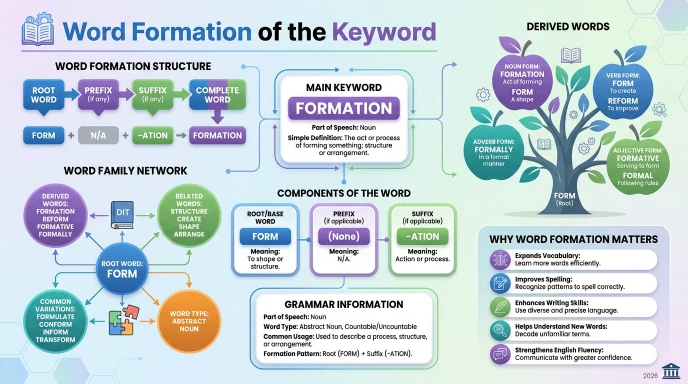
- Happy (Adjective) – feeling pleasure.
- Happier (Adjective) – more happy.
- Happiest (Adjective) – most happy.
- Happily (Adverb) – in a happy way.
- Happiness (Noun) – the state of being happy.
- Unhappy (Adjective) – not happy.
- Unhappily (Adverb) – in an unhappy way.
- Unhappiness (Noun) – the state of being unhappy.
Synonyms of Happy
1. Joyful (Adjective)
US: /ˈdʒɔɪfəl/ | UK: /ˈdʒɔɪfəl/
Meaning: Full of joy and delight.
Examples:
- She felt joyful at the celebration.
- The children looked joyful during the trip.
2. Cheerful (Adjective)
US: /ˈtʃɪrfəl/ | UK: /ˈtʃɪəfəl/
Meaning: Noticeably bright and positive.
Examples:
- He has a cheerful smile.
- The room felt cheerful and welcoming.
3. Delighted (Adjective)
US: /dɪˈlaɪtɪd/ | UK: /dɪˈlaɪtɪd/
Meaning: Very pleased and happy.
Examples:
- She was delighted by the surprise.
- We were delighted to meet them.
4. Pleased (Adjective)
US: /pliːzd/ | UK: /pliːzd/
Meaning: Feeling satisfaction.
Examples:
- I am pleased with my results.
- They were pleased by the news.
5. Content (Adjective)
US: /kənˈtent/ | UK: /kənˈtent/
Meaning: Peacefully satisfied.
Examples:
- She felt content with her life.
- He looked content after dinner.
6. Glad (Adjective)
US: /ɡlæd/ | UK: /ɡlæd/
Meaning: Feeling pleasure or relief.
Examples:
- I am glad you came.
- She was glad to help.
7. Elated (Adjective)
US: /ɪˈleɪtɪd/ | UK: /ɪˈleɪtɪd/
Meaning: Extremely happy and excited.
Examples:
- He felt elated after winning.
- The team was elated by the victory.
8. Ecstatic (Adjective)
US: /ɪkˈstætɪk/ | UK: /ɪkˈstætɪk/
Meaning: Overwhelmingly happy.
Examples:
- She was ecstatic about the award.
- They were ecstatic after hearing the news.
9. Thrilled (Adjective)
US: /θrɪld/ | UK: /θrɪld/
Meaning: Very excited and happy.
Examples:
- I was thrilled to travel abroad.
- She felt thrilled about her promotion.
10. Jubilant (Adjective)
US: /ˈdʒuːbɪlənt/ | UK: /ˈdʒuːbɪlənt/
Meaning: Showing great joy.
Examples:
- Fans were jubilant after the win.
- The crowd became jubilant.
11. Merry (Adjective)
US: /ˈmeri/ | UK: /ˈmeri/
Meaning: Cheerfully happy.
Examples:
- Everyone was merry at the party.
- The holiday season feels merry.
12. Blissful (Adjective)
US: /ˈblɪsfəl/ | UK: /ˈblɪsfəl/
Meaning: Perfectly happy.
Examples:
- They enjoyed a blissful vacation.
- She felt blissful in the quiet garden.
13. Upbeat (Adjective)
US: /ˈʌpbiːt/ | UK: /ˈʌpbiːt/
Meaning: Optimistic and positive.
Examples:
- He remained upbeat during challenges.
- The team stayed upbeat.
14. Optimistic (Adjective)
US: /ˌɑːptəˈmɪstɪk/ | UK: /ˌɒptɪˈmɪstɪk/
Meaning: Expecting good things.
Examples:
- She is optimistic about the future.
- They stayed optimistic despite difficulties.
15. Satisfied (Adjective)
US: /ˈsætɪsfaɪd/ | UK: /ˈsætɪsfaɪd/
Meaning: Feeling fulfilled.
Examples:
- He felt satisfied with his work.
- Customers were satisfied with the service.
16. Sunny (Adjective)
US: /ˈsʌni/ | UK: /ˈsʌni/
Meaning: Cheerful and bright.
Examples:
- She has a sunny personality.
- His sunny attitude inspires others.
17. Lighthearted (Adjective)
US: /ˌlaɪtˈhɑːrtɪd/ | UK: /ˌlaɪtˈhɑːtɪd/
Meaning: Cheerfully carefree.
Examples:
- The movie was lighthearted.
- They enjoyed a lighthearted evening.
18. Gleeful (Adjective)
US: /ˈɡliːfəl/ | UK: /ˈɡliːfəl/
Meaning: Full of joy.
Examples:
- The children were gleeful.
- She gave a gleeful laugh.
19. Radiant (Adjective)
US: /ˈreɪdiənt/ | UK: /ˈreɪdiənt/
Meaning: Showing happiness clearly.
Examples:
- She looked radiant on her wedding day.
- His face was radiant with joy.
20. Exuberant (Adjective)
US: /ɪɡˈzuːbərənt/ | UK: /ɪɡˈzjuːbərənt/
Meaning: Energetically happy.
Examples:
- The children were exuberant.
- Her exuberant mood was contagious.
21. Overjoyed (Adjective)
US: /ˌoʊvərˈdʒɔɪd/ | UK: /ˌəʊvəˈdʒɔɪd/
Meaning: Extremely happy.
Examples:
- We were overjoyed by the news.
- She felt overjoyed after the reunion.
22. Buoyant (Adjective)
US: /ˈbɔɪənt/ | UK: /ˈbɔɪənt/
Meaning: Cheerful and confident.
Examples:
- He remained buoyant all day.
- The atmosphere was buoyant.
23. Euphoric (Adjective)
US: /juːˈfɔːrɪk/ | UK: /juːˈfɒrɪk/
Meaning: Feeling intense happiness.
Examples:
- Fans were euphoric after the match.
- She felt euphoric about her success.
24. Chipper (Adjective)
US: /ˈtʃɪpər/ | UK: /ˈtʃɪpə/
Meaning: Cheerful and lively.
Examples:
- He seemed chipper this morning.
- She stayed chipper throughout the day.
25. Joyous (Adjective)
US: /ˈdʒɔɪəs/ | UK: /ˈdʒɔɪəs/
Meaning: Full of happiness.
Examples:
- It was a joyous celebration.
- The occasion was joyous.
26. Grateful (Adjective)
US: /ˈɡreɪtfəl/ | UK: /ˈɡreɪtfəl/
Meaning: Happily thankful.
Examples:
- I am grateful for your help.
- She felt grateful for the opportunity.
27. Fortunate (Adjective)
US: /ˈfɔːrtʃənət/ | UK: /ˈfɔːtʃənət/
Meaning: Lucky and pleased.
Examples:
- We were fortunate to succeed.
- She felt fortunate to be there.
28. Carefree (Adjective)
US: /ˈkerfriː/ | UK: /ˈkeəfriː/
Meaning: Free from worries.
Examples:
- The children seemed carefree.
- He enjoyed a carefree weekend.
29. Enthusiastic (Adjective)
US: /ɪnˌθuːziˈæstɪk/ | UK: /ɪnˌθjuːziˈæstɪk/
Meaning: Showing energetic happiness.
Examples:
- She was enthusiastic about learning.
- Students were enthusiastic participants.
30. Animated (Adjective)
US: /ˈænəmeɪtɪd/ | UK: /ˈænɪmeɪtɪd/
Meaning: Full of life and excitement.
Examples:
- He became animated during the discussion.
- The group was animated and cheerful.
Prototype Meaning
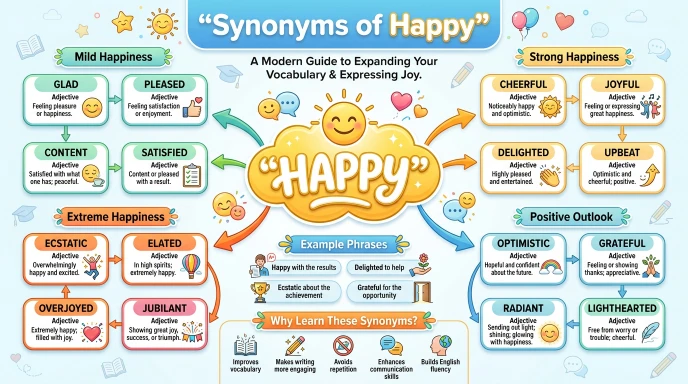
The prototype meaning of happy is a positive feeling of joy, pleasure, or satisfaction.
When people hear the word, they usually imagine someone smiling, laughing, feeling good, and enjoying life. It is one of the most common words used to describe positive emotions.
Prototype Categorization
- Mild Happiness: pleased, glad, content, satisfied.
- Strong Happiness: delighted, thrilled, overjoyed, ecstatic.
- Energetic Happiness: exuberant, enthusiastic, animated.
- Peaceful Happiness: blissful, content, carefree.
- Social Happiness: cheerful, merry, joyous.
- Optimistic Happiness: upbeat, sunny, optimistic.
Categorization helps writers choose the most suitable synonym. For example, content suggests calm satisfaction, while ecstatic expresses extreme joy.
Antonyms of Happy
- Sad (Adjective) – feeling unhappy or sorrowful.
- Unhappy (Adjective) – not happy.
- Miserable (Adjective) – very unhappy.
- Depressed (Adjective) – feeling deep sadness.
- Gloomy (Adjective) – feeling dark or discouraged.
- Upset (Adjective) – emotionally disturbed.
- Disappointed (Adjective) – unhappy because expectations were not met.
- Melancholy (Adjective) – quietly sad.
- Heartbroken (Adjective) – extremely sad.
- Dismal (Adjective) – lacking joy or hope.
Related Words
- Happiness (Noun)
- Happily (Adverb)
- Happier (Adjective)
- Happiest (Adjective)
- Joy (Noun)
- Joyful (Adjective)
- Delight (Noun/Verb)
- Cheerfulness (Noun)
- Contentment (Noun)
- Bliss (Noun)
Formal and Casual Alternatives
Formal Alternatives
- Jubilant
- Euphoric
- Elated
- Delighted
- Optimistic
- Exuberant
Casual Alternatives
- Glad
- Cheerful
- Thrilled
- Merry
- Chipper
- Sunny
Short Questions and Answers
- What does happy mean?
Happy means feeling pleased, joyful, or satisfied. - When should happy be used?
Use happy when describing positive emotions, enjoyable experiences, or satisfaction. - Is happy positive or negative?
Happy is generally a positive word because it describes pleasant feelings. - How is it different from similar words?
Happy is a general term, while words like ecstatic and euphoric describe much stronger happiness.
Conclusion
Learning the word happy and its synonyms can greatly improve your English vocabulary. Different synonyms help you express emotions with greater accuracy and variety.
Words such as cheerful, delighted, content, and ecstatic allow you to describe different levels of happiness. Using these alternatives strengthens speaking and writing skills, prevents repetition, and makes communication more engaging.
Understanding pronunciation, connotation, history, and related words also builds deeper language knowledge.
Practice these synonyms in daily conversations, essays, emails, and stories. The more words you learn, the more confident you will become in English. Make vocabulary practice a daily habit and continue expanding your language skills.
Read more about!
- 30 Powerful Synonyms for You You Should Know
- 30 Synonyms for “In Conclusion” to Improve Your Writing
- 30 Powerful Synonyms for Red You Should Know

I am an American author, and I write books about power, strategy, and human behavior. My writing style is simple but deep, and I try to explain how people think and act in real-life situations.
I studied classical studies, and before becoming a writer, I worked in different fields which helped me understand people and life better.
My most famous books include The 48 Laws of Power, The Art of Seduction, and Mastery. These books are widely read by business people, leaders, and students around the world.