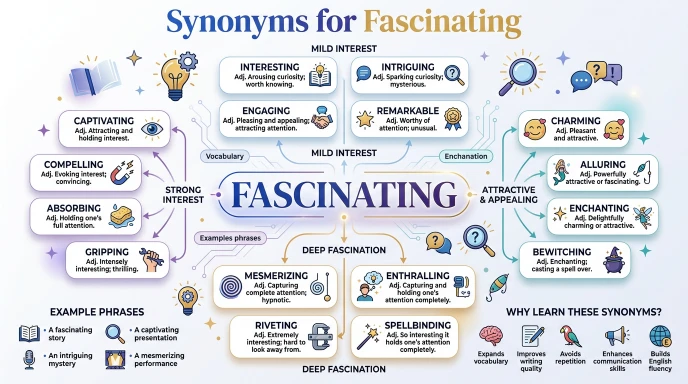
The word fascinating means extremely interesting, attractive, or captivating. Imagine visiting a museum and discovering an ancient treasure that tells a story from hundreds of years ago. You cannot stop looking at it because it is fascinating.
People often use this word when talking about books, people, places, ideas, science, history, and experiences that strongly capture attention.
Learning synonyms for fascinating is useful for English learners, students, teachers, writers, and content creators.
Using different words helps make writing richer, clearer, and more engaging. It also prevents repetition and improves communication skills.
In this article, you will learn the meaning of fascinating, its pronunciation, grammar, history, connotation, and 30 useful synonyms. You will also explore examples, semantic categories, antonyms, related words, and common questions to strengthen your English vocabulary.
Meaning of Fascinating
Definition
Fascinating (Adjective):
Very interesting and able to attract attention strongly.
Examples
- The documentary was fascinating from beginning to end.
- She shared a fascinating story about her travels.
Connotative Meaning
(Connotation means the emotional feeling or idea connected to a word beyond its basic definition.)
- Positive Tone: Interesting, attractive, engaging, captivating.
- Negative Tone: Sometimes suggests being overly attracted or distracted.
- Neutral Tone: Describing something that strongly holds attention.
Etymology
- Origin: From Latin fascinare.
- Source Language: Latin.
- Original Meaning: To bewitch, enchant, or hold under a spell.
Short History of the Keyword
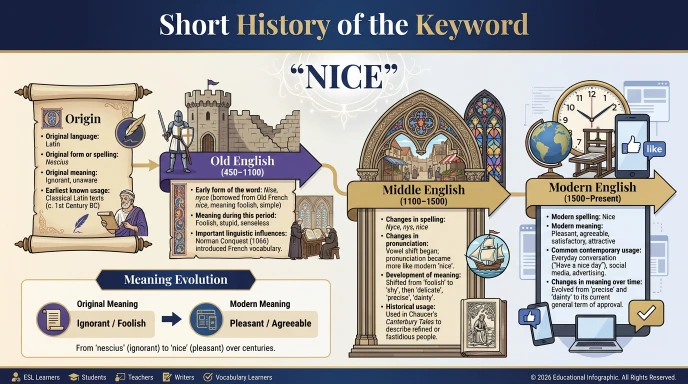
- Old English (450–1100): The exact word did not exist, but words meaning charm or enchant were used.
- Middle English (1100–1500): Influence from French and Latin introduced related forms.
- Modern English (1500–Present): Fascinating became widely used to describe things that strongly attract interest.
Pronunciation (US & UK – IPA)
US: /ˈfæsəˌneɪtɪŋ/
UK: /ˈfæsɪˌneɪtɪŋ/
Syllables
fas-ci-nat-ing
Affixation Pattern of Fascinating
Root: fascinate
Prefix: None
Suffix: -ing
Word Formation of the Keyword
- Fascinate (Verb) – to attract strongly.
- Fascinating (Adjective) – very interesting.
- Fascinated (Adjective/Verb) – strongly interested.
- Fascination (Noun) – intense interest.
- Fascinator (Noun) – something that fascinates.
- Fascinatingly (Adverb) – in a fascinating way.
Synonyms of Fascinating
1. Interesting (Adjective)
US: /ˈɪntrəstɪŋ/ | UK: /ˈɪntrəstɪŋ/
Meaning: Holding attention or curiosity.
Examples:
- The lesson was interesting.
- He told an interesting story.
2. Captivating (Adjective)
US: /ˈkæptəˌveɪtɪŋ/ | UK: /ˈkæptɪveɪtɪŋ/
Meaning: Attracting and holding attention completely.
Examples:
- The movie was captivating.
- She gave a captivating speech.
3. Engaging (Adjective)
US: /ɪnˈɡeɪdʒɪŋ/ | UK: /ɪnˈɡeɪdʒɪŋ/
Meaning: Pleasant and interesting.
Examples:
- The teacher was engaging.
- The book remained engaging.
4. Intriguing (Adjective)
US: /ɪnˈtriːɡɪŋ/ | UK: /ɪnˈtriːɡɪŋ/
Meaning: Creating curiosity.
Examples:
- The mystery was intriguing.
- She asked an intriguing question.
5. Compelling (Adjective)
US: /kəmˈpelɪŋ/ | UK: /kəmˈpelɪŋ/
Meaning: Very convincing or interesting.
Examples:
- The evidence was compelling.
- It was a compelling story.
6. Enchanting (Adjective)
US: /ɪnˈtʃæntɪŋ/ | UK: /ɪnˈtʃɑːntɪŋ/
Meaning: Delightfully attractive.
Examples:
- The village was enchanting.
- We enjoyed the enchanting scenery.
7. Absorbing (Adjective)
US: /əbˈzɔːrbɪŋ/ | UK: /əbˈzɔːbɪŋ/
Meaning: Fully holding attention.
Examples:
- The novel was absorbing.
- The lecture was absorbing.
8. Riveting (Adjective)
US: /ˈrɪvətɪŋ/ | UK: /ˈrɪvɪtɪŋ/
Meaning: Extremely interesting.
Examples:
- The documentary was riveting.
- The audience found it riveting.
9. Mesmerizing (Adjective)
US: /ˈmezməraɪzɪŋ/ | UK: /ˈmezməraɪzɪŋ/
Meaning: Holding attention like magic.
Examples:
- The performance was mesmerizing.
- The view was mesmerizing.
10. Spellbinding (Adjective)
US: /ˈspelˌbaɪndɪŋ/ | UK: /ˈspelˌbaɪndɪŋ/
Meaning: Completely captivating.
Examples:
- The story was spellbinding.
- Her performance was spellbinding.
11. Gripping (Adjective)
US: /ˈɡrɪpɪŋ/ | UK: /ˈɡrɪpɪŋ/
Meaning: Exciting and difficult to stop watching.
Examples:
- It was a gripping film.
- The novel was gripping.
12. Alluring (Adjective)
US: /əˈlʊrɪŋ/ | UK: /əˈljʊərɪŋ/
Meaning: Strongly attractive.
Examples:
- The island looked alluring.
- The idea was alluring.
13. Appealing (Adjective)
US: /əˈpiːlɪŋ/ | UK: /əˈpiːlɪŋ/
Meaning: Attractive or interesting.
Examples:
- The design was appealing.
- The offer seemed appealing.
14. Attractive (Adjective)
US: /əˈtræktɪv/ | UK: /əˈtræktɪv/
Meaning: Pleasing and interesting.
Examples:
- The city is attractive.
- She has an attractive personality.
15. Enthralling (Adjective)
US: /ɪnˈθrɔːlɪŋ/ | UK: /ɪnˈθrɔːlɪŋ/
Meaning: Capturing full attention.
Examples:
- The drama was enthralling.
- The audience found it enthralling.
16. Bewitching (Adjective)
US: /bɪˈwɪtʃɪŋ/ | UK: /bɪˈwɪtʃɪŋ/
Meaning: Charming and captivating.
Examples:
- The garden was bewitching.
- Her voice sounded bewitching.
17. Charming (Adjective)
US: /ˈtʃɑːrmɪŋ/ | UK: /ˈtʃɑːmɪŋ/
Meaning: Pleasant and delightful.
Examples:
- It was a charming town.
- He has a charming smile.
18. Magnetic (Adjective)
US: /mæɡˈnetɪk/ | UK: /mæɡˈnetɪk/
Meaning: Naturally attracting attention.
Examples:
- She has a magnetic personality.
- The speaker was magnetic.
19. Remarkable (Adjective)
US: /rɪˈmɑːrkəbəl/ | UK: /rɪˈmɑːkəbəl/
Meaning: Worth noticing and admiring.
Examples:
- It was a remarkable discovery.
- His success was remarkable.
20. Extraordinary (Adjective)
US: /ɪkˈstrɔːrdəˌneri/ | UK: /ɪkˈstrɔːdənri/
Meaning: Very unusual and impressive.
Examples:
- She has extraordinary talent.
- The achievement was extraordinary.
21. Amazing (Adjective)
US: /əˈmeɪzɪŋ/ | UK: /əˈmeɪzɪŋ/
Meaning: Causing great surprise and interest.
Examples:
- The show was amazing.
- We had an amazing experience.
22. Astonishing (Adjective)
US: /əˈstɑːnɪʃɪŋ/ | UK: /əˈstɒnɪʃɪŋ/
Meaning: Very surprising and impressive.
Examples:
- The results were astonishing.
- She made an astonishing discovery.
23. Impressive (Adjective)
US: /ɪmˈpresɪv/ | UK: /ɪmˈpresɪv/
Meaning: Deserving admiration.
Examples:
- The building is impressive.
- His skills are impressive.
24. Inspiring (Adjective)
US: /ɪnˈspaɪrɪŋ/ | UK: /ɪnˈspaɪərɪŋ/
Meaning: Encouraging admiration and interest.
Examples:
- Her journey is inspiring.
- The speech was inspiring.
25. Thought-Provoking (Adjective)
US: /ˈθɔːt prəˌvoʊkɪŋ/ | UK: /ˈθɔːt prəˌvəʊkɪŋ/
Meaning: Causing deep thinking.
Examples:
- The article was thought-provoking.
- It raised thought-provoking questions.
26. Curious (Adjective)
US: /ˈkjʊriəs/ | UK: /ˈkjʊəriəs/
Meaning: Causing interest and questions.
Examples:
- It was a curious event.
- The object looked curious.
27. Noteworthy (Adjective)
US: /ˈnoʊtˌwɜːrði/ | UK: /ˈnəʊtˌwɜːði/
Meaning: Worth attention.
Examples:
- It was a noteworthy achievement.
- The report contained noteworthy facts.
28. Stunning (Adjective)
US: /ˈstʌnɪŋ/ | UK: /ˈstʌnɪŋ/
Meaning: Extremely impressive.
Examples:
- The landscape was stunning.
- The artwork was stunning.
29. Wonderful (Adjective)
US: /ˈwʌndərfəl/ | UK: /ˈwʌndəfəl/
Meaning: Extremely pleasing.
Examples:
- We had a wonderful trip.
- The experience was wonderful.
30. Phenomenal (Adjective)
US: /fəˈnɑːmənəl/ | UK: /fəˈnɒmɪnəl/
Meaning: Exceptionally impressive.
Examples:
- The athlete showed phenomenal skill.
- The results were phenomenal.
Prototype Meaning
The prototype meaning of fascinating is something so interesting that it captures a person’s attention completely.
When people hear the word, they often imagine a book, story, discovery, person, or experience that they cannot stop thinking about because it is highly engaging and exciting.
Prototype Categorization
- Interesting Ideas: intriguing, thought-provoking, curious.
- Strong Attention: riveting, gripping, absorbing, compelling.
- Magical Attraction: enchanting, mesmerizing, spellbinding, bewitching.
- General Appeal: appealing, attractive, charming.
- Exceptional Interest: remarkable, extraordinary, phenomenal, astonishing.
- Inspirational Interest: inspiring, amazing, impressive.
Categorization helps writers choose the most suitable synonym. For example, intriguing highlights curiosity, while mesmerizing emphasizes deep attraction and attention.
Antonyms of Fascinating
- Boring (Adjective) – not interesting.
- Dull (Adjective) – lacking excitement.
- Uninteresting (Adjective) – not attracting attention.
- Tedious (Adjective) – tiresomely long or repetitive.
- Monotonous (Adjective) – lacking variety.
- Plain (Adjective) – simple and not exciting.
- Mundane (Adjective) – ordinary and uninteresting.
- Forgettable (Adjective) – not memorable.
- Dry (Adjective) – lacking excitement or emotion.
- Routine (Adjective) – ordinary and predictable.
Related Words
- Fascinate (Verb)
- Fascinated (Adjective)
- Fascination (Noun)
- Fascinator (Noun)
- Interest (Noun)
- Intrigue (Noun/Verb)
- Captivate (Verb)
- Enchantment (Noun)
- Attraction (Noun)
- Curiosity (Noun)
Formal and Casual Alternatives
Formal Alternatives
- Compelling
- Intriguing
- Remarkable
- Extraordinary
- Thought-Provoking
- Phenomenal
Casual Alternatives
- Interesting
- Amazing
- Cool
- Wonderful
- Gripping
- Stunning
Short Questions and Answers
Frequently Asked Questions
- What does fascinating mean?
Fascinating means extremely interesting and able to hold attention strongly. - When should fascinating be used?
Use fascinating when describing something that captures curiosity or interest. - Is fascinating positive or negative?
It is usually a positive word because it expresses admiration and interest. - How is it different from similar words?
Fascinating suggests deep interest, while words like interesting are more general and less intense.
Conclusion
Learning the word fascinating and its synonyms can improve your vocabulary and communication skills
. Different synonyms allow you to describe people, places, ideas, stories, and experiences more accurately. Words such as captivating, intriguing, mesmerizing, and remarkable add variety and depth to writing and speaking.
Understanding pronunciation, connotation, history, and related words helps build stronger language knowledge. Using these synonyms also prevents repetition and makes your content more engaging.
Practice them in conversations, essays, presentations, and creative writing. Daily vocabulary learning will help you become a more confident and effective English communicator.
Read more about!
- 30 Synonyms for “Safe” to Level Up Your Writing
- 30 Powerful Synonyms for Future You Should Know
- 30 Synonyms for Nature to Boost Your Vocabulary

I am a linguist with 17 years of experience in English language teaching, including postgraduate-level instruction. My expertise includes English grammar, and I contribute as a content and blog writer, producing scholarly and educational language resources.