The word derogatory means showing disrespect or expressing a low opinion of someone or something. Imagine a student making fun of a classmate by calling them hurtful names. Those words are derogatory because they insult the other person and may hurt their feelings.
We often use this word when discussing rude comments, offensive jokes, unfair criticism, and disrespectful language.
Learning synonyms of derogatory helps English learners understand different levels of insult and choose the right words for each situation. It also helps writers create clear, engaging, and varied content without repeating the same word. However, not every synonym has the same meaning or strength.
Some words describe rude speech, while others suggest humiliation, contempt, or unfair judgment.
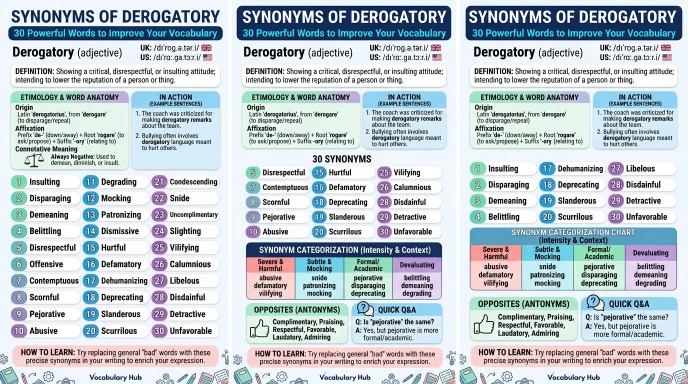
In this guide, you will learn the meaning, pronunciation, history, grammar, and emotional tone of derogatory, along with 30 synonyms, example sentences, related words, and antonyms.
Meaning of Derogatory
Definition
Derogatory (Adjective): Showing disrespect, expressing a negative opinion, or making someone or something seem less valuable or important.
Examples
- The student made a derogatory comment about his classmate.
- She asked her team to avoid derogatory language during the meeting.
Connotative Meaning
Connotation (the feelings or ideas a word suggests beyond its basic meaning) helps us understand the emotional effect of a word.
- Positive tone: Derogatory usually has no positive tone. Respectful criticism can be firm without being insulting.
- Negative tone: The word suggests disrespect, insult, contempt, or an attempt to lower someone’s reputation.
- Neutral tone: The word can be used neutrally in academic, legal, or educational discussions about offensive language.
Etymology
- Origin: Derogatory comes from the Latin verb derogare, meaning “to take away” or “to lessen.”
- Latin roots: It combines de- (“away” or “down”) with rogare (“to ask” or “propose”), which developed into the sense of reducing or taking away from something.
- Development: Through Latin and later English usage, the word came to describe remarks that lower a person’s value, reputation, or standing.
Short History of the Keyword
- Old English (450–1100): The modern word derogatory was not in common use. English used other words and expressions to describe insults, shame, and disrespect.
- Middle English (1100–1500): Latin and French influenced English vocabulary. Words related to judgment, honor, and insult became more common, helping shape the language used to describe disrespect.
- Modern English (1500–Present): Derogatory developed from Latin-based vocabulary and became an established adjective for language or behavior that lowers someone’s standing. Today, it appears in education, journalism, law, and everyday discussion.
Pronunciation (US & UK – IPA)
- US: /dɪˈrɑːɡəˌtɔːri/
- UK: /dɪˈrɒɡətəri/
Syllables
der-og-a-tor-y — 5 syllables.
Affixation Pattern of Derogatory
- Root: rog : associated with asking or proposing in the Latin root rogare.
- Prefix: de- : part of the word’s Latin formation, conveying a sense of taking away or reducing.
- Suffix: -ory : forms adjectives that describe a quality, relation, or function.
Word formation and grammatical categories
- Derogate (verb): To detract from or lessen the value or standing of something.
- Derogation (noun): The act of taking away from, or diminishing, the value or authority of something.
- Derogatory (adjective): Expressing disrespect or a low opinion.
- Derogatorily (adverb): In a disrespectful or belittling way.
- Non-derogatory (adjective): Not insulting or belittling.
These words belong to the same word family, but their grammatical roles and uses differ.
Synonyms of Derogatory
The following 30 words can replace derogatory in suitable contexts. Each word has its own shade of meaning, so consider the tone and purpose of your sentence before choosing one.
1. Insulting (Adjective)
US IPA: /ɪnˈsʌltɪŋ/ | UK IPA: /ɪnˈsʌltɪŋ/
Meaning: Showing disrespect or saying something that hurts another person’s feelings.
Examples:
- His insulting remarks upset the whole class.
- She refused to answer the insulting message.
2. Disparaging (Adjective)
US IPA: /dɪˈsperɪdʒɪŋ/ | UK IPA: /dɪˈspærɪdʒɪŋ/
Meaning: Expressing a low opinion of someone or something.
Examples:
- The manager made disparaging comments about the project.
- Avoid disparaging remarks about other people’s work.
3. Demeaning (Adjective)
US IPA: /dɪˈmiːnɪŋ/ | UK IPA: /dɪˈmiːnɪŋ/
Meaning: Making someone feel less worthy or respected.
Examples:
- Nobody should accept demeaning treatment at work.
- His demeaning words hurt her confidence.
4. Belittling (Adjective)
US IPA: /bɪˈlɪtəlɪŋ/ | UK IPA: /bɪˈlɪtəlɪŋ/
Meaning: Making someone or something seem less important or capable.
Examples:
- The coach stopped the belittling comments.
- Belittling others does not make you stronger.
5. Disrespectful (Adjective)
US IPA: /ˌdɪsrɪˈspektfəl/ | UK IPA: /ˌdɪsrɪˈspektfəl/
Meaning: Showing a lack of respect for someone or something.
Examples:
- His disrespectful reply angered the teacher.
- It is disrespectful to laugh at someone’s mistakes.
6. Offensive (Adjective)
US IPA: /əˈfensɪv/ | UK IPA: /əˈfensɪv/
Meaning: Causing anger, hurt, or upset because something seems rude or insulting.
Examples:
- The website removed the offensive comment.
- Some people found his joke offensive.
7. Contemptuous (Adjective)
US IPA: /kənˈtemptʃuəs/ | UK IPA: /kənˈtemptʃuəs/
Meaning: Showing that you believe someone or something is unworthy of respect.
Examples:
- She gave a contemptuous look to the speaker.
- His contemptuous tone made the discussion worse.
8. Scornful (Adjective)
US IPA: /ˈskɔːrnfəl/ | UK IPA: /ˈskɔːnfəl/
Meaning: Showing strong disrespect or a feeling that someone is beneath you.
Examples:
- He made a scornful remark about the idea.
- Her scornful smile made him feel unwelcome.
9. Pejorative (Adjective)
US IPA: /pɪˈdʒɔːrətɪv/ | UK IPA: /pɪˈdʒɒrətɪv/
Meaning: Expressing criticism or disrespect through a word or phrase.
Examples:
- The label is often used in a pejorative way.
- Writers should explain when a term has a pejorative meaning.
10. Derogative (Adjective)
US IPA: /dɪˈrɑːɡətɪv/ | UK IPA: /dɪˈrɒɡətɪv/
Meaning: Expressing disrespect or a negative judgment; similar to derogatory.
Examples:
- The article avoided derogative labels.
- He objected to the derogative phrase used in the report.
11. Deprecating (Adjective)
US IPA: /ˈdeprəˌkeɪtɪŋ/ | UK IPA: /ˈdeprɪkeɪtɪŋ/
Meaning: Expressing disapproval or making someone or something seem less valuable.
Examples:
- She disliked his deprecating comments about her work.
- His deprecating tone made the team feel discouraged.
12. Abusive (Adjective)
US IPA: /əˈbjuːsɪv/ | UK IPA: /əˈbjuːsɪv/
Meaning: Using cruel, insulting, or harmful words or behavior.
Examples:
- The employee reported abusive language.
- Abusive messages can cause lasting emotional pain.
13. Degrading (Adjective)
US IPA: /dɪˈɡreɪdɪŋ/ | UK IPA: /dɪˈɡreɪdɪŋ/
Meaning: Making someone lose dignity or feel less worthy.
Examples:
- The workers protested against degrading conditions.
- No one deserves degrading treatment.
14. Denigrating (Adjective)
US IPA: /ˈdenɪˌɡreɪtɪŋ/ | UK IPA: /ˈdenɪɡreɪtɪŋ/
Meaning: Unfairly attacking someone’s value, character, or reputation.
Examples:
- The article contained denigrating remarks about the group.
- He stopped denigrating his rivals during the debate.
15. Humiliating (Adjective)
US IPA: /hjuːˈmɪlieɪtɪŋ/ | UK IPA: /hjuːˈmɪlieɪtɪŋ/
Meaning: Causing someone to feel ashamed or embarrassed.
Examples:
- The humiliating joke upset the new student.
- She spoke out against humiliating punishments.
16. Mocking (Adjective)
US IPA: /ˈmɑːkɪŋ/ | UK IPA: /ˈmɒkɪŋ/
Meaning: Showing disrespect by making fun of someone or something.
Examples:
- His mocking voice made the child cry.
- The speaker ignored the mocking laughter.
17. Sneering (Adjective)
US IPA: /ˈsnɪrɪŋ/ | UK IPA: /ˈsnɪərɪŋ/
Meaning: Showing disrespect through a cruel smile, expression, or remark.
Examples:
- She answered his sneering comment calmly.
- His sneering expression showed his contempt.
18. Patronizing (Adjective)
US IPA: /ˈpeɪtrəˌnaɪzɪŋ/ | UK IPA: /ˈpætrənaɪzɪŋ/
Meaning: Treating someone as if they are less intelligent or capable than you.
Examples:
- His patronizing advice annoyed his colleague.
- Try to explain the rules without sounding patronizing.
19. Condescending (Adjective)
US IPA: /ˌkɑːndɪˈsendɪŋ/ | UK IPA: /ˌkɒndɪˈsendɪŋ/
Meaning: Acting as if you are better or more important than another person.
Examples:
- The teacher avoided a condescending tone.
- His condescending reply made the discussion tense.
20. Uncomplimentary (Adjective)
US IPA: /ˌʌnˌkɑːmpləˈmentəri/ | UK IPA: /ˌʌnˌkɒmplɪˈmentəri/
Meaning: Expressing an unfavorable opinion rather than praise.
Examples:
- The review included uncomplimentary comments about the film.
- She made an uncomplimentary remark about his presentation.
21. Slighting (Adjective)
US IPA: /ˈslaɪtɪŋ/ | UK IPA: /ˈslaɪtɪŋ/
Meaning: Showing a lack of respect by treating someone as unimportant.
Examples:
- His slighting remark offended the guest.
- She felt hurt by the slighting reference to her work.
22. Dismissive (Adjective)
US IPA: /dɪˈsmɪsɪv/ | UK IPA: /dɪˈsmɪsɪv/
Meaning: Showing that you do not consider someone or something worthy of attention.
Examples:
- The manager gave a dismissive answer.
- A dismissive attitude can stop useful discussion.
23. Hurtful (Adjective)
US IPA: /ˈhɝːtfəl/ | UK IPA: /ˈhɜːtfəl/
Meaning: Causing emotional pain or distress.
Examples:
- His hurtful words damaged their friendship.
- Think before sharing a hurtful comment online.
24. Nasty (Adjective)
US IPA: /ˈnæsti/ | UK IPA: /ˈnɑːsti/
Meaning: Unkind, unpleasant, or intended to hurt someone.
Examples:
- She received a nasty message after the match.
- There is no need to make nasty comments.
25. Defamatory (Adjective)
US IPA: /dɪˈfæmətɔːri/ | UK IPA: /dɪˈfæmətəri/
Meaning: Making a damaging claim about someone that harms their reputation and may be legally actionable.
Examples:
- The company challenged the allegedly defamatory statement.
- Writers should check facts before publishing claims that could be defamatory.
26. Slanderous (Adjective)
US IPA: /ˈslændərəs/ | UK IPA: /ˈslɑːndərəs/
Meaning: Containing spoken false claims that harm someone’s reputation.
Examples:
- He denied making slanderous statements about his rival.
- Slanderous accusations can damage a person’s good name.
27. Vulgar (Adjective)
US IPA: /ˈvʌlɡər/ | UK IPA: /ˈvʌlɡə/
Meaning: Using language or behavior that is crude, offensive, or socially unacceptable.
Examples:
- The teacher asked the students to avoid vulgar language.
- The comedian apologized for a vulgar joke.
28. Critical (Adjective)
US IPA: /ˈkrɪtɪkəl/ | UK IPA: /ˈkrɪtɪkəl/
Meaning: Expressing disapproval or pointing out faults; it is not always insulting.
Examples:
- The reviewer was critical of the film’s ending.
- You can be critical of an idea without attacking its creator.
29. Disdainful (Adjective)
US IPA: /dɪsˈdeɪnfəl/ | UK IPA: /dɪsˈdeɪnfəl/
Meaning: Showing that you consider someone or something unworthy of respect.
Examples:
- He made a disdainful comment about the proposal.
- Her disdainful attitude discouraged the volunteers.
30. Dehumanizing (Adjective)
US IPA: /ˌdiːˈhjuːməˌnaɪzɪŋ/ | UK IPA: /ˌdiːˈhjuːmənaɪzɪŋ/
Meaning: Treating people as if they are less than human or do not deserve dignity.
Examples:
- The campaign challenged dehumanizing language about migrants.
- Dehumanizing labels can encourage prejudice and discrimination.
Prototype Meaning
The most typical meaning of derogatory is language that shows disrespect or lowers someone’s value in the eyes of others. People usually imagine an insulting remark, a cruel nickname, or a comment that makes another person feel small.
For example, calling someone’s work “worthless” just to embarrass them is derogatory. The word can describe spoken comments, written messages, labels, jokes, and descriptions. Its main purpose in a sentence is to show that language carries a negative or belittling tone.
Prototype Categorization
Synonyms of derogatory can be grouped by their meanings and uses. These categories help writers choose words that fit the exact situation.
- Direct insults: Insulting, offensive, abusive, hurtful, and nasty. Use these words when someone says something rude or painful.
- Belittling and humiliation: Demeaning, belittling, degrading, humiliating, and slighting. These words describe language or actions that lower someone’s dignity or importance.
- Contempt and disrespect: Contemptuous, scornful, disdainful, sneering, and disrespectful. Use these when someone shows that they consider another person unworthy of respect.
- Negative judgments: Disparaging, denigrating, deprecating, uncomplimentary, and critical. These words fit comments that express disapproval or a low opinion.
- Condescending behavior: Patronizing, condescending, and dismissive. These describe language that treats someone as less capable or less important.
- Insulting words and labels: Pejorative, derogative, vulgar, and mocking. These can describe offensive terms, crude expressions, or language used to make fun of others.
- Reputation-damaging claims: Defamatory and slanderous. These are more specific terms for statements that can harm a person’s reputation, especially false claims.
- Attacks on human dignity: Dehumanizing. Use this when language denies or undermines the humanity of a person or group.
Categorization helps writers avoid choosing a synonym that changes the intended meaning. For example, critical can describe fair feedback, while abusive suggests much harsher language. Choose a word based on the tone, context, and effect you want to communicate.
Antonyms of Derogatory
Antonyms are words with opposite or contrasting meanings. These words describe language that shows respect, praise, or approval instead of disrespect.
- Respectful (Adjective): Showing consideration and respect for others.
- Complimentary (Adjective): Expressing praise or admiration.
- Appreciative (Adjective): Showing gratitude or recognition of someone’s value.
- Flattering (Adjective): Giving praise that makes someone feel admired or important.
- Laudatory (Adjective): Expressing strong praise or approval.
- Eulogistic (Adjective): Expressing high praise, especially for someone’s achievements or character.
- Affirming (Adjective): Showing support or confirming someone’s worth.
- Honoring (Verb/Adjective): Showing respect or giving recognition to someone.
- Kind (Adjective): Showing care and consideration for others.
- Polite (Adjective): Showing good manners and consideration in speech or behavior.
Short Questions and Answers
– What does derogatory mean?
Derogatory means showing disrespect or expressing a negative opinion about someone or something.
– When should derogatory be used?
Use it when describing insulting words, disrespectful comments, or language that lowers someone’s value or reputation.
– Is derogatory positive or negative?
It is generally negative because it describes language or expressions that show disrespect.
– How is derogatory different from similar words?
Insulting focuses on an offense, demeaning focuses on lowering someone’s dignity, and disparaging focuses on expressing a low opinion. Pejorative often describes words or labels with a negative meaning.
– Can derogatory be used in formal writing?
Yes. It is common in academic writing, journalism, reports, and discussions about discrimination or offensive language.
– What is the difference between derogatory and defamatory?
Derogatory describes disrespectful language. Defamatory describes a statement that harms someone’s reputation and may have legal consequences.
– What is the opposite of derogatory?
Words such as respectful, complimentary, and laudatory can express the opposite idea.
– Why should English learners study synonyms of derogatory?
Learning these synonyms helps learners understand subtle differences in tone, improve vocabulary, and communicate more accurately.
Conclusion
Learning the meaning of derogatory and its 30 synonyms can improve your English vocabulary and help you understand how words affect people. Each synonym has a different shade of meaning. Words like insulting and offensive describe rude language, while demeaning and belittling focus on lowering someone’s dignity. Words such as disparaging and contemptuous express a negative opinion or lack of respect.
Using the right synonym makes your writing clearer, stronger, and more natural. It also helps you avoid repetition in essays, articles, school assignments, and daily conversations. Understanding pronunciation, grammar, history, and emotional tone makes it easier to use these words correctly.
Practice by learning a few synonyms each day and writing your own example sentences. With regular practice, you can strengthen your speaking and writing skills, express ideas with greater accuracy, and build confidence in English.
Read more about!
- Synonyms for Goals: Powerful Words to Use Instead
- 30 Synonyms for ‘Impactful’ to Boost Your Vocabulary
- Synonyms for Valuable: Powerful Words to Use Instead

I am a linguist with 17 years of experience in English language teaching, including postgraduate-level instruction. My expertise includes English grammar, and I contribute as a content and blog writer, producing scholarly and educational language resources.