The word major means something that is very important, large, serious, or significant. Imagine a student preparing for a final exam. That exam is a major part of the student’s grade because it has a big impact on the final result.
People use the word major every day when talking about important events, problems, achievements, decisions, and changes.
Learning synonyms for major helps English learners, writers, students, teachers, and content creators express ideas more clearly. Using different words also prevents repetition and makes writing more interesting.
In this article, you will learn the meaning of major, its pronunciation, history, grammar, connotation, and 30 useful synonyms. You will also discover examples, semantic categories, antonyms, and practical tips to improve your vocabulary and communication skills.
Meaning of Major
Definition
Major (Adjective)
A word used to describe something that is very important, large, serious, or significant.
Examples
- The company announced a major change in its policy.
- She played a major role in the project.
Connotative Meaning
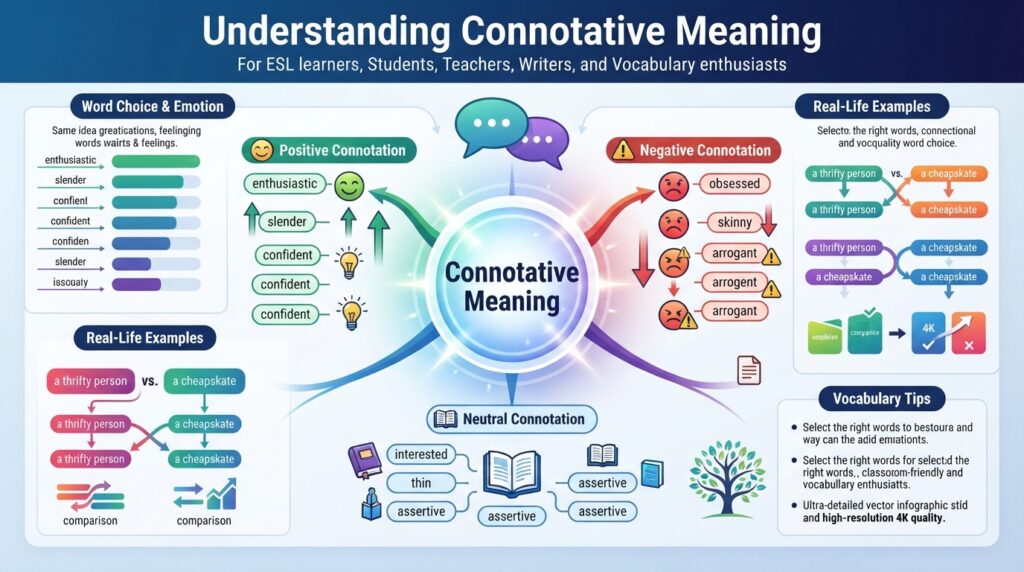
What is connotation? (The emotional or cultural feeling associated with a word beyond its basic meaning.)
- Positive tone: Important, influential, valuable, successful.
- Negative tone: Serious, critical, troublesome, severe.
- Neutral tone: Large, significant, considerable.
Etymology
- Origin: Latin major meaning “greater” or “larger.”
- Entered English through Old French.
- Originally referred to someone or something greater in size, rank, or importance.
Short History of the Word
Old English (450–1100)
- The exact word major was not used.
- Similar ideas were expressed with words meaning “great” or “important.”
Middle English (1100–1500)
- French influence introduced many Latin-based words.
- Early forms related to rank and importance appeared.
Modern English (1500–Present)
- Major became common in education, military ranks, business, and everyday speech.
- Today it means important, significant, or large.
Pronunciation (US & UK – IPA)
US: /ˈmeɪ.dʒɚ/
UK: /ˈmeɪ.dʒə/
Syllables
ma-jor
Affixation Pattern of Major
Root: major
Prefix: None
Suffix: None
Word Formation
- Major (Adjective)
- Major (Noun)
- Majority (Noun)
- Majorly (Adverb)
- Majorship (Noun)
- Majestic (Adjective)
- Majesty (Noun)
Synonyms of Major
1. Important (Adjective)
US: /ɪmˈpɔːr.tənt/ | UK: /ɪmˈpɔː.tənt/
Meaning: Having great value or significance.
Examples:
- Important decisions affect many people.
- Education is important for success.
2. Significant (Adjective)
US: /sɪɡˈnɪf.ə.kənt/ | UK: /sɪɡˈnɪf.ɪ.kənt/
Meaning: Meaningful or notable.
Examples:
- The study showed significant results.
- There was a significant increase in sales.
3. Crucial (Adjective)
US: /ˈkruː.ʃəl/ | UK: /ˈkruː.ʃəl/
Meaning: Extremely important.
Examples:
- Timing is crucial in sports.
- Water is crucial for life.
4. Essential (Adjective)
US: /ɪˈsen.ʃəl/ | UK: /ɪˈsen.ʃəl/
Meaning: Absolutely necessary.
Examples:
- Sleep is essential for health.
- Teamwork is essential for success.
5. Vital (Adjective)
US: /ˈvaɪ.t̬əl/ | UK: /ˈvaɪ.təl/
Meaning: Necessary for survival or success.
Examples:
- Clean water is vital.
- Communication is vital in business.
6. Critical (Adjective)
US: /ˈkrɪt̬.ɪ.kəl/ | UK: /ˈkrɪt.ɪ.kəl/
Meaning: Very serious or important.
Examples:
- The patient is in critical condition.
- This is a critical issue.
7. Key (Adjective)
US: /kiː/ | UK: /kiː/
Meaning: Most important.
Examples:
- She is a key member.
- Planning is a key factor.
8. Principal (Adjective)
US: /ˈprɪn.sə.pəl/ | UK: /ˈprɪn.sɪ.pəl/
Meaning: Main or primary.
Examples:
- Safety is the principal concern.
- He explained the principal reason.
9. Primary (Adjective)
US: /ˈpraɪ.mer.i/ | UK: /ˈpraɪ.mə.ri/
Meaning: First in importance.
Examples:
- Our primary goal is quality.
- Health is a primary concern.
10. Leading (Adjective)
US: /ˈliː.dɪŋ/ | UK: /ˈliː.dɪŋ/
Meaning: Most important or successful.
Examples:
- She is a leading scientist.
- It is a leading company.
11. Substantial (Adjective)
US: /səbˈstæn.ʃəl/ | UK: /səbˈstæn.ʃəl/
Meaning: Large in amount or importance.
Examples:
- They made substantial progress.
- The damage was substantial.
12. Considerable (Adjective)
US: /kənˈsɪd.ɚ.ə.bəl/ | UK: /kənˈsɪd.ər.ə.bəl/
Meaning: Quite large or important.
Examples:
- It required considerable effort.
- The project gained considerable support.
13. Great (Adjective)
US: /ɡreɪt/ | UK: /ɡreɪt/
Meaning: Very important or large.
Examples:
- It was a great achievement.
- The event had great impact.
14. Serious (Adjective)
US: /ˈsɪr.i.əs/ | UK: /ˈsɪə.ri.əs/
Meaning: Important and not trivial.
Examples:
- This is a serious problem.
- They had a serious discussion.
15. Influential (Adjective)
US: /ˌɪn.fluˈen.ʃəl/ | UK: /ˌɪn.fluˈen.ʃəl/
Meaning: Having strong influence.
Examples:
- She is an influential leader.
- The book was influential.
16. Dominant (Adjective)
US: /ˈdɑː.mə.nənt/ | UK: /ˈdɒm.ɪ.nənt/
Meaning: Most powerful or important.
Examples:
- The team was dominant.
- Technology plays a dominant role.
17. Weighty (Adjective)
US: /ˈweɪ.t̬i/ | UK: /ˈweɪ.ti/
Meaning: Important and serious.
Examples:
- It is a weighty matter.
- The report contains weighty issues.
18. Meaningful (Adjective)
US: /ˈmiː.nɪŋ.fəl/ | UK: /ˈmiː.nɪŋ.fəl/
Meaning: Having importance or value.
Examples:
- We had a meaningful conversation.
- Her work is meaningful.
19. Monumental (Adjective)
US: /ˌmɑːn.jəˈmen.t̬əl/ | UK: /ˌmɒn.jʊˈmen.təl/
Meaning: Extremely large or important.
Examples:
- It was a monumental achievement.
- They faced a monumental challenge.
20. Momentous (Adjective)
US: /moʊˈmen.t̬əs/ | UK: /məˈmen.təs/
Meaning: Very important and historic.
Examples:
- It was a momentous occasion.
- The decision was momentous.
21. Notable (Adjective)
US: /ˈnoʊ.t̬ə.bəl/ | UK: /ˈnəʊ.tə.bəl/
Meaning: Worth noticing.
Examples:
- There was notable progress.
- She made a notable contribution.
22. Prominent (Adjective)
US: /ˈprɑː.mə.nənt/ | UK: /ˈprɒm.ɪ.nənt/
Meaning: Important and well-known.
Examples:
- He is a prominent figure.
- The issue remains prominent.
23. Consequential (Adjective)
US: /ˌkɑːn.səˈkwen.ʃəl/ | UK: /ˌkɒn.sɪˈkwen.ʃəl/
Meaning: Producing important effects.
Examples:
- It was a consequential choice.
- The meeting was consequential.
24. Extensive (Adjective)
US: /ɪkˈsten.sɪv/ | UK: /ɪkˈsten.sɪv/
Meaning: Large in amount or degree.
Examples:
- The damage was extensive.
- They conducted extensive research.
25. Massive (Adjective)
US: /ˈmæs.ɪv/ | UK: /ˈmæs.ɪv/
Meaning: Very large or important.
Examples:
- The company made a massive investment.
- There was a massive crowd.
26. Large-Scale (Adjective)
US: /ˌlɑːrdʒ ˈskeɪl/ | UK: /ˌlɑːdʒ ˈskeɪl/
Meaning: Involving a large area or amount.
Examples:
- They launched a large-scale campaign.
- The project was large-scale.
27. Extensive-Ranging (Adjective)
US: /ɪkˈsten.sɪv/ | UK: /ɪkˈsten.sɪv/
Meaning: Covering many areas.
Examples:
- The reforms were extensive-ranging.
- The effects were extensive-ranging.
28. Paramount (Adjective)
US: /ˈper.ə.maʊnt/ | UK: /ˈpær.ə.maʊnt/
Meaning: More important than anything else.
Examples:
- Safety is paramount.
- Trust is paramount in relationships.
29. Outstanding (Adjective)
US: /aʊtˈstæn.dɪŋ/ | UK: /aʊtˈstæn.dɪŋ/
Meaning: Extremely important or excellent.
Examples:
- She gave an outstanding performance.
- The results were outstanding.
30. Supreme (Adjective)
US: /suːˈpriːm/ | UK: /suːˈpriːm/
Meaning: Highest in rank or importance.
Examples:
- The supreme goal is peace.
- The court has supreme authority.
Prototype Meaning
The most common meaning of major is very important or significant.
When people hear this word, they usually think of something that has a strong effect, high value, or a large impact on people, events, or outcomes.
Prototype Categorization
Categorizing synonyms helps writers choose the most accurate word for different situations.
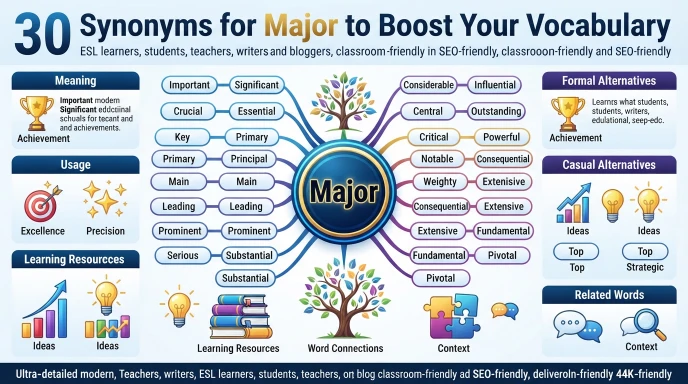
- Importance: important, crucial, essential, vital, key, paramount.
- Size and Scale: massive, extensive, large-scale, substantial.
- Influence and Power: influential, dominant, leading, supreme.
- Historical Impact: momentous, monumental, consequential.
- Recognition and Visibility: notable, prominent, outstanding.
Using categories helps writers select the best synonym based on meaning, tone, and context.
Antonyms of Major
- Minor (Adjective) – Small or less important.
- Insignificant (Adjective) – Not important.
- Trivial (Adjective) – Having little value.
- Unimportant (Adjective) – Not worthy of attention.
- Secondary (Adjective) – Less important than the main thing.
- Negligible (Adjective) – Too small to matter.
- Slight (Adjective) – Small in amount or importance.
- Marginal (Adjective) – Having limited significance.
Formal and Casual Alternatives
Formal Alternatives
- Significant
- Crucial
- Paramount
- Consequential
- Monumental
- Momentous
Casual Alternatives
- Big
- Important
- Huge
- Main
- Key
- Great
Related Words
- Majority (Noun)
- Importance (Noun)
- Significance (Noun)
- Influence (Noun)
- Priority (Noun)
- Prominence (Noun)
- Greatness (Noun)
- Essentiality (Noun)
Short Questions and Answers
- What does major mean?
Major means very important, significant, or large. - When should major be used?
Use it when talking about something important, serious, or influential. - Is major positive or negative?
It can be positive, negative, or neutral depending on the context. - How is it different from similar words?
Major is a general term. Words like crucial and vital express a stronger level of importance.
Conclusion
Learning the word major and its synonyms can greatly improve your English vocabulary. These words help you express ideas more clearly in speaking and writing.
Using different synonyms also prevents repetition and makes your communication more engaging. Understanding pronunciation, connotation, history, and categories gives you a deeper understanding of each word.
if you are an ESL learner, student, teacher, writer, or content creator, mastering these synonyms can strengthen your language skills and boost your confidence. Try using a new synonym each day in conversations, essays, emails, or social media posts. Regular practice will help you remember the words and use them naturally in real-life situations.
Read more dbout!
- Synonyms for Horny 30 Powerful Words to Vocabulary
- Synonyms for Vulnerable: Alternative Words & Meanings

I am an American author, and I write books about power, strategy, and human behavior. My writing style is simple but deep, and I try to explain how people think and act in real-life situations.
I studied classical studies, and before becoming a writer, I worked in different fields which helped me understand people and life better.
My most famous books include The 48 Laws of Power, The Art of Seduction, and Mastery. These books are widely read by business people, leaders, and students around the world.