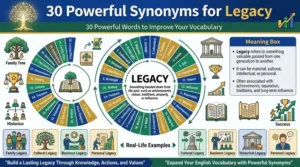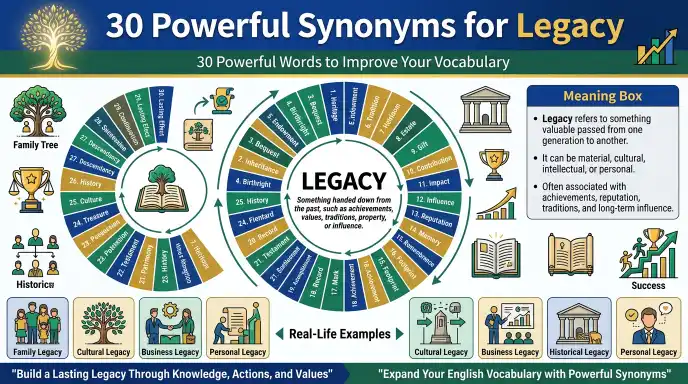
Legacy means something valuable that a person leaves behind for future generations. It can be money, property, achievements, values, ideas, or a lasting impact. Imagine a teacher who spends many years helping students succeed.
Long after retirement, people still remember the teacher’s kindness and wisdom. That lasting influence becomes the teacher’s legacy.
The word legacy is common in education, history, business, family discussions, and personal development.
Learning synonyms for legacy helps English learners and content writers express ideas more clearly and avoid repeating the same word.
A strong vocabulary makes writing and speaking more effective.
In this article, you will learn the meaning of legacy, its pronunciation, grammar, history, emotional tone, and 30 useful synonyms. You will also explore examples, semantic categories, antonyms, related words, and practical language tips.
Meaning of Legacy
Definition
Legacy (Noun):
Something handed down from the past, such as property, values, achievements, traditions, or influence.
Examples
- Her legacy continues to inspire young people.
- The scientist left a legacy of important discoveries.
Connotative Meaning
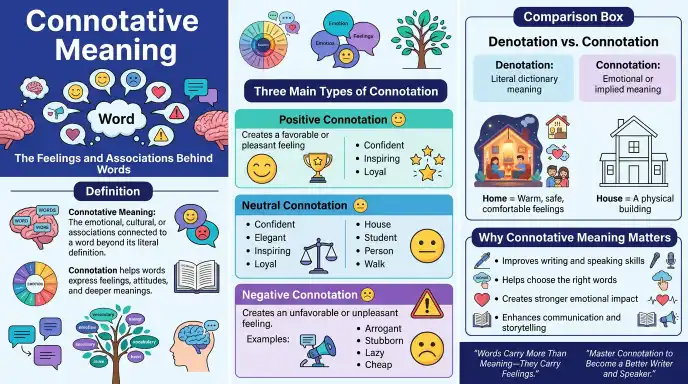
(Connotation: the emotional feeling or association connected to a word beyond its dictionary meaning.)
- Positive tone: Achievement, inspiration, honor, contribution.
- Negative tone: Can refer to harmful effects or negative consequences left behind.
- Neutral tone: Something inherited or passed from one generation to another.
Etymology
- Source language: Latin
- Derived from legatus, meaning “delegate” or “person sent on a mission.”
- Related to the Latin word legare, meaning “to appoint” or “to leave by will.”
- Original meaning: A gift or property left to another person.
Short History of the Keyword
- Old English (450–1100): The word legacy was not used in Old English.
- Middle English (1100–1500): The term entered English through Latin and Old French influences.
- Modern English (1500–Present): Legacy expanded beyond inheritance to include reputation, achievements, and long-term influence.
Pronunciation (US & UK – IPA)
US: /ˈleɡəsi/
UK: /ˈleɡəsi/
Syllables
leg-a-cy
Affixation Pattern of Legacy
Root: legacy
Prefix: None
Suffix: None
Word Formation of the Keyword
- Legacy (Noun)
- Legacies (Plural Noun)
- Legacy-based (Adjective)
- Legacy-driven (Adjective)
- Legacy-building (Noun/Adjective)
Synonyms of Legacy
1. Heritage (Noun)
US: /ˈherɪtɪdʒ/ | UK: /ˈherɪtɪdʒ/
Meaning: Traditions, culture, or property passed down through generations.
Examples:
- Heritage is an important part of identity.
- The town protects its cultural heritage.
2. Inheritance (Noun)
US: /ɪnˈherɪtəns/ | UK: /ɪnˈherɪtəns/
Meaning: Money, property, or qualities received from others.
Examples:
- She received a large inheritance.
- The house became his inheritance.
3. Birthright (Noun)
US: /ˈbɜːrθraɪt/ | UK: /ˈbɜːθraɪt/
Meaning: A right or possession gained by birth.
Examples:
- Freedom is a birthright.
- He viewed the land as his birthright.
4. Bequest (Noun)
US: /bɪˈkwest/ | UK: /bɪˈkwest/
Meaning: Property left in a will.
Examples:
- The museum received a bequest.
- Her bequest supported education.
5. Endowment (Noun)
US: /ɪnˈdaʊmənt/ | UK: /ɪnˈdaʊmənt/
Meaning: A gift of money or resources.
Examples:
- The university received an endowment.
- The endowment funded research.
6. Tradition (Noun)
US: /trəˈdɪʃən/ | UK: /trəˈdɪʃən/
Meaning: A custom passed through generations.
Examples:
- The tradition continues today.
- Families value tradition.
7. Reputation (Noun)
US: /ˌrepjəˈteɪʃən/ | UK: /ˌrepjʊˈteɪʃən/
Meaning: The opinion people have about someone.
Examples:
- She built a strong reputation.
- His reputation remains respected.
8. Influence (Noun)
US: /ˈɪnfluəns/ | UK: /ˈɪnfluəns/
Meaning: The power to affect others.
Examples:
- His influence lasted for decades.
- The leader had great influence.
9. Impact (Noun)
US: /ˈɪmpækt/ | UK: /ˈɪmpækt/
Meaning: A strong effect on people or events.
Examples:
- Her impact was significant.
- The project had a lasting impact.
10. Contribution (Noun)
US: /ˌkɑːntrɪˈbjuːʃən/ | UK: /ˌkɒntrɪˈbjuːʃən/
Meaning: Something valuable given to others.
Examples:
- His contribution changed the industry.
- She made a major contribution.
11. Remembrance (Noun)
US: /rɪˈmembrəns/ | UK: /rɪˈmembrəns/
Meaning: The act of remembering someone.
Examples:
- The event was held in remembrance.
- Her remembrance continues.
12. Memory (Noun)
US: /ˈmeməri/ | UK: /ˈmeməri/
Meaning: Something remembered from the past.
Examples:
- The memory remains strong.
- Happy memories form part of a legacy.
13. Record (Noun)
US: /ˈrekərd/ | UK: /ˈrekɔːd/
Meaning: A preserved account of achievements.
Examples:
- His record remains impressive.
- The company has a strong record.
14. Footprint (Noun)
US: /ˈfʊtprɪnt/ | UK: /ˈfʊtprɪnt/
Meaning: A lasting mark left behind.
Examples:
- The inventor left a footprint on history.
- Her footprint remains visible.
15. Mark (Noun)
US: /mɑːrk/ | UK: /mɑːk/
Meaning: A lasting sign or effect.
Examples:
- He left a mark on society.
- The project made its mark.
16. Gift (Noun)
US: /ɡɪft/ | UK: /ɡɪft/
Meaning: Something given to another person.
Examples:
- Education is a valuable gift.
- Her gift benefited many people.
17. Treasure (Noun)
US: /ˈtreʒər/ | UK: /ˈtreʒə/
Meaning: Something highly valued.
Examples:
- The letters became a family treasure.
- History is a national treasure.
18. Estate (Noun)
US: /ɪˈsteɪt/ | UK: /ɪˈsteɪt/
Meaning: Property left by a person.
Examples:
- The estate was divided equally.
- The estate included farmland.
19. Patrimony (Noun)
US: /ˈpætrɪmoʊni/ | UK: /ˈpætrɪməni/
Meaning: Property inherited from ancestors.
Examples:
- The land was family patrimony.
- He protected his patrimony.
20. Heirloom (Noun)
US: /ˈerluːm/ | UK: /ˈeəluːm/
Meaning: A valuable object passed through generations.
Examples:
- The watch became a family heirloom.
- She inherited an heirloom necklace.
21. Heritage Asset (Noun)
US: /ˈherɪtɪdʒ ˈæset/ | UK: /ˈherɪtɪdʒ ˈæset/
Meaning: A valuable item preserved from the past.
Examples:
- The castle is a heritage asset.
- The artifact became a heritage asset.
22. Achievement (Noun)
US: /əˈtʃiːvmənt/ | UK: /əˈtʃiːvmənt/
Meaning: Something successfully accomplished.
Examples:
- His achievement inspired others.
- The award recognized her achievement.
23. Accomplishment (Noun)
US: /əˈkɑːmplɪʃmənt/ | UK: /əˈkʌmplɪʃmənt/
Meaning: A completed success.
Examples:
- The bridge was a great accomplishment.
- Her accomplishments are remembered.
24. Aftereffect (Noun)
US: /ˈæftərefekt/ | UK: /ˈɑːftərɪfekt/
Meaning: A result that remains afterward.
Examples:
- The aftereffects lasted years.
- Positive aftereffects shaped the community.
25. Consequence (Noun)
US: /ˈkɑːnsəkwens/ | UK: /ˈkɒnsɪkwəns/
Meaning: A result of an action.
Examples:
- Every decision has a consequence.
- The consequence affected future generations.
26. Monument (Noun)
US: /ˈmɑːnjəmənt/ | UK: /ˈmɒnjəmənt/
Meaning: Something built to remember a person.
Examples:
- The monument honors heroes.
- Visitors admired the monument.
27. Testament (Noun)
US: /ˈtestəmənt/ | UK: /ˈtestəmənt/
Meaning: Evidence of someone’s achievements.
Examples:
- The building is a testament to hard work.
- Her success is a testament to dedication.
28. Symbol (Noun)
US: /ˈsɪmbəl/ | UK: /ˈsɪmbəl/
Meaning: Something representing an idea.
Examples:
- The statue became a symbol.
- The flag is a symbol of unity.
29. Lineage (Noun)
US: /ˈlɪniɪdʒ/ | UK: /ˈlɪniɪdʒ/
Meaning: Family ancestry or descent.
Examples:
- The family traced its lineage.
- His lineage spans centuries.
30. Succession (Noun)
US: /səkˈseʃən/ | UK: /səkˈseʃən/
Meaning: The passing of roles or property.
Examples:
- Succession planning is important.
- The succession happened smoothly.
Prototype Meaning
The most typical meaning of legacy is something important that a person leaves behind after their life or career.
People often think of achievements, values, traditions, property, or a positive impact that continues to influence others in the future.
Prototype Categorization
- Inheritance Synonyms: Inheritance, Bequest, Estate, Patrimony, Heirloom
- Cultural Synonyms: Heritage, Tradition, Lineage, Heritage Asset
- Achievement Synonyms: Achievement, Accomplishment, Contribution, Testament
- Influence Synonyms: Impact, Influence, Mark, Footprint
- Memory Synonyms: Remembrance, Memory, Monument, Symbol
Categorization helps writers choose the best synonym for specific contexts. For example, inheritance relates to property, while impact focuses on influence and lasting effects.
Antonyms of Legacy
- Loss (Noun): The absence of something valuable.
- Oblivion (Noun): A state of being forgotten.
- Insignificance (Noun): Lack of importance or influence.
- Forgetfulness (Noun): Failure to remember.
- Erasure (Noun): The removal of traces or records.
- Destruction (Noun): Complete ruin or elimination.
Formal and Casual Usage
Formal Synonyms
- Bequest
- Patrimony
- Endowment
- Testament
- Succession
- Heritage
Casual Synonyms
- Memory
- Gift
- Mark
- Impact
- Treasure
- Influence
Related Words Section
- Heritage
- Inheritance
- Tradition
- Ancestor
- Heirloom
- Reputation
- Influence
- Achievement
- Contribution
- History
Meaning and Example Sentence Table
| Word | Meaning | Example Sentence |
| Legacy | Something left behind | Her legacy inspires students. |
| Heritage | Cultural inheritance | The city protects its heritage. |
| Impact | Strong effect | His impact changed lives. |
| Achievement | Successful accomplishment | The award honored her achievement. |
| Influence | Power to affect others | Her influence remains strong. |
Short Questions and Answers
- What does legacy mean?
Legacy means something valuable or meaningful passed on to future generations. - When should legacy be used?
Use it when discussing inheritance, achievements, traditions, or lasting influence. - Is legacy positive or negative?
It is usually positive, but it can describe negative effects left behind as well. - How is it different from similar words?
Legacy is broader than inheritance because it includes values, reputation, influence, and achievements.
Conclusion
Learning the word legacy and its synonyms can greatly improve your English vocabulary. These words help you describe inheritance, achievements, traditions, memories, and lasting influence with greater accuracy.
Using different synonyms strengthens writing and speaking skills while preventing repetitive language. Understanding pronunciation, history, connotation, and related meanings also helps you use these words confidently in different situations.
if you are writing about family history, famous leaders, personal success, or cultural traditions, these synonyms can make your communication more effective. Practice them regularly in conversations, essays, and daily writing to build confidence and expand your vocabulary over time.
Discover more about!
- Synonyms for Fancy: 30 Vocabulary-Boosting Words
- Synonyms for Common: 30 Words to Boost Vocabulary
- 30 Powerful Synonyms for Various You Should Know

I am an American author, and I write books about power, strategy, and human behavior. My writing style is simple but deep, and I try to explain how people think and act in real-life situations.
I studied classical studies, and before becoming a writer, I worked in different fields which helped me understand people and life better.
My most famous books include The 48 Laws of Power, The Art of Seduction, and Mastery. These books are widely read by business people, leaders, and students around the world.