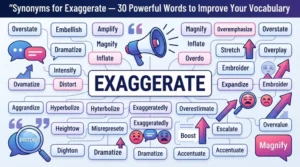
Exaggerate means to describe something as bigger, better, worse, or more important than it really is. Imagine a student telling a friend, “I waited for ten hours!” when the actual wait was only one hour.
The student has exaggerated the situation. This word is common in everyday English because people often describe stories, feelings, problems, achievements, or events. Learning synonyms for exaggerate helps English learners and content writers express ideas with more variety and precision.
Words such as overstate, amplify, and embellish can fit different situations.
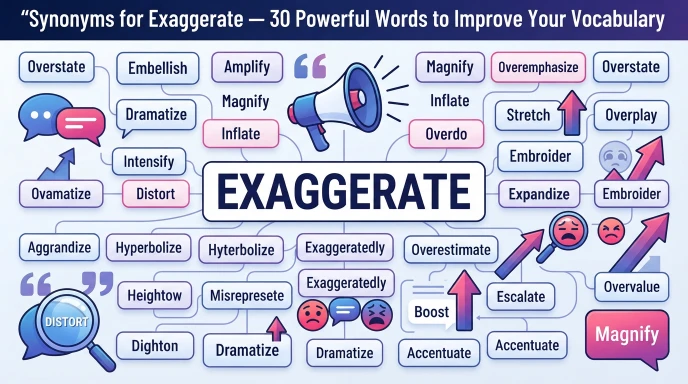
This article explains the meaning, grammar, pronunciation, history, tone, and word formation of exaggerate. It also gives 30 useful synonyms with simple meanings and examples, followed by semantic categories, related words, antonyms, FAQs, and practical writing tips.
Meaning of Exaggerate
Definition
Exaggerate (Verb):
To make something seem larger, better, worse, or more important than it really is.
Examples
- He tends to exaggerate his achievements.
- Don’t exaggerate the problem; it is easy to solve.
Connotative Meaning
(Connotation: the feeling or association that a word may suggest beyond its basic dictionary meaning.)
- Positive Tone: Can suggest colorful storytelling, humor, or dramatic expression.
- Negative Tone: Often suggests dishonesty, distortion, or making something seem more serious than it is.
- Neutral Tone: Can simply describe making something appear greater or stronger than its actual level.
Etymology
- Origin: Latin.
- Latin source: exaggerare.
- Original meaning: “To heap up” or “to make higher.”
- The word entered English through French and Latin influence.
Short History of the Keyword
Old English (450–1100)
The modern word exaggerate was not part of Old English vocabulary. English speakers used other words to describe making something greater, higher, or more than its normal size.
Middle English (1100–1500)
Latin and French vocabulary had a growing influence on English. Words related to increasing, enlarging, and overstating gradually became more common in educated and formal language.
Modern English (1500–Present)
Exaggerate became established in English as a verb meaning to make something appear greater than it really is. Today, it is widely used for stories, claims, emotions, problems, achievements, and descriptions.
Pronunciation (US & UK – IPA)
US: /ɪɡˈzædʒəreɪt/
UK: /ɪɡˈzædʒəreɪt/
Syllables
ex-ag-ger-ate
Affixation Pattern of Exaggerate
Root
- agger :related to the Latin idea of a mound or heap.
Prefix
- ex- : historically connected with the idea of “out” or “thoroughly.”
Suffix
- -ate : forms a verb in this word.
Word Formation
- exaggerate :verb: to make something seem greater than it is
- exaggerated : adjective/verb: made greater than reality
- exaggerating : verb: making something seem greater
- exaggeration : noun: an overstated description
- exaggeratedly : adverb: in an exaggerated manner
Related Words
- overstatement
- distortion
- amplification
- embellishment
- hyperbole
- inflation
- dramatization
- enhancement
- magnification
- misrepresentation
Formal and Casual Alternatives
| Formal | Casual |
| Overstate | Blow up |
| Amplify | Make a big deal |
| Embellish | Stretch the truth |
| Magnify | Make it sound bigger |
| Overemphasize | Play it up |
Meaning Column
| Word | Meaning |
| Exaggerate | Make something seem greater than reality |
| Overstate | Describe something as more important or serious than it is |
| Amplify | Increase the strength or effect of something |
| Embellish | Add extra details to make a story more interesting |
| Magnify | Make something appear larger or more important |
Example Sentence Column
| Word | Example Sentence |
| Exaggerate | Don’t exaggerate the size of the problem. |
| Overstate | The report may overstate the benefits. |
| Amplify | Social media can amplify a small mistake. |
| Embellish | He likes to embellish his travel stories. |
| Magnify | Fear can magnify a small concern. |
Synonyms of Exaggerate
1. Overstate (Verb)
US: /ˌoʊvərˈsteɪt/ | UK: /ˌəʊvəˈsteɪt/
Meaning: To describe something as more important, serious, or valuable than it really is.
Examples:
- The advertisement may overstate the product’s benefits.
- She did not want to overstate the problem.
2. Embellish (Verb)
US: /ɪmˈbelɪʃ/ | UK: /ɪmˈbelɪʃ/
Meaning: To add extra details to make a story more interesting or impressive.
Examples:
- He likes to embellish his travel stories.
- She embellished the story with colorful details.
3. Amplify (Verb)
US: /ˈæmpləfaɪ/ | UK: /ˈæmplɪfaɪ/
Meaning: To make something stronger, greater, or more noticeable.
Examples:
- Social media can amplify a small mistake.
- The microphone amplified her voice.
4. Magnify (Verb)
US: /ˈmæɡnəfaɪ/ | UK: /ˈmæɡnɪfaɪ/
Meaning: To make something appear larger or more important than it is.
Examples:
- Fear can magnify a small problem.
- The lens magnifies tiny objects.
5. Inflate (Verb)
US: /ɪnˈfleɪt/ | UK: /ɪnˈfleɪt/
Meaning: To make an amount, value, or importance seem greater than it really is.
Examples:
- The company was accused of inflating its sales figures.
- He inflated the cost of the project.
6. Overemphasize (Verb)
US: /ˌoʊərˈemfəsaɪz/ | UK: /ˌəʊvərˈemfəsaɪz/
Meaning: To give something more importance than it deserves.
Examples:
- We should not overemphasize one small mistake.
- The article overemphasizes the negative effects.
7. Overplay (Verb)
US: /ˌoʊvərˈpleɪ/ | UK: /ˌəʊvəˈpleɪ/
Meaning: To make something seem more important or serious than it really is.
Examples:
- The media sometimes overplays minor events.
- Don’t overplay the importance of one test.
8. Dramatize (Verb)
US: /ˈdræmətaɪz/ | UK: /ˈdræmətaɪz/
Meaning: To present something in a more dramatic way than it really is.
Examples:
- He tends to dramatize ordinary problems.
- The movie dramatizes the historical event.
9. Overdraw (Verb)
US: /ˌoʊvərˈdrɔː/ | UK: /ˌəʊvəˈdrɔː/
Meaning: To describe or present something in an exaggerated way.
Examples:
- The cartoon overdraws the character’s features.
- The article overdraws the risks involved.
10. Stretch (Verb)
US: /stretʃ/ | UK: /stretʃ/
Meaning: To make a statement less accurate by adding too much to it.
Examples:
- Saying he ran fifty miles is stretching the truth.
- That claim stretches the facts too far.
11. Overinflate (Verb)
US: /ˌoʊvərɪnˈfleɪt/ | UK: /ˌəʊvərɪnˈfleɪt/
Meaning: To make something seem larger, more valuable, or more important than it really is.
Examples:
- The advertisement overinflates the product’s benefits.
- He overinflated the importance of his role.
12. Magnify (Verb)
US: /ˈmæɡnəfaɪ/ | UK: /ˈmæɡnɪfaɪ/
Meaning: To make a problem, detail, or effect seem greater than it really is.
Examples:
- Worry can magnify a small problem.
- The article magnifies the risks of the situation.
13. Aggrandize (Verb)
US: /əˈɡrænˌdaɪz/ | UK: /əˈɡræn.daɪz/
Meaning: To make someone or something appear more important or powerful than they are.
Examples:
- He tried to aggrandize his achievements.
- The speech aggrandized the leader’s role.
14. Embellishment (Noun)
US: /ɪmˈbelɪʃmənt/ | UK: /ɪmˈbelɪʃmənt/
Meaning: An extra detail added to a story that may make it seem more impressive.
Examples:
- The story contained several embellishments.
- Some embellishment made the tale more entertaining.
15. Overestimate (Verb)
US: /ˌoʊvərˈestəmeɪt/ | UK: /ˌəʊvərˈestɪmeɪt/
Meaning: To judge an amount, size, or importance as greater than it really is.
Examples:
- We overestimated the amount of time needed.
- Do not overestimate the difficulty of the task.
16. Overstate (Verb)
US: /ˌoʊvərˈsteɪt/ | UK: /ˌəʊvəˈsteɪt/
Meaning: To express something in a stronger or more important way than the facts support.
Examples:
- The report may overstate the benefits.
- It would be wrong to overstate the results.
17. Distort (Verb)
US: /dɪˈstɔːrt/ | UK: /dɪˈstɔːt/
Meaning: To change information or facts so they do not show reality accurately.
Examples:
- The headline distorted the facts.
- Fear can distort our view of a situation.
18. Misrepresent (Verb)
US: /ˌmɪsˌreprɪˈzent/ | UK: /ˌmɪsˌreprɪˈzent/
Meaning: To describe or present something incorrectly.
Examples:
- The article misrepresented his comments.
- Do not misrepresent the facts.
19. Heighten (Verb)
US: /ˈhaɪtən/ | UK: /ˈhaɪtən/
Meaning: To increase the strength or intensity of something.
Examples:
- The music heightened the sense of danger.
- The announcement heightened public concern.
20. Intensify (Verb)
US: /ɪnˈtensəfaɪ/ | UK: /ɪnˈtensɪfaɪ/
Meaning: To make something stronger or more extreme.
Examples:
- The storm intensified during the night.
- His comments intensified the debate.
Casual Alternatives
- Blow up
- Stretch the truth
- Play up
- Make a big deal
- Make it sound bigger
21. Sensationalize (Verb)
US: /senˈseɪʃənəlaɪz/ | UK: /senˈseɪʃənəlaɪz/
Meaning: To present something in an exciting or shocking way that makes it seem more important than it is.
Examples:
- Some websites sensationalize minor news stories.
- The report sensationalized the details of the event.
22. Overblow (Verb)
US: /ˌoʊvərˈbloʊ/ | UK: /ˌəʊvəˈbləʊ/
Meaning: To make something seem much more serious or important than it really is.
Examples:
- The article overblew the danger of the situation.
- Don’t overblow a simple mistake.
23. Overdo (Verb)
US: /ˌoʊvərˈduː/ | UK: /ˌəʊvəˈduː/
Meaning: To do or present something too much.
Examples:
- He overdid the story to make it sound exciting.
- Try not to overdo the dramatic language.
24. Hyperbolize (Verb)
US: /haɪˈpɜːrbəlaɪz/ | UK: /haɪˈpɜːbəlaɪz/
Meaning: To describe something using deliberate exaggeration or hyperbole.
Examples:
- Writers sometimes hyperbolize their descriptions.
- He hyperbolized the difficulty of the journey.
25. Glorify (Verb)
US: /ˈɡlɔːrəfaɪ/ | UK: /ˈɡlɔːrɪfaɪ/
Meaning: To describe someone or something as better, more admirable, or more impressive than the facts may support.
Examples:
- The film glorifies the hero’s achievements.
- The article seems to glorify his past actions.
26. Romanticize (Verb)
US: /roʊˈmæntəsaɪz/ | UK: /rəʊˈmæntɪsaɪz/
Meaning: To describe something as more pleasant, beautiful, or ideal than it really is.
Examples:
- People sometimes romanticize life in the past.
- The novel romanticizes rural life.
27. Overcolor (Verb)
US: /ˌoʊvərˈkʌlər/ | UK: /ˌəʊvəˈkʌlə/
Meaning: To describe something with too many dramatic or colorful details.
Examples:
- The writer overcolored the description of the event.
- His account overcolors the dangers of the journey.
28. Overplay (Verb)
US: /ˌoʊvərˈpleɪ/ | UK: /ˌəʊvəˈpleɪ/
Meaning: To give something more attention or importance than it deserves.
Examples:
- The media sometimes overplays small mistakes.
- We should not overplay the importance of one result.
29. Overemphasize (Verb)
US: /ˌoʊərˈemfəsaɪz/ | UK: /ˌəʊvərˈemfəsaɪz/
Meaning: To give too much importance or attention to something.
Examples:
- Teachers should not overemphasize minor errors.
- The article overemphasizes the negative side of the issue.
30. Inflate (Verb)
US: /ɪnˈfleɪt/ | UK: /ɪnˈfleɪt/
Meaning: To make an amount, value, or importance seem greater than it really is.
Examples:
- The company was accused of inflating its figures.
- He inflated the cost of the project.
Prototype Meaning
The prototype meaning of exaggerate is to make something appear greater, stronger, worse, better, or more important than it actually is.
The central idea is a gap between reality and presentation. For example, saying “I waited for five hours” when you actually waited for one hour is a simple example of exaggeration.
Prototype Categorization
Exaggerate belongs to the category of words related to overstatement and distortion. It can describe exaggerated stories, claims, emotions, achievements, problems, numbers, or descriptions.
Common categories include:
- Overstatement: overstate, overplay, overemphasize
- Storytelling: embellish, dramatize, hyperbolize
- Distortion: distort, misrepresent
- Increase: amplify, heighten, intensify
- Inflated importance: magnify, aggrandize, glorify
Antonyms of Exaggerate
The opposite of exaggerate is to present something accurately, honestly, or realistically.
Useful antonyms include:
- Understate :describe something as less important than it is.
- Minimize : make something seem less serious or important.
- Downplay : give something less importance or attention.
- Clarify : make information easier to understand.
- Accurately describe : present something according to the facts.
- Report : give information without unnecessary changes.
- Specify : state something clearly and exactly.
- Moderate :keep something within reasonable limits.
Word Formation
The word family of exaggerate includes:
- Exaggerate :verb
- Exaggerated : adjective / past participle
- Exaggerating : present participle
- Exaggeration : noun
- Exaggeratedly : adverb
Example:
His exaggerated description was an exaggeration of what really happened.
Short History of Exaggerate
The word exaggerate comes from Latin exaggerare, which carried the idea of piling up or making something higher. Over time, the word developed the figurative meaning of making something seem greater than its actual size or importance.
In Modern English, exaggerate is commonly used for stories, descriptions, claims, emotions, problems, achievements, and numbers.
Neutral Tone
The word exaggerate is usually neutral when it simply describes an inaccurate increase in size, importance, or intensity.
Example:
The advertisement exaggerates the size of the product.
The sentence describes a claim without adding strong emotional language.
Bias and Preference
Exaggerate can become negative when it suggests that someone is intentionally making facts seem greater than they are.
For neutral writing, alternatives such as overstate, amplify, increase, or emphasize may be more suitable when the exact context supports them.
Writers should choose the synonym based on the intended meaning instead of treating all synonyms as exact replacements.
Short Q&A
Q1: What is the simplest synonym for exaggerate?
Answer: Overstate is one of the closest common synonyms. It means to describe something as greater, more important, or more serious than it really is.
Q2: Is exaggerate a verb?
Answer: Yes. Exaggerate is a verb.
Q3: What is the noun form of exaggerate?
Answer: The noun form is exaggeration.
Q4: What is the opposite of exaggerate?
Answer: Common opposites include understate, minimize, and downplay.
Q5: Is exaggerate always negative?
Answer: No. It can be used neutrally, but it often has a negative meaning when someone makes facts seem larger or more serious than they are.
Q6: What is a casual phrase for exaggerate?
Answer: Stretch the truth and blow something up are common casual expressions.
Q7: What is a formal synonym for exaggerate?
Answer: Depending on the context, overstate, misrepresent, or overestimate can be formal alternatives.
Conclusion
Learning synonyms for exaggerate helps you describe ideas with greater accuracy and variety. Words such as overstate, embellish, magnify, distort, sensationalize, and overestimate have related meanings, but they are not always interchangeable.
Choosing the right word depends on the situation, tone, and exact meaning you want to communicate. English learners, students, teachers, and content writers can use these alternatives to make their vocabulary clearer and more precise.
Discover more!

I am a linguist with 17 years of experience in English language teaching, including postgraduate-level instruction. My expertise includes English grammar, and I contribute as a content and blog writer, producing scholarly and educational language resources.