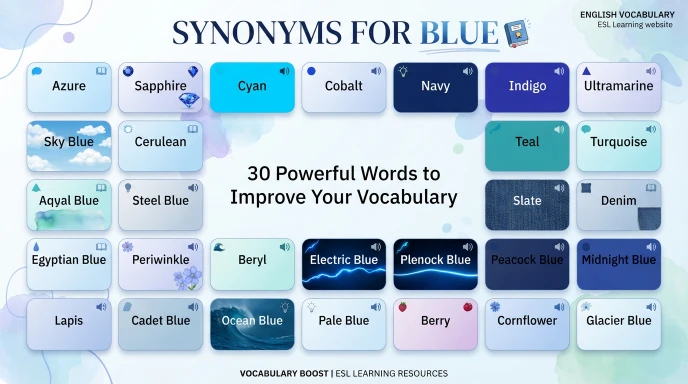
Blue is a common English word that usually refers to a color seen in the sky and the sea. It can also describe a feeling of sadness. Imagine looking at a clear blue sky on a sunny day. The color brings a sense of calm and beauty. In another situation, a person may say, “I feel blue today,” to express sadness.
The word blue is widely used in daily conversation, writing, art, fashion, and literature. Learning synonyms for blue helps English learners, students, writers, and content creators improve their vocabulary and avoid repetition. Different synonyms can add more detail and style to writing.
This article explains the meaning of blue, its pronunciation, history, grammar, connotation, and 30 useful synonyms with examples. You will also learn categories, antonyms, and practical usage tips.
Meaning of Blue
Definition
Blue (Adjective / Noun):
A color between green and violet in the visible spectrum; it can also mean feeling sad or unhappy.
Examples
- The ocean looked blue under the bright sun.
- She felt blue after hearing the disappointing news.
Connotative Meaning
What is connotation? (The emotional or cultural feeling associated with a word beyond its dictionary meaning.)
- Positive tone: Calm, peaceful, trustworthy, loyal, refreshing.
- Negative tone: Sad, depressed, lonely, gloomy.
- Neutral tone: Simply describing a color.
Etymology
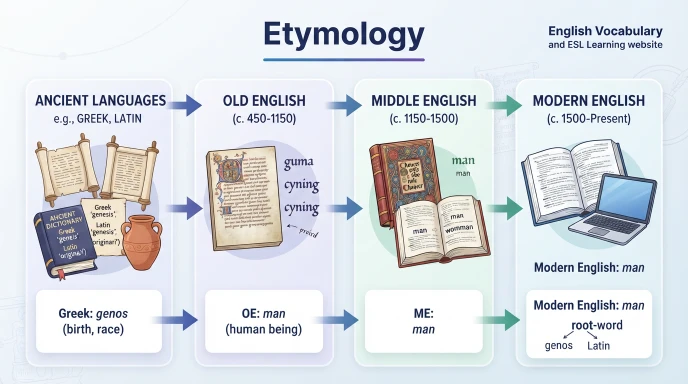
- Origin: Old French bleu
- Source language: Germanic roots
- Original meaning: Blue-colored or pale-colored
Short History
- Old English (450–1100): The word blǣwen was used for blue shades.
- Middle English (1100–1500): The form changed closer to blew and blue.
- Modern English (1500–Present): Blue became the standard spelling and gained the additional meaning of sadness.
Pronunciation (US & UK – IPA)
US: /bluː/
UK: /bluː/
Syllables
blue
Affixation Pattern of Blue
Root: blue
Prefix: None
Suffix: None
Word Formation of Blue
- blue (adjective)
- blue (noun)
- bluish (adjective)
- blueness (noun)
- bluebird (noun)
- blueberry (noun)
- blue-collar (adjective)
- bluebook (noun)
Synonyms of Blue
1. Azure (Adjective)
US: /ˈæʒər/ | UK: /ˈæʒʊə/
Meaning: Bright sky-blue color.
Examples:
- The lake reflected the azure sky.
- She wore an azure dress.
2. Navy (Adjective)
US: /ˈneɪvi/ | UK: /ˈneɪvi/
Meaning: Dark blue color.
Examples:
- He bought a navy suit.
- The walls were painted navy.
3. Sapphire (Adjective)
US: /ˈsæfaɪər/ | UK: /ˈsæfaɪə/
Meaning: Rich gemstone blue.
Examples:
- The water shone sapphire blue.
- Her eyes looked sapphire in sunlight.
4. Cerulean (Adjective)
US: /səˈruːliən/ | UK: /səˈruːliən/
Meaning: Deep sky-blue shade.
Examples:
- Birds flew across the cerulean sky.
- The painting featured cerulean tones.
5. Cobalt (Adjective)
US: /ˈkoʊbɔːlt/ | UK: /ˈkəʊbɔːlt/
Meaning: Strong vivid blue.
Examples:
- The vase was cobalt blue.
- She chose cobalt curtains.
6. Turquoise (Adjective)
US: /ˈtɜːrkɔɪz/ | UK: /ˈtɜːkwɔɪz/
Meaning: Blue-green shade.
Examples:
- The sea looked turquoise.
- He painted the room turquoise.
7. Teal (Adjective)
US: /tiːl/ | UK: /tiːl/
Meaning: Dark blue-green color.
Examples:
- She likes teal clothing.
- The chair had teal fabric.
8. Indigo (Adjective)
US: /ˈɪndɪɡoʊ/ | UK: /ˈɪndɪɡəʊ/
Meaning: Deep violet-blue shade.
Examples:
- The sky turned indigo at dusk.
- He wore an indigo shirt.
9. Aqua (Adjective)
US: /ˈækwə/ | UK: /ˈækwə/
Meaning: Light blue-green color.
Examples:
- The pool water looked aqua.
- She chose aqua decorations.
10. Cyan (Adjective)
US: /ˈsaɪən/ | UK: /ˈsaɪən/
Meaning: Greenish-blue shade.
Examples:
- The logo uses cyan colors.
- Cyan ink was missing.
11. Sky-Blue (Adjective)
US: /ˈskaɪ bluː/ | UK: /ˈskaɪ bluː/
Meaning: Color of a clear sky.
Examples:
- The scarf was sky-blue.
- He painted the ceiling sky-blue.
12. Powder Blue (Adjective)
US: /ˈpaʊdər bluː/ | UK: /ˈpaʊdə bluː/
Meaning: Soft pale blue.
Examples:
- She wore a powder blue sweater.
- The room looked peaceful in powder blue.
13. Baby Blue (Adjective)
US: /ˈbeɪbi bluː/ | UK: /ˈbeɪbi bluː/
Meaning: Very light blue shade.
Examples:
- The blanket was baby blue.
- Baby blue walls brightened the room.
14. Steel Blue (Adjective)
US: /ˈstiːl bluː/ | UK: /ˈstiːl bluː/
Meaning: Grayish blue color.
Examples:
- The car was steel blue.
- He liked steel blue furniture.
15. Royal Blue (Adjective)
US: /ˈrɔɪəl bluː/ | UK: /ˈrɔɪəl bluː/
Meaning: Bright strong blue.
Examples:
- The flag featured royal blue.
- She selected a royal blue gown.
16. Denim (Adjective)
US: /ˈdenɪm/ | UK: /ˈdenɪm/
Meaning: Blue like denim fabric.
Examples:
- The jacket had a denim shade.
- Denim blue remains popular.
17. Arctic Blue (Adjective)
US: /ˈɑːrktɪk bluː/ | UK: /ˈɑːktɪk bluː/
Meaning: Very cool pale blue.
Examples:
- The ice appeared arctic blue.
- The designer used arctic blue tones.
18. Ocean Blue (Adjective)
US: /ˈoʊʃən bluː/ | UK: /ˈəʊʃən bluː/
Meaning: Blue like the sea.
Examples:
- The painting showed ocean blue waves.
- Ocean blue is relaxing.
19. Midnight Blue (Adjective)
US: /ˈmɪdnaɪt bluː/ | UK: /ˈmɪdnaɪt bluː/
Meaning: Very dark blue.
Examples:
- He chose a midnight blue coat.
- The sky became midnight blue.
20. Ice Blue (Adjective)
US: /ˈaɪs bluː/ | UK: /ˈaɪs bluː/
Meaning: Pale icy blue.
Examples:
- Her eyes were ice blue.
- The walls were painted ice blue.
21. Ultramarine (Adjective)
US: /ˌʌltrəməˈriːn/ | UK: /ˌʌltrəməˈriːn/
Meaning: Deep brilliant blue.
Examples:
- The artist used ultramarine paint.
- Ultramarine dominated the artwork.
22. Peacock Blue (Adjective)
US: /ˈpiːkɑːk bluː/ | UK: /ˈpiːkɒk bluː/
Meaning: Rich blue-green shade.
Examples:
- She wore peacock blue jewelry.
- The fabric was peacock blue.
23. Robin’s Egg Blue (Adjective)
US: /ˈrɑːbɪnz eɡ bluː/ | UK: /ˈrɒbɪnz eɡ bluː/
Meaning: Light greenish blue.
Examples:
- The vase was robin’s egg blue.
- The room felt fresh and bright.
24. Periwinkle (Adjective)
US: /ˈperɪwɪŋkəl/ | UK: /ˈperɪwɪŋkəl/
Meaning: Soft blue-purple color.
Examples:
- She chose periwinkle flowers.
- The dress was periwinkle.
25. Slate Blue (Adjective)
US: /ˈsleɪt bluː/ | UK: /ˈsleɪt bluː/
Meaning: Grayish medium blue.
Examples:
- The wall was slate blue.
- Slate blue adds elegance.
26. Prussian Blue (Adjective)
US: /ˈprʌʃən bluː/ | UK: /ˈprʌʃən bluː/
Meaning: Dark intense blue.
Examples:
- The painting used Prussian blue.
- The artist loved Prussian blue pigments.
27. Electric Blue (Adjective)
US: /ɪˈlektrɪk bluː/ | UK: /ɪˈlektrɪk bluː/
Meaning: Bright vivid blue.
Examples:
- The sign glowed electric blue.
- Electric blue attracts attention.
28. Lagoon Blue (Adjective)
US: /ləˈɡuːn bluː/ | UK: /ləˈɡuːn bluː/
Meaning: Tropical blue-green shade.
Examples:
- The water looked lagoon blue.
- Lagoon blue creates a relaxing mood.
29. Blueish (Adjective)
US: /ˈbluːɪʃ/ | UK: /ˈbluːɪʃ/
Meaning: Somewhat blue in color.
Examples:
- The clouds appeared blueish.
- The stone had a blueish tint.
30. Aquamarine (Adjective)
US: /ˌækwəməˈriːn/ | UK: /ˌækwəməˈriːn/
Meaning: Light sea-blue color.
Examples:
- She wore an aquamarine necklace.
- The water sparkled aquamarine.
Prototype Meaning
The most common meaning of blue is the color of a clear sky or a calm ocean. When people hear the word blue, they usually imagine a cool, peaceful, and refreshing color found in nature.
Prototype Categorization
Categorizing synonyms helps writers select the most accurate word for a specific context.
- Light Blue Shades: Baby Blue, Powder Blue, Ice Blue, Sky-Blue
- Dark Blue Shades: Navy, Midnight Blue, Prussian Blue, Indigo
- Blue-Green Shades: Teal, Aqua, Turquoise, Aquamarine
- Bright Blue Shades: Azure, Royal Blue, Electric Blue, Cerulean
- Artistic and Decorative Shades: Ultramarine, Cobalt, Periwinkle, Peacock Blue
- Nature-Inspired Shades: Ocean Blue, Lagoon Blue, Arctic Blue, Robin’s Egg Blue
Antonyms of Blue
- Red (Noun/Adjective): A warm color opposite blue on many color charts.
- Orange (Noun/Adjective): A bright warm color contrasting with blue.
- Yellow (Noun/Adjective): A cheerful warm color often paired opposite blue visually.
- Golden (Adjective): Having the color of gold.
- Amber (Noun/Adjective): Yellow-orange color.
- Scarlet (Adjective): Bright red color.
Related Words
- Bluish (Adjective)
- Blueness (Noun)
- Bluebird (Noun)
- Blueberry (Noun)
- Indigo (Noun/Adjective)
- Azure (Adjective)
- Turquoise (Noun/Adjective)
- Cobalt (Noun/Adjective)
Formal and Casual Alternatives
Formal Alternatives
- Cerulean
- Ultramarine
- Sapphire
- Cobalt
- Prussian Blue
Casual Alternatives
- Sky-Blue
- Navy
- Teal
- Aqua
- Baby Blue
Short Questions and Answers
- What does blue mean?
Blue is a color between green and violet, and it can also mean feeling sad. - When should blue be used?
Use blue when describing a color or expressing sadness in conversation and writing. - Is blue positive or negative?
It can be positive when describing calmness and beauty, or negative when referring to sadness. - How is it different from similar words?
Blue is a general term, while words like azure, navy, and turquoise describe specific shades of blue.
Conclusion
Learning the word blue and its synonyms can greatly improve your English vocabulary. Different shades and related words help you describe colors more accurately and make your writing more interesting.
Using synonyms such as azure, navy, cerulean, and turquoise prevents repetition and adds variety to speech and writing. Understanding pronunciation, connotation, history, and usage also builds stronger language skills.
if you are an ESL learner, student, teacher, writer, or content creator, expanding your vocabulary gives you more confidence. Practice using one new synonym each day in sentences and conversations. Over time, your English will become richer, clearer, and more expressive.
Explore more about!
- “Fascinating” Synonyms List with Meaning & Examples
- Synonyms for Goals: Powerful Words to Use Instead

I am a linguist with 17 years of experience in English language teaching, including postgraduate-level instruction. My expertise includes English grammar, and I contribute as a content and blog writer, producing scholarly and educational language resources.