Interested means wanting to know, learn, see, or take part in something. Imagine that a friend tells you about a new hobby, such as photography. You begin asking questions, watching videos, and learning more about it.
In this situation, you are interested in photography. This word is very common because people often talk about their hobbies, studies, jobs, and personal interests.
Learning synonyms for interested helps English learners, students, teachers, writers, and content creators improve their vocabulary.
It also makes writing and speaking more natural and less repetitive.
In this article, you will learn the meaning of interested, its pronunciation, grammar, history, connotation, and 30 useful synonyms with examples. You will also explore semantic categories, antonyms, related words, and practical usage tips to build stronger English skills.
Meaning of Interested
Definition
Interested (Adjective):
Wanting to know more about something or feeling curiosity and attention toward it.
Examples
- I am interested in learning Spanish.
- She is interested in science and technology.
Connotative Meaning
(Connotation: the emotional feeling or idea that a word suggests beyond its basic dictionary meaning.)
- Positive Tone: Curious, eager, attentive, enthusiastic.
- Negative Tone: Can sometimes suggest personal gain or self-interest.
- Neutral Tone: Simply paying attention to something.
Etymology
- Comes from the Latin word interesse, meaning “to be between” or “to matter.”
- Entered English through French and Medieval Latin.
- Originally referred to having concern or importance.
Short History of the Keyword
Old English (450–1100)
- The word interested did not exist in Old English.
- Other words expressed concern or attention.
Middle English (1100–1500)
- Related forms entered English through French influence.
Modern English (1500–Present)
- Developed the meaning of curiosity, concern, and attention.
- Became widely used in everyday speech and writing.
Pronunciation (US & UK – IPA)
US: /ˈɪn.trə.stɪd/
UK: /ˈɪn.trə.stɪd/
Syllables
in-ter-est-ed
Affixation Pattern of Interested
Root: interest
Prefix: inter-
Suffix: -ed
Word Formation of the Keyword
- Interest (Noun)
- Interest (Verb)
- Interested (Adjective)
- Interesting (Adjective)
- Interestingly (Adverb)
- Disinterested (Adjective)
- Uninterested (Adjective)
- Interestingly (Adverb)
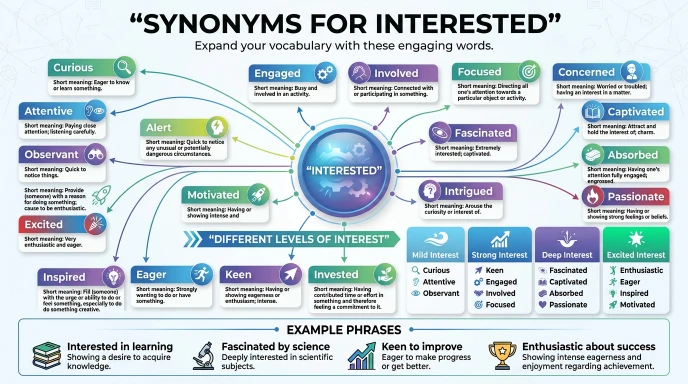
Synonyms of Interested
1. Curious (Adjective)
US: /ˈkjʊr.i.əs/ | UK: /ˈkjʊə.ri.əs/
Meaning: Wanting to know or learn more.
Examples:
- I am curious about space travel.
- The child was curious about the machine.
2. Fascinated (Adjective)
US: /ˈfæs.ə.neɪ.t̬ɪd/ | UK: /ˈfæs.ɪ.neɪ.tɪd/
Meaning: Extremely interested and attracted.
Examples:
- She was fascinated by history.
- We were fascinated by the documentary.
3. Intrigued (Adjective)
US: /ɪnˈtriːɡd/ | UK: /ɪnˈtriːɡd/
Meaning: Interested because something is mysterious.
Examples:
- I was intrigued by the story.
- They were intrigued by the idea.
4. Engaged (Adjective)
US: /ɪnˈɡeɪdʒd/ | UK: /ɪnˈɡeɪdʒd/
Meaning: Giving full attention.
Examples:
- Students were engaged in class.
- He remained engaged throughout the discussion.
5. Absorbed (Adjective)
US: /əbˈzɔːrbd/ | UK: /əbˈzɔːbd/
Meaning: Deeply focused.
Examples:
- She was absorbed in a book.
- He became absorbed in his work.
6. Attentive (Adjective)
US: /əˈten.t̬ɪv/ | UK: /əˈten.tɪv/
Meaning: Listening or watching carefully.
Examples:
- The audience was attentive.
- She remained attentive during the lecture.
7. Eager (Adjective)
US: /ˈiː.ɡɚ/ | UK: /ˈiː.ɡə/
Meaning: Very excited to do something.
Examples:
- He was eager to start.
- They were eager to learn.
8. Enthusiastic (Adjective)
US: /ɪnˌθuː.ziˈæs.tɪk/ | UK: /ɪnˌθjuː.ziˈæs.tɪk/
Meaning: Showing strong interest and excitement.
Examples:
- She is enthusiastic about art.
- The team was enthusiastic about the project.
9. Keen (Adjective)
US: /kiːn/ | UK: /kiːn/
Meaning: Very interested or eager.
Examples:
- He is keen on sports.
- She is keen to improve.
10. Excited (Adjective)
US: /ɪkˈsaɪ.t̬ɪd/ | UK: /ɪkˈsaɪ.tɪd/
Meaning: Happy and interested.
Examples:
- I am excited about the trip.
- They were excited to meet her.
11. Inquisitive (Adjective)
US: /ɪnˈkwɪz.ə.t̬ɪv/ | UK: /ɪnˈkwɪz.ɪ.tɪv/
Meaning: Always wanting information.
Examples:
- The child was inquisitive.
- She asked many inquisitive questions.
12. Observant (Adjective)
US: /əbˈzɝː.vənt/ | UK: /əbˈzɜː.vənt/
Meaning: Quick to notice things.
Examples:
- He is very observant.
- Observant students learn quickly.
13. Alert (Adjective)
US: /əˈlɝːt/ | UK: /əˈlɜːt/
Meaning: Paying close attention.
Examples:
- Stay alert during the meeting.
- She remained alert to changes.
14. Focused (Adjective)
US: /ˈfoʊ.kəst/ | UK: /ˈfəʊ.kəst/
Meaning: Concentrating on something.
Examples:
- He stayed focused on his goals.
- The group was focused on success.
15. Invested (Adjective)
US: /ɪnˈves.tɪd/ | UK: /ɪnˈves.tɪd/
Meaning: Emotionally involved or interested.
Examples:
- She is invested in the project.
- We are invested in the outcome.
16. Captivated (Adjective)
US: /ˈkæp.tə.veɪ.t̬ɪd/ | UK: /ˈkæp.tɪ.veɪ.tɪd/
Meaning: Strongly attracted and interested.
Examples:
- The audience was captivated.
- I was captivated by the performance.
17. Hooked (Adjective)
US: /hʊkt/ | UK: /hʊkt/
Meaning: Extremely interested in something.
Examples:
- I am hooked on the series.
- She became hooked on reading.
18. Stimulated (Adjective)
US: /ˈstɪm.jə.leɪ.t̬ɪd/ | UK: /ˈstɪm.jʊ.leɪ.tɪd/
Meaning: Mentally excited.
Examples:
- The discussion stimulated interest.
- Students felt stimulated by the lesson.
19. Concerned (Adjective)
US: /kənˈsɝːnd/ | UK: /kənˈsɜːnd/
Meaning: Interested because something matters.
Examples:
- She is concerned about education.
- Parents are concerned about safety.
20. Involved (Adjective)
US: /ɪnˈvɑːlvd/ | UK: /ɪnˈvɒlvd/
Meaning: Taking part actively.
Examples:
- He is involved in sports.
- They became involved in community work.
21. Mindful (Adjective)
US: /ˈmaɪnd.fəl/ | UK: /ˈmaɪnd.fəl/
Meaning: Paying attention carefully.
Examples:
- Be mindful of details.
- She is mindful of others.
22. Intent (Adjective)
US: /ɪnˈtent/ | UK: /ɪnˈtent/
Meaning: Giving complete attention.
Examples:
- He listened with intent interest.
- The audience was intent on the speech.
23. Enthralled (Adjective)
US: /ɪnˈθrɔːld/ | UK: /ɪnˈθrɔːld/
Meaning: Completely fascinated.
Examples:
- Children were enthralled by the story.
- She was enthralled by the show.
24. Animated (Adjective)
US: /ˈæn.ə.meɪ.t̬ɪd/ | UK: /ˈæn.ɪ.meɪ.tɪd/
Meaning: Full of interest and energy.
Examples:
- They had an animated discussion.
- She looked animated during the presentation.
25. Responsive (Adjective)
US: /rɪˈspɑːn.sɪv/ | UK: /rɪˈspɒn.sɪv/
Meaning: Reacting with interest.
Examples:
- The audience was responsive.
- Students were responsive to questions.
26. Receptive (Adjective)
US: /rɪˈsep.tɪv/ | UK: /rɪˈsep.tɪv/
Meaning: Open to ideas and information.
Examples:
- She was receptive to advice.
- The team was receptive to change.
27. Drawn (Adjective)
US: /drɔːn/ | UK: /drɔːn/
Meaning: Attracted toward something.
Examples:
- I am drawn to music.
- She felt drawn to the subject.
28. Attracted (Adjective)
US: /əˈtræk.tɪd/ | UK: /əˈtræk.tɪd/
Meaning: Interested because something appeals.
Examples:
- He is attracted to science.
- They were attracted to the opportunity.
29. Engrossed (Adjective)
US: /ɪnˈɡroʊst/ | UK: /ɪnˈɡrəʊst/
Meaning: Fully occupied with something.
Examples:
- She was engrossed in a novel.
- He became engrossed in research.
30. Motivated (Adjective)
US: /ˈmoʊ.t̬ə.veɪ.t̬ɪd/ | UK: /ˈməʊ.tɪ.veɪ.tɪd/
Meaning: Interested and driven to act.
Examples:
- The students were motivated to learn.
- She felt motivated to improve.
Prototype Meaning
The prototype meaning of interested is having curiosity or attention toward something.
When people hear this word, they usually imagine a person who wants to learn more, participate, or explore a topic because it attracts their attention.
Prototype Categorization
- Curiosity-Based Interest: curious, inquisitive, intrigued
- Strong Fascination: fascinated, captivated, enthralled, engrossed
- Attention and Focus: attentive, alert, focused, mindful
- Excitement and Energy: eager, enthusiastic, excited, animated
- Personal Involvement: invested, involved, concerned, motivated
- Attraction and Appeal: drawn, attracted, receptive, responsive
Categorization helps writers select the most accurate synonym based on the level and type of interest being described.
Antonyms of Interested
- Uninterested (Adjective) – Not interested or curious.
- Indifferent (Adjective) – Showing no interest or concern.
- Bored (Adjective) – Feeling tired because something is not interesting.
- Apathetic (Adjective) – Showing little or no enthusiasm.
- Detached (Adjective) – Emotionally uninvolved.
- Disengaged (Adjective) – Not paying attention or participating.
Short Questions and Answers
- What does interested mean?
It means wanting to know, learn, or take part in something. - When should interested be used?
Use it when someone shows curiosity, attention, or enthusiasm. - Is interested positive or negative?
It is usually positive because it shows attention and curiosity. - How is it different from similar words?
Interested is a general term, while fascinated and enthralled show much stronger interest.
Formal and Casual Alternatives
Formal Alternatives
- Inquisitive
- Receptive
- Engaged
- Invested
- Attentive
Casual Alternatives
- Curious
- Keen
- Hooked
- Excited
- Drawn
Related Words
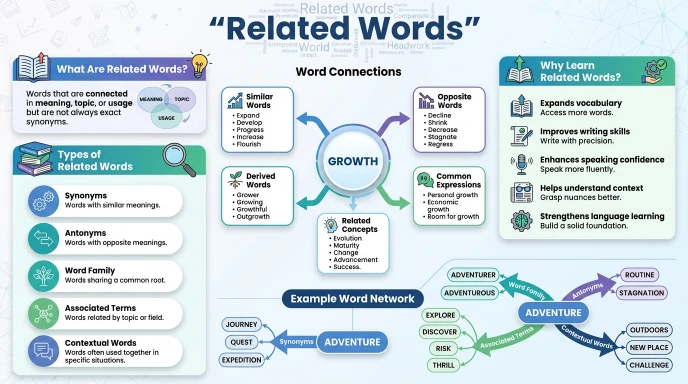
- Interest
- Interesting
- Curiosity
- Attention
- Engagement
- Fascination
- Enthusiasm
- Motivation
- Awareness
- Focus
Conclusion
Learning the word interested and its synonyms is a great way to improve your English vocabulary. Different synonyms allow you to express varying levels of curiosity, attention, enthusiasm, and involvement.
Using a wide range of words strengthens both writing and speaking skills while helping you avoid repetition. Understanding pronunciation, history, grammar, connotation, and semantic categories also makes vocabulary learning more effective.
As you practice these words in daily conversations, reading, and writing, you will become more confident in English. Make vocabulary learning a regular habit, and your communication skills will continue to grow.
Discover More About!
- Synonyms of This 30 Powerful Words to Improve
- Powerful Alternatives to “Especially” You Should Know
- Powerful Alternatives to “Maybe” You Should Know

I am an American author, and I write books about power, strategy, and human behavior. My writing style is simple but deep, and I try to explain how people think and act in real-life situations.
I studied classical studies, and before becoming a writer, I worked in different fields which helped me understand people and life better.
My most famous books include The 48 Laws of Power, The Art of Seduction, and Mastery. These books are widely read by business people, leaders, and students around the world.