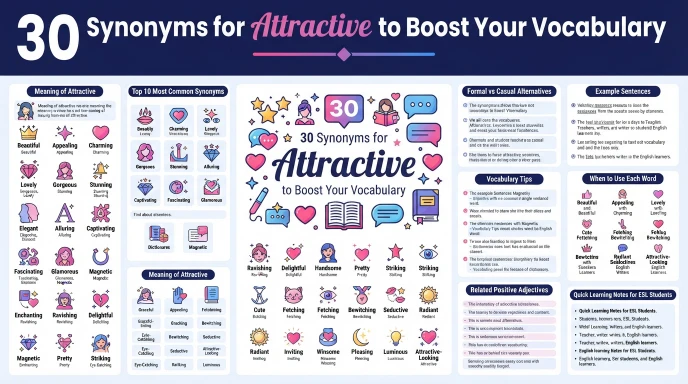
Attractive means pleasing, appealing, or able to draw attention and interest. Imagine walking into a bookstore and seeing a colorful display of new books. The bright colors and neat arrangement make the display look attractive, so you stop to take a closer look.
The word attractive is common in everyday English because people use it to describe people, places, objects, ideas, and opportunities. Learning synonyms for attractive helps English learners, students, writers, and content creators express themselves more clearly and avoid repeating the same word.
In this article, you will learn the meaning of attractive, its pronunciation, history, grammar, connotations, and 30 useful synonyms with examples. You will also explore semantic categories, antonyms, related words, and practical usage tips to strengthen your vocabulary and communication skills.
Meaning of Attractive
Definition
Attractive (Adjective): Pleasant, appealing, or interesting in a way that draws attention or admiration.
Examples
- The garden looks very attractive in spring.
- She created an attractive presentation for the meeting.
Connotative Meaning
(Connotation: the emotional or cultural feeling associated with a word beyond its dictionary meaning.)
- Positive tone: Beautiful, pleasing, charming, desirable, engaging.
- Negative tone: Can suggest excessive focus on appearance in some contexts.
- Neutral tone: Simply drawing attention or interest.
Etymology
- Origin: Latin through French
- Source word: attractivus
- Original meaning: “Having the power to draw toward.”
Short History of Attractive
Old English (450–1100)
- The exact word attractive was not used.
- Similar ideas were expressed with words meaning beautiful or pleasing.
Middle English (1100–1500)
- French and Latin influences introduced related forms.
- The idea of drawing interest became more common.
Modern English (1500–Present)
- Attractive became widely used to describe beauty, appeal, and interest.
- Today it applies to people, products, places, and ideas.
Pronunciation (US & UK – IPA)
US: /əˈtræktɪv/
UK: /əˈtræktɪv/
Syllables
at-trac-tive
Affixation Pattern of Attractive
Root: attract
Prefix: at- (historically from Latin ad- meaning “toward”)
Suffix: -ive
Word Formation
- Attract (Verb)
- Attraction (Noun)
- Attractiveness (Noun)
- Attractively (Adverb)
- Attractor (Noun)
- Attracted (Adjective/Verb)
- Attracting (Verb/Adjective)
- Unattractive (Adjective)
- Unattractively (Adverb)
- Unattractiveness (Noun)
Synonyms of Attractive
1. Appealing (Adjective)
US: /əˈpiːlɪŋ/ | UK: /əˈpiːlɪŋ/
Meaning: Pleasant and interesting.
Examples:
- The website has an appealing design.
- Her idea sounded appealing.
2. Beautiful (Adjective)
US: /ˈbjuːtəfəl/ | UK: /ˈbjuːtəfəl/
Meaning: Extremely pleasing to look at.
Examples:
- The sunset was beautiful.
- She wore a beautiful dress.
3. Charming (Adjective)
US: /ˈtʃɑːrmɪŋ/ | UK: /ˈtʃɑːmɪŋ/
Meaning: Pleasant and delightful.
Examples:
- The village is charming.
- He has a charming smile.
4. Lovely (Adjective)
US: /ˈlʌvli/ | UK: /ˈlʌvli/
Meaning: Very pleasing and enjoyable.
Examples:
- They live in a lovely house.
- It was a lovely day.
5. Pretty (Adjective)
US: /ˈprɪti/ | UK: /ˈprɪti/
Meaning: Pleasantly attractive.
Examples:
- The flowers are pretty.
- She bought a pretty bag.
6. Elegant (Adjective)
US: /ˈeləɡənt/ | UK: /ˈelɪɡənt/
Meaning: Graceful and stylish.
Examples:
- The room looks elegant.
- She wore an elegant outfit.
7. Handsome (Adjective)
US: /ˈhænsəm/ | UK: /ˈhænsəm/
Meaning: Good-looking and attractive.
Examples:
- He is a handsome man.
- The building has a handsome design.
8. Gorgeous (Adjective)
US: /ˈɡɔːrdʒəs/ | UK: /ˈɡɔːdʒəs/
Meaning: Extremely beautiful.
Examples:
- The beach is gorgeous.
- She looked gorgeous.
9. Stunning (Adjective)
US: /ˈstʌnɪŋ/ | UK: /ˈstʌnɪŋ/
Meaning: Impressively beautiful.
Examples:
- The view was stunning.
- He made a stunning entrance.
10. Alluring (Adjective)
US: /əˈlʊrɪŋ/ | UK: /əˈljʊərɪŋ/
Meaning: Strongly attractive and tempting.
Examples:
- The city has an alluring atmosphere.
- The offer was alluring.
11. Engaging (Adjective)
US: /ɪnˈɡeɪdʒɪŋ/ | UK: /ɪnˈɡeɪdʒɪŋ/
Meaning: Interesting and pleasant.
Examples:
- She gave an engaging speech.
- The book is engaging.
12. Captivating (Adjective)
US: /ˈkæptɪveɪtɪŋ/ | UK: /ˈkæptɪveɪtɪŋ/
Meaning: Holding attention completely.
Examples:
- The movie was captivating.
- He has a captivating personality.
13. Fascinating (Adjective)
US: /ˈfæsəneɪtɪŋ/ | UK: /ˈfæsɪneɪtɪŋ/
Meaning: Extremely interesting.
Examples:
- It is a fascinating topic.
- The documentary was fascinating.
14. Enchanting (Adjective)
US: /ɪnˈtʃæntɪŋ/ | UK: /ɪnˈtʃɑːntɪŋ/
Meaning: Delightfully charming.
Examples:
- The garden was enchanting.
- She has an enchanting voice.
15. Magnetic (Adjective)
US: /mæɡˈnɛtɪk/ | UK: /mæɡˈnetɪk/
Meaning: Naturally drawing people in.
Examples:
- He has a magnetic personality.
- The speaker was magnetic.
16. Pleasing (Adjective)
US: /ˈpliːzɪŋ/ | UK: /ˈpliːzɪŋ/
Meaning: Giving satisfaction.
Examples:
- The results were pleasing.
- The colors are pleasing.
17. Delightful (Adjective)
US: /dɪˈlaɪtfəl/ | UK: /dɪˈlaɪtfəl/
Meaning: Causing great pleasure.
Examples:
- The meal was delightful.
- We had a delightful evening.
18. Inviting (Adjective)
US: /ɪnˈvaɪtɪŋ/ | UK: /ɪnˈvaɪtɪŋ/
Meaning: Welcoming and attractive.
Examples:
- The café looked inviting.
- The room felt inviting.
19. Fetching (Adjective)
US: /ˈfetʃɪŋ/ | UK: /ˈfetʃɪŋ/
Meaning: Attractively stylish.
Examples:
- She wore a fetching hat.
- The outfit looked fetching.
20. Eye-Catching (Adjective)
US: /ˈaɪ ˌkætʃɪŋ/ | UK: /ˈaɪ ˌkætʃɪŋ/
Meaning: Easily noticed because of appearance.
Examples:
- The poster is eye-catching.
- She chose an eye-catching color.
21. Appealing-Looking (Adjective)
US: /əˈpiːlɪŋ/ | UK: /əˈpiːlɪŋ/
Meaning: Looking pleasant and attractive.
Examples:
- The restaurant looked appealing.
- The package was appealing-looking.
22. Graceful (Adjective)
US: /ˈɡreɪsfəl/ | UK: /ˈɡreɪsfəl/
Meaning: Attractive through elegance.
Examples:
- The dancer was graceful.
- Her movements were graceful.
23. Stylish (Adjective)
US: /ˈstaɪlɪʃ/ | UK: /ˈstaɪlɪʃ/
Meaning: Fashionably attractive.
Examples:
- He drives a stylish car.
- The office is stylish.
24. Glamorous (Adjective)
US: /ˈɡlæmərəs/ | UK: /ˈɡlæmərəs/
Meaning: Attractive in an exciting way.
Examples:
- The actress looked glamorous.
- The event was glamorous.
25. Radiant (Adjective)
US: /ˈreɪdiənt/ | UK: /ˈreɪdiənt/
Meaning: Brightly attractive.
Examples:
- She looked radiant.
- The bride was radiant.
26. Seductive (Adjective)
US: /sɪˈdʌktɪv/ | UK: /sɪˈdʌktɪv/
Meaning: Strongly appealing or tempting.
Examples:
- The advertisement was seductive.
- The aroma was seductive.
27. Winsome (Adjective)
US: /ˈwɪnsəm/ | UK: /ˈwɪnsəm/
Meaning: Sweetly charming.
Examples:
- The child had a winsome smile.
- Her manner was winsome.
28. Desirable (Adjective)
US: /dɪˈzaɪərəbəl/ | UK: /dɪˈzaɪərəbəl/
Meaning: Worth wanting.
Examples:
- It is a desirable location.
- The job is highly desirable.
29. Tempting (Adjective)
US: /ˈtemptɪŋ/ | UK: /ˈtemptɪŋ/
Meaning: Attractive and hard to resist.
Examples:
- The dessert looked tempting.
- The discount was tempting.
30. Irresistible (Adjective)
US: /ˌɪrɪˈzɪstəbəl/ | UK: /ˌɪrɪˈzɪstəbəl/
Meaning: Too attractive to refuse.
Examples:
- The offer was irresistible.
- Her enthusiasm was irresistible.
Formal and Casual Alternatives
Formal Synonyms
- Elegant
- Captivating
- Fascinating
- Desirable
- Enchanting
- Magnetic
- Glamorous
- Graceful
Casual Synonyms
- Pretty
- Lovely
- Nice-Looking
- Beautiful
- Eye-Catching
- Stylish
- Appealing
- Gorgeous
Related Words
- Attraction (Noun)
- Attractiveness (Noun)
- Attract (Verb)
- Attractively (Adverb)
- Beauty (Noun)
- Appeal (Noun)
- Charm (Noun)
- Elegance (Noun)
Prototype Meaning
The prototype meaning of attractive is something that looks good or draws positive attention.
When people hear the word, they often imagine a beautiful person, a lovely place, a stylish object, or an interesting idea that makes others want to look closer or learn more.
Prototype Categorization
Categorizing synonyms helps writers choose the best word for different situations.
- Physical Beauty: beautiful, gorgeous, pretty, handsome, stunning
- Charm and Personality: charming, winsome, engaging, magnetic
- Fashion and Style: elegant, stylish, glamorous, fetching
- Interest and Attention: fascinating, captivating, eye-catching
- Appeal and Desire: desirable, tempting, alluring, irresistible
- Warm and Pleasant Feelings: lovely, delightful, inviting, pleasing
Antonyms of Attractive
- Unattractive (Adjective): Not appealing or pleasant.
- Ugly (Adjective): Unpleasant to look at.
- Plain (Adjective): Simple and lacking beauty.
- Unappealing (Adjective): Not interesting or attractive.
- Repulsive (Adjective): Causing strong dislike.
- Offensive (Adjective): Unpleasant or upsetting.
- Unsightly (Adjective): Not pleasant to see.
- Hideous (Adjective): Extremely ugly.
Short Questions and Answers
- What does attractive mean?
- It means pleasing, appealing, or able to draw attention.
- When should attractive be used?
- Use it to describe people, places, objects, ideas, or opportunities that create positive interest.
- Is attractive positive or negative?
- It is usually positive, though context can change its tone.
- How is it different from similar words?
- Attractive is a general term, while words like gorgeous, elegant, and captivating describe specific types of appeal.
Conclusion
Learning the word attractive and its synonyms can greatly improve your English vocabulary. These words help you describe people, places, ideas, and objects more accurately and creatively. Using a variety of synonyms strengthens both writing and speaking skills while preventing repetition.
Understanding pronunciation, history, connotations, and semantic categories also helps you choose the right word for the right situation.
if you are an ESL learner, student, teacher, or content writer, mastering these vocabulary words can increase your confidence and make your communication more effective. Practice using a new synonym each day, and your English skills will continue to grow naturally over time.
Discover more about!
- 30 Synonyms for ‘Lucky’ to Boost Your Vocabulary
- 30 Synonyms for ‘Thankful’ to Boost Your Vocabulary
- “Synonyms for Wrong: Powerful Words to Use Instead”

I am a linguist with 17 years of experience in English language teaching, including postgraduate-level instruction. My expertise includes English grammar, and I contribute as a content and blog writer, producing scholarly and educational language resources.