Hungry means needing or wanting food. Imagine you have been busy all day and missed lunch. By evening, your stomach starts to growl, and you think about your favorite meal. At that moment, you feel hungry.
This word is very common in daily English because people often talk about food, meals, and appetite.
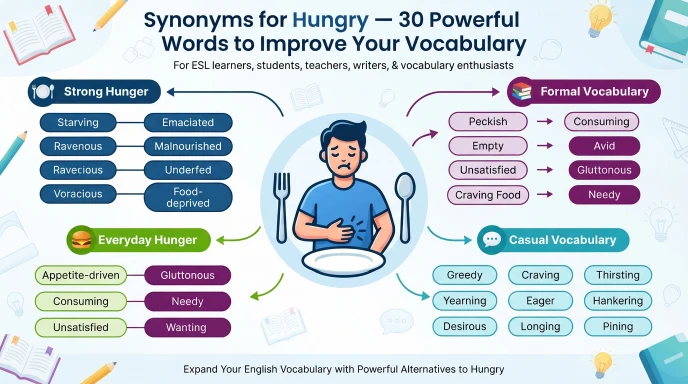
Learning synonyms for hungry helps English learners and content writers improve their vocabulary. Using different words makes speaking and writing more interesting and precise. Some synonyms describe a small desire for food, while others express extreme hunger.
In this article, you will learn the meaning of hungry, its pronunciation, grammar, history, connotation, and semantic categories. You will also discover 30 useful synonyms with meanings and examples to help you communicate more effectively.
Meaning of Hungry
Definition
Hungry (Adjective):
Feeling a need or strong desire to eat food.
Examples
- I am hungry because I skipped breakfast.
- The children were hungry after playing outside.
Connotative Meaning
(Connotation: the emotional feeling or idea connected to a word beyond its basic dictionary meaning.)
- Positive tone: Can suggest eagerness, ambition, or enthusiasm (e.g., hungry for success).
- Negative tone: Can describe discomfort, lack of food, or need.
- Neutral tone: Simply means needing food.
Etymology
- Origin: Old English
- Source word: hungrig
- Original meaning: “Feeling hunger” or “needing food”
- Related to Germanic words connected with hunger and appetite
Short History of the Keyword
- Old English (450–1100): The word hungrig was used to describe a person needing food.
- Middle English (1100–1500): The spelling changed gradually to hungry.
- Modern English (1500–Present): The word became common in both literal and figurative meanings, such as “hungry for knowledge.”
Pronunciation (US & UK – IPA)
US: /ˈhʌŋɡri/
UK: /ˈhʌŋɡri/
Syllables
hun-gry
Affixation Pattern of Hungry
Root: hunger
Prefix: None
Suffix: -y
Word Formation of the Keyword
- Hungry (Adjective)
- Hunger (Noun)
- Hunger (Verb)
- Hungrily (Adverb)
- Hungering (Verb/Participle)
- Hungriness (Noun)
Synonyms of Hungry
1. Starving (Adjective)
US /ˈstɑːrvɪŋ/ | UK /ˈstɑːvɪŋ/
Meaning: Extremely hungry.
Examples:
- I’m starving after the long trip.
- The hikers were starving by evening.
2. Famished (Adjective)
US /ˈfæmɪʃt/ | UK /ˈfæmɪʃt/
Meaning: Very hungry.
Examples:
- She was famished after work.
- We arrived home famished.
3. Ravenous (Adjective)
US /ˈrævənəs/ | UK /ˈrævənəs/
Meaning: Extremely eager for food.
Examples:
- The children were ravenous.
- He felt ravenous after exercise.
4. Voracious (Adjective)
US /vəˈreɪʃəs/ | UK /vəˈreɪʃəs/
Meaning: Having a very large appetite.
Examples:
- He has a voracious appetite.
- The teenager was voracious after practice.
5. Peckish (Adjective)
US /ˈpekɪʃ/ | UK /ˈpekɪʃ/
Meaning: Slightly hungry.
Examples:
- I’m feeling peckish.
- Let’s have a snack because we’re peckish.
6. Empty (Adjective)
US /ˈempti/ | UK /ˈempti/
Meaning: Feeling as if the stomach has no food.
Examples:
- My stomach feels empty.
- She felt empty after skipping lunch.
7. Unsatisfied (Adjective)
US /ʌnˈsætɪsfaɪd/ | UK /ʌnˈsætɪsfaɪd/
Meaning: Not fully fed.
Examples:
- He remained unsatisfied after dinner.
- The meal left us unsatisfied.
8. Underfed (Adjective)
US /ˌʌndərˈfed/ | UK /ˌʌndəˈfed/
Meaning: Not receiving enough food.
Examples:
- The animals looked underfed.
- Many people were underfed.
9. Malnourished (Adjective)
US /ˌmælnɚˈrɪʃt/ | UK /ˌmælnəˈrɪʃt/
Meaning: Lacking proper nutrition.
Examples:
- The child was malnourished.
- Aid workers helped malnourished families.
10. Food-Deprived (Adjective)
US /fuːd dɪˈpraɪvd/ | UK /fuːd dɪˈpraɪvd/
Meaning: Without enough food.
Examples:
- The travelers felt food-deprived.
- Food-deprived workers needed a break.
11. Hollow (Adjective)
US /ˈhɑːloʊ/ | UK /ˈhɒləʊ/
Meaning: Feeling empty from hunger.
Examples:
- I felt hollow inside.
- Her stomach felt hollow.
12. Craving Food (Adjective Phrase)
US /ˈkreɪvɪŋ fuːd/ | UK /ˈkreɪvɪŋ fuːd/
Meaning: Strongly wanting food.
Examples:
- He was craving food.
- They were craving food after the hike.
13. Appetite-Driven (Adjective)
US /ˈæpɪtaɪt ˈdrɪvən/ | UK /ˈæpɪtaɪt ˈdrɪvən/
Meaning: Motivated by hunger.
Examples:
- The dog became appetite-driven.
- Hunger made him appetite-driven.
14. Greedy (Adjective)
US /ˈɡriːdi/ | UK /ˈɡriːdi/
Meaning: Wanting more food than needed.
Examples:
- The greedy child wanted more cake.
- He looked greedy at the buffet.
15. Eager (Adjective)
US /ˈiːɡər/ | UK /ˈiːɡə/
Meaning: Ready and excited for food.
Examples:
- The guests were eager to eat.
- We were eager for dinner.
16. Desirous (Adjective)
US /dɪˈzaɪərəs/ | UK /dɪˈzaɪərəs/
Meaning: Wanting something strongly.
Examples:
- She was desirous of a meal.
- The travelers were desirous of food.
17. Longing (Adjective)
US /ˈlɔːŋɪŋ/ | UK /ˈlɒŋɪŋ/
Meaning: Strongly wishing for food.
Examples:
- He was longing for lunch.
- The children were longing for snacks.
18. Needy (Adjective)
US /ˈniːdi/ | UK /ˈniːdi/
Meaning: Requiring something urgently.
Examples:
- The hungry animals seemed needy.
- He felt needy for food.
19. Fasting (Adjective)
US /ˈfæstɪŋ/ | UK /ˈfɑːstɪŋ/
Meaning: Not eating for a period.
Examples:
- She was fasting all day.
- Many people are fasting today.
20. Empty-Bellied (Adjective)
US /ˈempti ˈbelid/ | UK /ˈempti ˈbelid/
Meaning: Having no food in the stomach.
Examples:
- The workers were empty-bellied.
- He went to bed empty-bellied.
21. Starved (Adjective)
US /stɑːrvd/ | UK /stɑːvd/
Meaning: Suffering from lack of food.
Examples:
- The refugees were starved.
- The animals appeared starved.
22. Deprived (Adjective)
US /dɪˈpraɪvd/ | UK /dɪˈpraɪvd/
Meaning: Lacking something needed.
Examples:
- They felt deprived of food.
- The group was deprived for hours.
23. Yearning (Adjective)
US /ˈjɜːrnɪŋ/ | UK /ˈjɜːnɪŋ/
Meaning: Having a strong desire.
Examples:
- She was yearning for a meal.
- We were yearning for dinner.
24. Wanting Food (Adjective Phrase)
US /ˈwɑːntɪŋ fuːd/ | UK /ˈwɒntɪŋ fuːd/
Meaning: Needing food.
Examples:
- The campers were wanting food.
- He was wanting food after work.
25. Appetite-Ridden (Adjective)
US /ˈæpɪtaɪt ˈrɪdən/ | UK /ˈæpɪtaɪt ˈrɪdən/
Meaning: Controlled by hunger.
Examples:
- The child seemed appetite-ridden.
- Hunger made him restless.
26. Gluttonous (Adjective)
US /ˈɡlʌtənəs/ | UK /ˈɡlʌtənəs/
Meaning: Wanting excessive amounts of food.
Examples:
- The gluttonous eater took more servings.
- His gluttonous habits caused concern.
27. Insatiable (Adjective)
US /ɪnˈseɪʃəbəl/ | UK /ɪnˈseɪʃəbəl/
Meaning: Impossible to satisfy.
Examples:
- He had an insatiable appetite.
- The boy seemed insatiable.
28. Avid (Adjective)
US /ˈævɪd/ | UK /ˈævɪd/
Meaning: Very eager for something.
Examples:
- The hikers were avid for food.
- She was avid for a warm meal.
29. Keen (Adjective)
US /kiːn/ | UK /kiːn/
Meaning: Very eager.
Examples:
- The guests were keen to eat.
- We were keen for lunch.
30. Food-Hungry (Adjective)
US /fuːd ˈhʌŋɡri/ | UK /fuːd ˈhʌŋɡri/
Meaning: Strongly needing food.
Examples:
- The children were food-hungry.
- The travelers felt food-hungry.
Prototype Meaning
The most common meaning of hungry is needing food because the body has not eaten for some time. When people hear the word, they usually imagine an empty stomach, a desire to eat, and thoughts about food or meals.
Prototype Categorization
- Extreme Hunger: starving, famished, ravenous, voracious, starved
- Mild Hunger: peckish, eager, keen
- Lack of Food: underfed, deprived, food-deprived, empty-bellied
- Strong Desire: craving food, longing, yearning, avid
- Excessive Appetite: gluttonous, insatiable, greedy
Categorization helps writers choose the best synonym. For example, peckish suggests slight hunger, while ravenous shows extreme hunger. Underfed relates to nutrition, while yearning emphasizes desire.
Antonyms of Hungry
- Full (Adjective): Having eaten enough food.
- Satisfied (Adjective): No longer needing food.
- Fed (Adjective): Having received food.
- Content (Adjective): Feeling comfortable and satisfied.
- Satiated (Adjective): Completely satisfied with food.
- Well-Fed (Adjective): Having enough food regularly.
- Nourished (Adjective): Properly fed and healthy.
- Replete (Adjective): Completely full.
- Stuffed (Adjective): Very full after eating.
- Filled (Adjective): No longer empty.
Related Words Section
- Hunger (Noun)
- Hunger (Verb)
- Hungry (Adjective)
- Hungrily (Adverb)
- Appetite (Noun)
- Starvation (Noun)
- Feed (Verb)
- Food (Noun)
- Nourishment (Noun)
- Crave (Verb)
Short Questions and Answers
- What does hungry mean?
Hungry means feeling a need or desire to eat food. - When should hungry be used?
Use it when talking about needing food or having an appetite. - Is hungry positive or negative?
It is usually neutral, but it can be negative when describing a lack of food. - How is it different from similar words?
Hungry is a general term, while words like ravenous and famished describe stronger levels of hunger.
Meaning and Example Sentence Table
| Word | Meaning | Example Sentence |
| Hungry | Needing food | I am hungry after school. |
| Famished | Very hungry | She felt famished after work. |
| Ravenous | Extremely hungry | The runners were ravenous. |
| Peckish | Slightly hungry | I’m a little peckish now. |
| Voracious | Having a huge appetite | He has a voracious appetite. |
Formal and Casual Sections
Formal Synonyms
- Voracious
- Insatiable
- Malnourished
- Underfed
- Deprived
- Desirous
Casual Synonyms
- Hungry
- Starving
- Famished
- Peckish
- Keen
- Empty
Conclusion
Learning the meaning of hungry and its synonyms can greatly improve your English vocabulary.
Different synonyms help you express various levels of hunger, appetite, and desire more accurately.
Using these words strengthens both writing and speaking because it gives you more choices and helps avoid repetition.
Understanding pronunciation, history, connotation, and usage makes it easier to choose the right word for the right situation.
if you are an English learner, student, writer, or professional, building your vocabulary increases confidence and communication skills.
Practice these words regularly, use them in daily conversations, and create your own example sentences. Small steps each day can lead to strong vocabulary growth and better English fluency.
Read more about!
- Powerful Alternatives to “Eager” You Should Know
- Powerful Alternatives to “Especially” You Should Know
- Different Ways to Say “With”: 30 Powerful Words

I am a linguist with 17 years of experience in English language teaching, including postgraduate-level instruction. My expertise includes English grammar, and I contribute as a content and blog writer, producing scholarly and educational language resources.