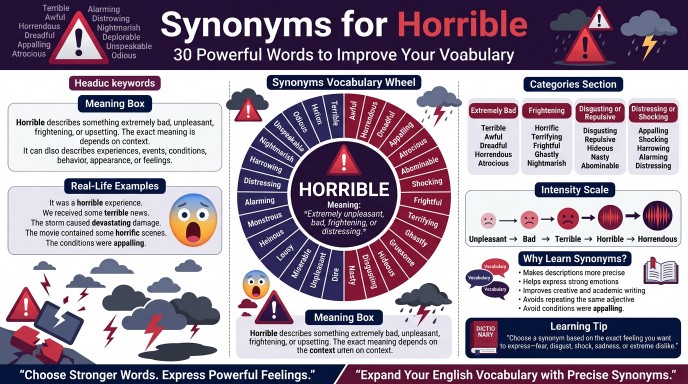
Horrible means very bad, unpleasant, shocking, or frightening. Imagine you order food at a restaurant, and it tastes so bad that you cannot finish it. You might say, “The food was horrible.” This word is common in everyday English because people often use it to describe bad experiences, poor situations, or unpleasant feelings.
Learning synonyms for horrible helps English learners and content writers improve their vocabulary.
Using different words makes writing more interesting and avoids repeating the same term again and again.
It also helps speakers express emotions more clearly.
In this article, you will learn the meaning of horrible, its pronunciation, grammar, history, connotation, semantic categories, and 30 useful synonyms. Each synonym includes meanings and examples to help you use the words correctly in speaking and writing.
Meaning of Horrible
Definition
Horrible (Adjective):
Extremely bad, unpleasant, frightening, or shocking.
Examples
- The weather was horrible during our trip.
- She had a horrible headache all day.
Connotative Meaning
(Connotation: the emotional feeling or idea connected to a word beyond its basic dictionary meaning.)
- Positive tone: Rarely used positively; sometimes used humorously.
- Negative tone: Very strong; expresses dislike, fear, disgust, or disappointment.
- Neutral tone: Can describe something objectively bad without strong emotion.
Etymology
- Origin: Latin
- Source word: horribilis
- Original meaning: “Causing fear,” “terrifying,” or “dreadful”
Short History of the Keyword
- Old English (450–1100): The exact word did not exist, but similar ideas were expressed through words meaning fearful or terrible.
- Middle English (1100–1500): Words from French and Latin entered English and influenced similar meanings.
- Modern English (1500–Present): Horrible became common and developed the meaning of extremely bad, unpleasant, or frightening.
Pronunciation (US & UK – IPA)
US: /ˈhɔːrəbəl/
UK: /ˈhɒrɪbəl/
Syllables
hor-ri-ble
Affixation Pattern of Horrible
Root: horr (fear, dread)
Prefix: None
Suffix: -ible
Word Formation of the Keyword
- Horrible (Adjective)
- Horribly (Adverb)
- Horribleness (Noun)
- Horror (Noun)
- Horrify (Verb)
- Horrified (Adjective)
- Horrifying (Adjective)
- Horrification (Noun)
Synonyms of Horrible
1. Terrible (Adjective)
US /ˈterəbəl/ | UK /ˈterɪbəl/
Meaning: Extremely bad or unpleasant.
Examples:
- The hotel service was terrible.
- We had terrible traffic on the way home.
2. Awful (Adjective)
US /ˈɔːfəl/ | UK /ˈɔːfəl/
Meaning: Very bad or unpleasant.
Examples:
- The movie was awful.
- He felt awful after the accident.
3. Dreadful (Adjective)
US /ˈdredfəl/ | UK /ˈdredfəl/
Meaning: Extremely bad or causing fear.
Examples:
- They received dreadful news.
- The weather was dreadful yesterday.
4. Atrocious (Adjective)
US /əˈtroʊʃəs/ | UK /əˈtrəʊʃəs/
Meaning: Shockingly bad.
Examples:
- The meal was atrocious.
- His behavior was atrocious.
5. Appalling (Adjective)
US /əˈpɔːlɪŋ/ | UK /əˈpɔːlɪŋ/
Meaning: Causing shock or disgust.
Examples:
- The conditions were appalling.
- We were appalled by the waste.
6. Abysmal (Adjective)
US /əˈbɪzməl/ | UK /əˈbɪzməl/
Meaning: Extremely poor.
Examples:
- Student attendance was abysmal.
- The team’s performance was abysmal.
7. Ghastly (Adjective)
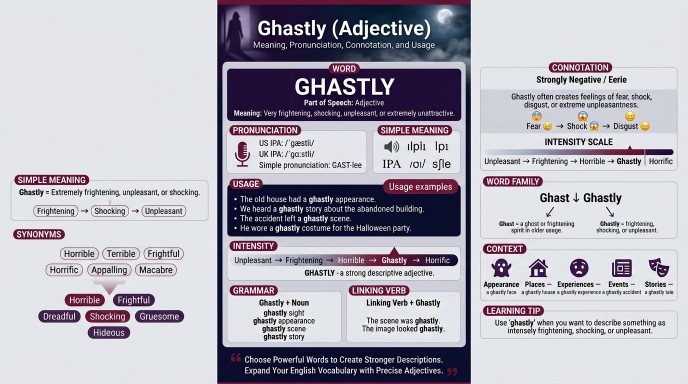
US /ˈɡæstli/ | UK /ˈɡɑːstli/
Meaning: Very unpleasant or frightening.
Examples:
- They saw a ghastly scene.
- The smell was ghastly.
8. Frightful (Adjective)
US /ˈfraɪtfəl/ | UK /ˈfraɪtfəl/
Meaning: Very bad or frightening.
Examples:
- We had frightful weather.
- The accident was frightful.
9. Heinous (Adjective)
US /ˈheɪnəs/ | UK /ˈheɪnəs/
Meaning: Extremely wicked or evil.
Examples:
- It was a heinous crime.
- The act was truly heinous.
10. Nasty (Adjective)
US /ˈnæsti/ | UK /ˈnɑːsti/
Meaning: Unpleasant or offensive.
Examples:
- He made a nasty comment.
- The medicine tastes nasty.
11. Repulsive (Adjective)
US /rɪˈpʌlsɪv/ | UK /rɪˈpʌlsɪv/
Meaning: Causing strong disgust.
Examples:
- The smell was repulsive.
- His actions were repulsive.
12. Revolting (Adjective)
US /rɪˈvoʊltɪŋ/ | UK /rɪˈvəʊltɪŋ/
Meaning: Extremely disgusting.
Examples:
- The food looked revolting.
- The sight was revolting.
13. Disgusting (Adjective)
US /dɪsˈɡʌstɪŋ/ | UK /dɪsˈɡʌstɪŋ/
Meaning: Causing disgust.
Examples:
- The room was disgusting.
- That behavior is disgusting.
14. Horrendous (Adjective)
US /hɔːˈrendəs/ | UK /hɒˈrendəs/
Meaning: Extremely terrible.
Examples:
- The storm caused horrendous damage.
- The noise was horrendous.
15. Shocking (Adjective)
US /ˈʃɑːkɪŋ/ | UK /ˈʃɒkɪŋ/
Meaning: Very surprising in a bad way.
Examples:
- The report contained shocking facts.
- The result was shocking.
16. Deplorable (Adjective)
US /dɪˈplɔːrəbəl/ | UK /dɪˈplɔːrəbəl/
Meaning: Deserving strong criticism.
Examples:
- The conditions were deplorable.
- Their conduct was deplorable.
17. Lousy (Adjective)
US /ˈlaʊzi/ | UK /ˈlaʊzi/
Meaning: Very poor in quality.
Examples:
- We received lousy service.
- He had a lousy day.
18. Miserable (Adjective)
US /ˈmɪzərəbəl/ | UK /ˈmɪzərəbəl/
Meaning: Very unhappy or unpleasant.
Examples:
- The rainy weather was miserable.
- She felt miserable after losing.
19. Unpleasant (Adjective)
US /ʌnˈplezənt/ | UK /ʌnˈplezənt/
Meaning: Not enjoyable.
Examples:
- We had an unpleasant meeting.
- The smell was unpleasant.
20. Disturbing (Adjective)
US /dɪˈstɜːrbɪŋ/ | UK /dɪˈstɜːbɪŋ/
Meaning: Causing worry or discomfort.
Examples:
- The documentary was disturbing.
- The news was disturbing.
21. Offensive (Adjective)
US /əˈfensɪv/ | UK /əˈfensɪv/
Meaning: Causing anger or insult.
Examples:
- His remarks were offensive.
- The joke was offensive.
22. Hideous (Adjective)
US /ˈhɪdiəs/ | UK /ˈhɪdiəs/
Meaning: Extremely ugly or unpleasant.
Examples:
- The design was hideous.
- The smell was hideous.
23. Dire (Adjective)
US /ˈdaɪər/ | UK /ˈdaɪə/
Meaning: Extremely serious or bad.
Examples:
- The situation became dire.
- They faced dire consequences.
24. Catastrophic (Adjective)
US /ˌkætəˈstrɑːfɪk/ | UK /ˌkætəˈstrɒfɪk/
Meaning: Causing great damage.
Examples:
- The flood was catastrophic.
- The decision had catastrophic effects.
25. Grim (Adjective)
US /ɡrɪm/ | UK /ɡrɪm/
Meaning: Serious, dark, or depressing.
Examples:
- The future looked grim.
- They received grim news.
26. Inferior (Adjective)
US /ɪnˈfɪriər/ | UK /ɪnˈfɪəriə/
Meaning: Lower in quality.
Examples:
- The product was inferior.
- They sold inferior materials.
27. Poor (Adjective)
US /pʊr/ | UK /pɔː/
Meaning: Not good in quality.
Examples:
- The performance was poor.
- He made a poor decision.
28. Wretched (Adjective)
US /ˈretʃɪd/ | UK /ˈretʃɪd/
Meaning: Very unhappy or unpleasant.
Examples:
- They lived in wretched conditions.
- The weather was wretched.
29. Detestable (Adjective)
US /dɪˈtestəbəl/ | UK /dɪˈtestəbəl/
Meaning: Deserving hatred.
Examples:
- The act was detestable.
- Such behavior is detestable.
30. Unspeakable (Adjective)
US /ʌnˈspiːkəbəl/ | UK /ʌnˈspiːkəbəl/
Meaning: Too terrible to describe.
Examples:
- The victims suffered unspeakable pain.
- It was an unspeakable tragedy.
Prototype Meaning
The most typical meaning of horrible is something that is extremely bad, unpleasant, frightening, or upsetting.
When people hear this word, they often imagine a terrible experience, bad news, poor quality, or something that causes strong dislike or fear.
Prototype Categorization
- Bad Quality: awful, lousy, poor, abysmal, inferior
- Fear and Shock: dreadful, horrendous, shocking, dire, catastrophic
- Disgust and Repulsion: disgusting, revolting, repulsive, ghastly
- Moral Wrongness: heinous, deplorable, detestable
- Unpleasant Feelings: miserable, unpleasant, grim, disturbing
Categorization helps writers choose the most accurate synonym. For example, heinous is best for crimes, while abysmal is better for poor performance. Disgusting describes something revolting, while catastrophic describes severe damage.
Antonyms of Horrible
- Wonderful (Adjective): Extremely good and enjoyable.
- Excellent (Adjective): Very high quality.
- Fantastic (Adjective): Extremely impressive.
- Pleasant (Adjective): Enjoyable and agreeable.
- Delightful (Adjective): Giving great pleasure.
- Lovely (Adjective): Beautiful or enjoyable.
- Outstanding (Adjective): Exceptionally good.
- Superb (Adjective): Of excellent quality.
- Marvelous (Adjective): Very good and surprising.
- Splendid (Adjective): Excellent and impressive.
Related Words Section
- Horror (Noun)
- Horrify (Verb)
- Horrified (Adjective)
- Horrifying (Adjective)
- Fearful (Adjective)
- Terrify (Verb)
- Frightening (Adjective)
- Dread (Noun/Verb)
- Alarm (Noun/Verb)
- Panic (Noun/Verb)
Short Questions and Answers
- What does horrible mean?
Horrible means extremely bad, unpleasant, frightening, or shocking. - When should horrible be used?
Use it when describing something very negative, unpleasant, or upsetting. - Is horrible positive or negative?
It is usually strongly negative. - How is it different from similar words?
Horrible is a general word. Specific synonyms such as heinous, abysmal, or disgusting express different types of negativity.
Meaning and Example Sentence Table
| Word | Meaning | Example Sentence |
| Horrible | Extremely bad or unpleasant | The weather was horrible yesterday. |
| Awful | Very bad | The meal was awful. |
| Dreadful | Extremely unpleasant | We received dreadful news. |
| Abysmal | Extremely poor | The results were abysmal. |
| Heinous | Extremely evil | It was a heinous crime. |
Formal and Casual Usage
Formal Synonyms
- Deplorable
- Heinous
- Catastrophic
- Dire
- Atrocious
- Detestable
Casual Synonyms
- Awful
- Terrible
- Nasty
- Lousy
- Poor
- Miserable
Conclusion
Learning the meaning of horrible and its synonyms is an excellent way to improve your English vocabulary. These words help you describe bad experiences, unpleasant situations, and strong emotions more accurately.
Using a variety of synonyms strengthens both writing and speaking because it allows you to express ideas with greater precision. It also helps avoid repetition, making your communication more engaging and professional.
Understanding pronunciation, history, connotation, and semantic categories gives you deeper knowledge of how each word works in context. The best way to remember new vocabulary is through daily practice.
Read regularly, learn a few new words each day, and use them in sentences. Over time, your confidence in English will grow, and your vocabulary will become richer and more powerful.
Explore more about!
- Anger Synonyms Boost Your Vocabulary
- Synonyms of This 30 Powerful Words to Improve
- Powerful Alternatives to “Especially” You Should Know

I am a linguist with 17 years of experience in English language teaching, including postgraduate-level instruction. My expertise includes English grammar, and I contribute as a content and blog writer, producing scholarly and educational language resources.