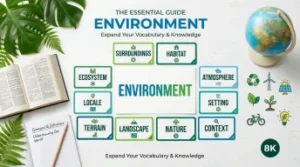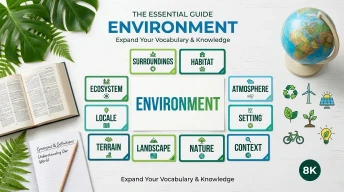
The word environment means the surroundings or conditions in which people, animals, and plants live or work. Imagine a child playing in a clean park filled with green trees, birds singing, and fresh air. That park is part of the child’s environment because it affects daily life, health, and happiness.
The word environment is one of the most common words in English. People use it when talking about nature, workplaces, schools, homes, and even social situations. It appears in everyday conversations, news reports, science books, and business writing.
Learning synonyms for environment helps English learners speak and write more naturally. It also helps students, bloggers, teachers, and content writers avoid repeating the same word many times. A rich vocabulary makes writing clearer, more interesting, and more professional.
In this article, you will learn the meaning of environment, its pronunciation, history, grammar, and word formation. You will also discover thirty useful synonyms with simple meanings and examples. Finally, you will explore semantic categories, antonyms, and common questions that will strengthen your English vocabulary.
Meaning of Environment
Definition
Environment (Noun):
The place, surroundings, or conditions in which people, animals, plants, or things live, grow, or exist.
Examples
- The school provides a safe environment for children.
- Plants grow well in a warm and sunny environment.
Connotative Meaning
(Connotation means the emotional feeling or idea that a word suggests beyond its basic dictionary meaning.)
- Positive tone: A healthy, peaceful, clean, supportive, or friendly place.
- Negative tone: A polluted, dangerous, stressful, or unhealthy place.
- Neutral tone: The physical or social surroundings where something exists.
Etymology
- Source language: Old French and Late Latin.
- Old French word: environner (“to surround”).
- Late Latin root: in (“around”) + viron (“circle” or “ring”).
- Original meaning: That which surrounds a person or thing.
Short History of the Keyword
- Old English (450–1100): The exact word environment did not exist. People used words meaning surroundings or land.
- Middle English (1100–1500): French influence introduced words related to surrounding places and conditions.
- Modern English (1500–Present): The word environment became common in the 17th century and later became widely used in science, ecology, education, and everyday English.
Pronunciation (US & UK – IPA)
US: /ɪnˈvaɪrənmənt/
UK: /ɪnˈvaɪrənmənt/
Syllables
en-vi-ron-ment
Affixation Pattern of Environment
Root: viron (surround)
Prefix: en- (“in” or “surround”)
Suffix: -ment (forms a noun)
Word Formation of Environment
The base word forms several related words in English.
- Environment — Noun
- Environmental — Adjective
- Environmentally — Adverb
- Environmentalist — Noun
- Environmentalism — Noun
- Environment-friendly — Adjective
- Eco-environment — Noun (compound)
- Built environment — Noun phrase
- Natural environment — Noun phrase
- Work environment — Noun phrase
- Learning environment — Noun phrase
- Home environment — Noun phrase
These word forms help speakers describe different kinds of surroundings and conditions in many situations.
Synonyms of Environment
1. Surroundings (Noun)
US: /səˈraʊndɪŋz/ | UK: /səˈraʊndɪŋz/
Meaning: The things, places, and conditions around a person or object.
Examples:
- The beautiful surroundings made our trip more enjoyable.
- Children learn better in clean and peaceful surroundings.
2. Setting (Noun)
US: /ˈsetɪŋ/ | UK: /ˈsetɪŋ/
Meaning: The place or situation where something happens.
Examples:
- The story takes place in a quiet village setting.
- A calm setting helps people relax.
3. Habitat (Noun)
US: /ˈhæbɪtæt/ | UK: /ˈhæbɪtæt/
Meaning: The natural home where a plant or animal lives.
Examples:
- The forest is the natural habitat of many birds.
- Pollution destroys animal habitats.
4. Ecosystem (Noun)
US: /ˈiːkoʊˌsɪstəm/ | UK: /ˈiːkəʊˌsɪstəm/
Meaning: A community of living things and their physical surroundings working together.
Examples:
- The lake has a healthy ecosystem.
- Every animal plays an important role in the ecosystem.
5. Atmosphere (Noun)
US: /ˈætməsfɪr/ | UK: /ˈætməsfɪə/
Meaning: The feeling or mood of a place.
Examples:
- The classroom has a friendly atmosphere.
- The restaurant created a warm atmosphere for guests.
6. Conditions (Noun)
US: /kənˈdɪʃənz/ | UK: /kənˈdɪʃənz/
Meaning: The circumstances or state in which something exists.
Examples:
- Plants need good conditions to grow.
- The workers asked for better working conditions.
7. Context (Noun)
US: /ˈkɑːntekst/ | UK: /ˈkɒntekst/
Meaning: The situation or background that helps explain something.
Examples:
- You should understand the context before making a decision.
- The meaning changes depending on the context.
8. Climate (Noun)
US: /ˈklaɪmət/ | UK: /ˈklaɪmət/
Meaning: The usual weather of a place or the general feeling in an organization.
Examples:
- The desert has a hot and dry climate.
- The company promotes a positive work climate.
9. Terrain (Noun)
US: /təˈreɪn/ | UK: /təˈreɪn/
Meaning: The physical features of an area of land.
Examples:
- The mountain terrain is difficult to cross.
- The soldiers trained on rough terrain.
10. Locale (Noun)
US: /loʊˈkæl/ | UK: /ləʊˈkæl/
Meaning: A particular place or location where something happens.
Examples:
- The movie was filmed in a beautiful locale.
- This quiet locale attracts many tourists.
11. Surround (Noun)
US: /səˈraʊnd/ | UK: /səˈraʊnd/
Meaning: The area or things that are around a person, place, or object.
Examples:
- The cabin is famous for its peaceful surround.
- The natural surround makes this park beautiful.
12. Sphere (Noun)
US: /sfɪr/ | UK: /sfɪə/
Meaning: A particular area, field, or world in which someone lives or works.
Examples:
- She is well known in the business sphere.
- Education plays an important role in every sphere of life.
13. Domain (Noun)
US: /doʊˈmeɪn/ | UK: /dəˈmeɪn/
Meaning: A particular area of activity, knowledge, or influence.
Examples:
- Science is his favorite domain.
- Wildlife protection is an important environmental domain.
14. Realm (Noun)
US: /relm/ | UK: /relm/
Meaning: A particular area, field, or world of activity or interest.
Examples:
- Technology has changed the realm of education.
- The book explores the realm of nature.
15. World (Noun)
US: /wɝːld/ | UK: /wɜːld/
Meaning: A particular place, society, or area of life.
Examples:
- Children grow up in a changing world.
- The business world is very competitive.
16. Scene (Noun)
US: /siːn/ | UK: /siːn/
Meaning: A place or setting where something happens.
Examples:
- The beach scene was peaceful.
- Police quickly arrived at the scene.
17. Milieu (Noun)
US: /miːlˈjuː/ | UK: /ˈmiːljɜː/
Meaning: A person’s social or cultural environment.
Examples:
- She grew up in an artistic milieu.
- A supportive milieu encourages creativity.
18. Background (Noun)
US: /ˈbækɡraʊnd/ | UK: /ˈbækɡraʊnd/
Meaning: The surrounding circumstances or conditions related to something.
Examples:
- His family background influenced his career.
- Understanding the background helps explain the situation.
19. Neighborhood (US) / Neighbourhood (UK) (Noun)
US: /ˈneɪbərˌhʊd/ | UK: /ˈneɪbəhʊd/
Meaning: The area around where people live.
Examples:
- They moved into a quiet neighborhood.
- The neighborhood has many parks and schools.
20. Environs (Noun)
US: /ɪnˈvaɪrənz/ | UK: /ɪnˈvaɪərənz/
Meaning: The surrounding area around a town, city, or place.
Examples:
- The castle stands in beautiful environs.
- Tourists enjoy exploring the surrounding environs.
21. Surrounding Area (Noun)
US: /səˈraʊndɪŋ ˈeriə/ | UK: /səˈraʊndɪŋ ˈeəriə/
Meaning: The area that is close to a particular place.
Examples:
- Many farms are located in the surrounding area.
- Visitors explored the surrounding area after lunch.
22. Vicinity (Noun)
US: /vəˈsɪnəti/ | UK: /vəˈsɪnɪti/
Meaning: The nearby area around a place.
Examples:
- There are several restaurants in the vicinity.
- No parking is allowed in the vicinity of the hospital.
23. Circumstances (Noun)
US: /ˈsɝːkəmstænsɪz/ | UK: /ˈsɜːkəmstənsɪz/
Meaning: The conditions or facts that affect a situation.
Examples:
- She succeeded despite difficult circumstances.
- We must consider all the circumstances before deciding.
24. Situation (Noun)
US: /ˌsɪtʃuˈeɪʃən/ | UK: /ˌsɪtʃuˈeɪʃən/
Meaning: The set of conditions in which someone or something exists.
Examples:
- The company improved its financial situation.
- Every situation requires careful thinking.
25. Framework (Noun)
US: /ˈfreɪmwɝːk/ | UK: /ˈfreɪmwɜːk/
Meaning: A basic structure or system that supports something.
Examples:
- The project follows a clear framework.
- Schools need a supportive learning framework.
26. Biosphere (Noun)
US: /ˈbaɪoʊsfɪr/ | UK: /ˈbaɪəʊsfɪə/
Meaning: All parts of Earth where living things exist.
Examples:
- Forests are an important part of the biosphere.
- Human activities affect the entire biosphere.
27. Nature (Noun)
US: /ˈneɪtʃər/ | UK: /ˈneɪtʃə/
Meaning: The natural world, including plants, animals, land, and water.
Examples:
- We should protect nature for future generations.
- Spending time in nature reduces stress.
28. Landscape (Noun)
US: /ˈlændskeɪp/ | UK: /ˈlændskeɪp/
Meaning: The visible features of an area of land.
Examples:
- The mountain landscape was breathtaking.
- Heavy rain changed the landscape.
29. Setting (Physical Context) (Noun)
US: /ˈsetɪŋ/ | UK: /ˈsetɪŋ/
Meaning: The physical place where an event or activity happens.
Examples:
- The hotel has a peaceful lakeside setting.
- The garden provides the perfect setting for weddings.
30. Living Conditions (Noun)
US: /ˈlɪvɪŋ kənˈdɪʃənz/ | UK: /ˈlɪvɪŋ kənˈdɪʃənz/
Meaning: The quality and circumstances of the place where people live.
Examples:
- The organization works to improve living conditions.
- Clean water is essential for healthy living conditions.
Prototype Meaning
The prototype meaning of environment is the surroundings in which a person, animal, plant, or object lives, grows, or exists. When most people hear the word environment, they usually think of nature, including forests, rivers, mountains, oceans, clean air, and wildlife. However, the word also refers to homes, schools, workplaces, and social conditions that influence people’s lives and behavior. It is a broad word that describes everything around us that affects living things.
Prototype Categorization
Grouping synonyms into categories makes it easier to choose the most suitable word for different situations. Instead of using environment every time, writers can select a synonym that matches the context more precisely.
- Natural Environment: Habitat, Ecosystem, Biosphere, Nature, Landscape, Terrain
- Physical Place: Surroundings, Setting, Locale, Vicinity, Environs, Surrounding Area
- Social or Cultural Environment: Milieu, Atmosphere, Climate, Neighborhood, Sphere
- Situational Context: Context, Circumstances, Situation, Framework, Domain, Realm, World, Background
- Living and Working Conditions: Conditions, Living Conditions
Using these categories helps writers choose accurate words, avoid repetition, and make their writing clearer and more engaging.
Antonyms of Environment
- Isolation (Noun): A state of being separated from people or surroundings.
- Seclusion (Noun): A private or hidden place away from others.
- Vacuum (Noun): An empty space with no surrounding matter or influence.
- Nothingness (Noun): A state where nothing exists around something.
- Emptiness (Noun): A place or condition with very little or nothing in it.
- Void (Noun): A completely empty space.
- Detachment (Noun): Separation from surrounding people or conditions.
- Disconnection (Noun): A lack of connection with the surrounding world.
Short Questions and Answers
- What does environment mean?
Environment means the surroundings or conditions in which people, animals, plants, or things live, work, and grow. - When should environment be used?
Use environment when talking about natural surroundings, workplaces, schools, homes, social conditions, or any situation that affects people or living things. - Is environment positive or negative?
The word is generally neutral. It can have a positive meaning when describing a healthy or supportive place and a negative meaning when referring to pollution, danger, or poor conditions. - How is environment different from similar words?
Environment is the broadest term. Words like habitat mainly describe the natural home of animals and plants, while setting refers to the place where an event happens. Atmosphere focuses on the feeling of a place, and context explains the surrounding circumstances of an event or idea.
Conclusion
Learning the word environment and its synonyms is an excellent way to improve your English vocabulary. Each synonym has a slightly different meaning, allowing you to choose the most accurate word for speaking and writing. A wider vocabulary also helps you avoid repeating the same word, making your sentences more natural and interesting. If you are a student, English learner, teacher, blogger, or professional writer, understanding these alternatives will strengthen your communication skills. Practice using one or two new words every day in conversations and writing exercises. Over time, you will become more confident in expressing your ideas clearly, correctly, and effectively in English.
Read more about!
Synonyms for Rude: 40 Better Words to Use in English
Synonyms for Get: 30 Powerful Words to Improve Your Vocabulary

I am an American author, and I write books about power, strategy, and human behavior. My writing style is simple but deep, and I try to explain how people think and act in real-life situations.
I studied classical studies, and before becoming a writer, I worked in different fields which helped me understand people and life better.
My most famous books include The 48 Laws of Power, The Art of Seduction, and Mastery. These books are widely read by business people, leaders, and students around the world.